connecting
people and cultures – inspiring journeys
sharing meaningful discoveries in Asia
 About Alam Asia Net
Asia Destinations News and Links
Journeys and Stories
Support Campaigns and Projects
Alam Indah Bali
Reading, Films, Music
Inspirations
Retreats
Some Favorite Images
About Alam Asia Net
Asia Destinations News and Links
Journeys and Stories
Support Campaigns and Projects
Alam Indah Bali
Reading, Films, Music
Inspirations
Retreats
Some Favorite Images


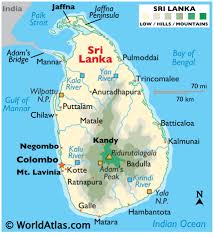

Sri Lanka! – a gem blessed with so much cultural diversity, heritage and natural wonder- all packed onto one island. And with some of the most welcoming people you can meet with wonderful food, this pearl of the Indian Ocean has a special place in my heart.
A Little History and Origin Myth
Ancient history of Lankapura and the reign of the infamous King Rawana of the Ramayana dates back to 2000 years before Christ.
Prince Vijaya, a legendary North Indian prince was banished from his kingdom, and along with his 700 followers, drifted by storm to Lanka around 500 BCE. They intermarried with indigenous peoples. Vijaya’s first marriage to Kuweni, a Yakkha princess, ended in tragedy. Legends tell the story of Kuweni as a daughter of a demonic raksasa. Vijaya’s followers encouraged him to marry a princess of different lineage. Heartbroken Kuweni died and her children fled to the forest becoming he ancestors of the Vedda people, still found in remote forests today.
Vijaya was the son of King Sinabahu, considered to be descended from a lion. And so with his new marriage, according to Sri Lankan royal chronicles, the Mahavamsa, Vijaya’s story marks the beginning of Sinhalese civilization.
Buddhism was introduced in the 3rd century CE by Mahinda, the son of Indian King Ashoka whose sister Princess Sangamitta, brought a cutting of the sacred Mahabodhi tree from Bodhgaya to present day Anuradhapura which flourished as a great Sinhalese capital for over 1000 years, but finally gave in to South Indian invaders. The capital was moved to Polonnaruwa which flourished until 13th century when Sinhalese power shifted further south again.
The colonization of the Portuguese in 16th century (who called the country Ceilao – and hence later Ceylon) followed by the Dutch and British, also shaped the fascinating multi-cultural character of Sri Lanka today.
Sri Pada- Adam’s Peak
The magical mountain of Sri Pada, also known as Adam’s Peak, ( 2243m), is a main pilgrimage site in the center of the island. Various legends tell of the Buddha leaving his footprint here. Another story tells of the footprint belonging to Adam as he took a last look at Eden and stepped onto Earth. Hindus believe this is where Shiva left his footprint. It’s a 7km walk up 5200 steps.
See more from my amazing walk up to Sri Pada back in 2012 along with a visit to Tea Leaf Vision School:
https://alamasia.net/sri-lanka-adams-peak/
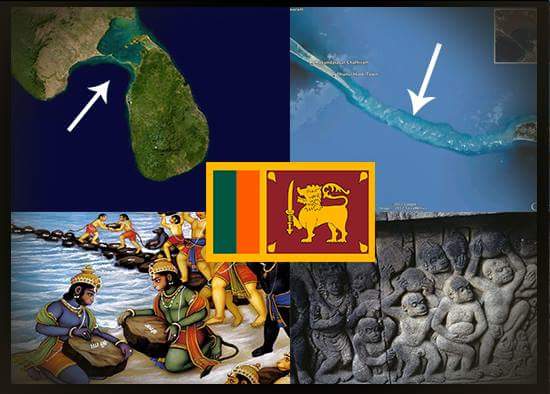
The Ramayana Story includes the creation of a bridge of boulders connecting India to Sri Lanka. Known as Rama Sethu or Adam’s Bridge, the myth tells of the Monkey King Hanoman and his army creating this bridge to help Rama rescue his beloved wife Sita from King Rawana. Today one can visit sites of
The Ramayana Trail to explore the story of love,devotion and heroism at gardens, caves and temples of worship. Healing herbs flourishing in gardens today are also said to have been brought to Sri Lanka by Hanoman on his personal flight from the Himalaya. There is no longer a bridge to cross over from India, but during low tides, one can see that a bridge must have been there before! Other beliefs also link the bridge to Adam, the first man who supposedly crosed it from Sri Lanka to India after being expelled from Eden.
Sigiriya Rock and Fountains of Paradise
Arthur C. Clarke was deeply fascinated by Sigiriya Rock calling it an “eighth wonder of the world,” comparable to the pyramids but more personal, incorporating its magic and mystery into his novel The Fountains of Paradise as a site for a space elevator, seeing its ancient grandeur and gardens as futuristic, linking it to human ingenuity and the “Dawn of Man” in 2001: A Space Odyssey.
Positioned strategically in the Indian Ocean, Sri Lanka had been a trading hub with early Arab traders. Some historians believe that Galle on the south coast was the biblical port of Tarshish where King Solomon found spices and gems, elephants and peacocks.
The Romans knew the island as Taprobane– referring to their hands turning a copper color when they touched the sands. Muslim traders talked of Serendip– meaning island of jewels in Arabic. This became the root word of serendipity– the art of making happy and unexpected discoveries.
Today, a journey to Sri Lanka is indeed full of serendipitous discoveries!


Travel around Sri Lanka
Once out of the main towns, you find yourself on country roads amidst stunning scenery. Each destination on the Sri Lanka circuit is within a few hours reach. It is nice to be flexible with a private car and driver and trains can also take you to many places around Sri Lanka- especially popular through the Tea Country. Trains are fun and very inexpensive.
Colombo and arriving in Sri Lanka:
Many travelers opt to skip Colombo and head first to Negombo, the beach resort town which is a short ride north of Colombo airport. But Colombo is very worthwhile to get to know and an Airport Expressway now makes access easier.
Colombo is full of Multi-Cultural Color
The Old Fort area of Colombo is where you can visit the Old Dutch Museum and see British colonial buildings. Nearby is the lively Tamil Pettah district and the Fort Railway Station.
The Red Mosque in the Pettah district dates back to 1908 and is known for its striking red and white candy-striped facade. Hindu Temples dedicated to Shiva and to Murugan and Christian churches are all found close by.
St. Peter’s, the oldest functioning Church evolved from early Portuguese missionaries.
St. Lucia’s Catholic Cathedral dates back to 1801 and the Wolvendaal Dutch Reform Church dates back to 1749. There is also the Christ Anglican Church known for its beautiful frescoes.
Galle Face Green – just south from the Fort area along the coast is where locals come to stroll and picnic- especially lively at sunset time.
The Galle Face Hotel of Colombo is still a choice place to stay, or at least, to have tea or a drink looking out to the sea. This historical place has welcomed guests and royalty since 1864.
The classic rooms of the old wing have been totally renovated and there is also a newer Regency Wing:
https://www.gallefacehotel.com/
Evenings you may encounter a local colorful wedding reception complete with Kandyan dancers in the lobby.


Cinnamon Gardens
The leafy embassy-row neighborhood, a few kms from the Old Fort area, is home to Viharamahadevi Park and the National Museum.
Gangaramaya Buddhist Temple was established in late 19th century and hosts a vibrant pageant with dancers and drummers usually sometime in February: https://gangaramaya.com/
Kelaniya Raja Maha Viharaya
approx 7km north of Colombo by the Kelani River, is a beautiful temple complex graced with incredible mural paintings. Throngs of worshippers come during late afternoons.


See and Learn more about Kelaniya Temple which founding goes back to 543BC:
https://kelaniyatemple.lk
Other Accomodation Options:
Havelock Place – Boutique Bungalow in quiet residential area of Colombo 5- also open to outside guests for lunch and dinner: Check on Booking.com
Very close to Buddhist Cultural Center which has a great bookshop as well as interesting activities.
Geoffrey Bawa Residence
Sri Lanka’s most celebrated architect known as the pioneer of Tropical Modernism, Geoffrey Bawa (1919-2003) was a Sri Lankan of multi-cultural background. He blended modern design with local tropical landscapes. He shaped postcolonial Sri Lankan architecture with buildings like the Parliament and iconic homes, becoming one of Asia’s most influential 20th-century architects.
Tours are available of his residence at Number 11 in Colombo 03 district:
https://geoffreybawa.com/
Personally when I travel, I always like to support small locally-owned hotels- many of them simple but with heart. Or hotels that are contributing to wellbeing of staff, local economy and helping to protect the environment.
In recent years, especially post covid, there have been lots of changes and new developments.
Tear Drop Story and Luxury Hotel Collection:
For those seeking some more exclusive luxury, check out the Teardrop Story and the properties they have restored and renovated into beautiful small luxury heritage havens in the tea valleys and mountains, and by the sea:
https://www.teardrop-hotels.com/about/
Art and Crafts:
BAREFOOT Crafts and Cafe supporting a cottage industry of weavers.
Also a relaxing place for lunch: https://barefootceylon.com/
The Old Colonial Dutch Hospital at the north end of Galle Face Green, has been renovated into a new shopping and dining complex.
Negombo:
If prefer to be closer to the airport for the late night or early morning flights- Negombo has a long stretch of beach with a commercial strip of mass-tourism hotels for all budgets along with shops and eateries.
A bit further north of Negombo brings you more into nature.

Ranweli Eco Resort– approx 20 min. drive north of Negombo.
This long established property is on a secluded beach and Eco area known for birdwatching.
A nice place to relax and unwind after a long flight:
https://ranweli.com/page/
Flights and Ferry Boats between India and Jaffna
An exciting new way to enter Sri Lanka from India.
Short Direct Flights have been operating between Chennai and Tiruchirappalli and Jaffna, the capital city of Sri Lanka’s northern province and center for Tamil culture and history.
A new ferry service started up between the Tamil port city of Nagapattinam and Jaffna but schedules still seem unpredictable. Follow up on: https://www.sailsubham.com/
I would love to get to Jaffna one day!
Note as far as I understand, foreign nationals can enter Sri Lanka at Jaffna with E-Visas, however it seems India E-Visa or Tourist Visa for foreigners entering India at the Nagapattinam seaport is not permitted, so double check on this. If traveling from Jaffna to India, you may have to fly, and forgo the ferry service.
Sri Lanka Ethnic Groups
The majority of Sri Lankans are Sinhalese Buddhist ( around 75%)
Approx 12% are Sri Lankan Tamils, predominantly in the north and east.
Approx 4-6% are Indian Tamils
Approx 10% are Moors/Muslims– traders that speak Sinhala and Tamil.
A small population of less than 1% are known as Burghers, people of European descent, mainly Dutch and Portuguese. There is also a small group of Malay descent.
The Christian population- about 7% is mostly Roman Catholic with some Protestants and Anglicans.
Christians are found among Sinhalese, Tamils, and Burghers.
Tamil Groups on Sri Lanka
There are three different groups of Tamils who make up the history of the island.
Sri Lankan Tamils in the north and the east have been settled for centuries.
Indian Tamils were brought by the British from Southern India in large numbers starting in the 1820s to work on coffee and tea plantations, establishing a distinct community known as ” Hill Country Tamils” or “Plantation Tamils.”
Tamils who joined the LTTE-Liberation Tigers of Tamil Eelam came from a broad section of Sri Lankan Tamil society in response to systemic discrimination. The LTTE war lasted for nearly three decades, from 1983 until the Sri Lankan military defeated the Tamil Tigers in 2009.
During the time of the civil war, another dark side affected Sinhalese youth who were caught up between nationalism and trying to understand the powerful shadow plays of politics, resulting in a great deal of trauma. Visiting Sri Lanka today meeting wonderful and welcoming people, it is hard to imagine the dark times of division. May Peace now Prevail.
PRIVATE GUIDE and DRIVER for Sri Lanka:

Contact Amith de Silva – one of the most wonderful, professional knowlegable, friendly English speaking guides I have met. Very efficient and responsible- highly recommended!
Amith and Family also run their Homestay close to Colombo Airport:
https://www.ayubowanhomestayinsrilanka.com/
Email: amithdmc@gmail.com
E-Visa: is required for all visitors.
Apply on the official site: http://eta.gov.lk
Ayubowan! is the traditional greeting wishing Long Life.
May Sri Lanka enjoy a long life in peaceful times!


Click Below for:
Cultural Triangle, Elephants, Minneriya National Park and Kandy:
https://alamasia.net/sri-lanka-cultural-triangle-elephants-and-kandy/
Silent Walks in Sri Lanka:
Walk back in time to the “Rock of Invitation” at Mihintale where teachings of the Buddha was introduced. and to Ritigala Nature Reserve, an ancient forest monastery and hospital see where Hanoman dropped healing herbs from the Himalayas:
https://alamasia.net/silent-walks-in-sri-lanka/
Nilambe Meditation Center near Kandy: https://alamasia.net/nilambe-meditation-center/
–Train to Tea Country, down South to Yala National Park, southern beaches, Galle Fort
–Trincomalee and the Abode of Rawana’s Temple with rediscovered sacred Lingga