connecting
people and cultures – inspiring journeys
sharing meaningful discoveries in Asia
 About Alam Asia Net
Asia Destinations News and Links
Journeys and Stories
Support Campaigns and Projects
Alam Indah Bali
Reading, Films, Music
Inspirations
Retreats
Some Favorite Images
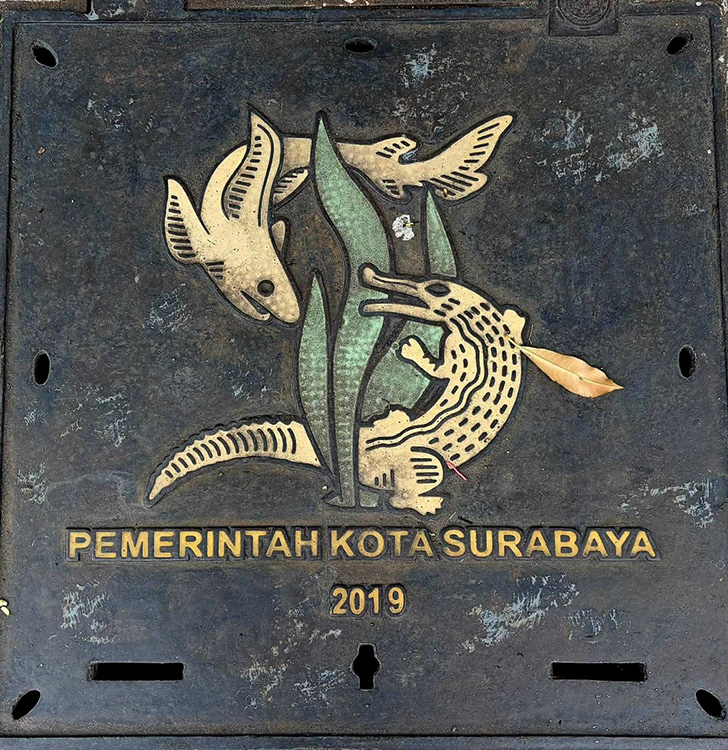
The Birthplace of Sukarno and how a Shark and a Crocodile became the symbol of Surabaya
August, 2026
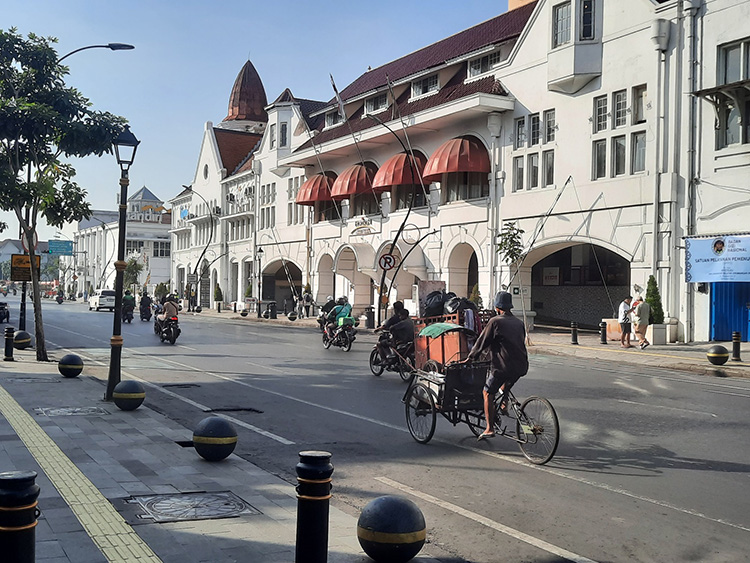
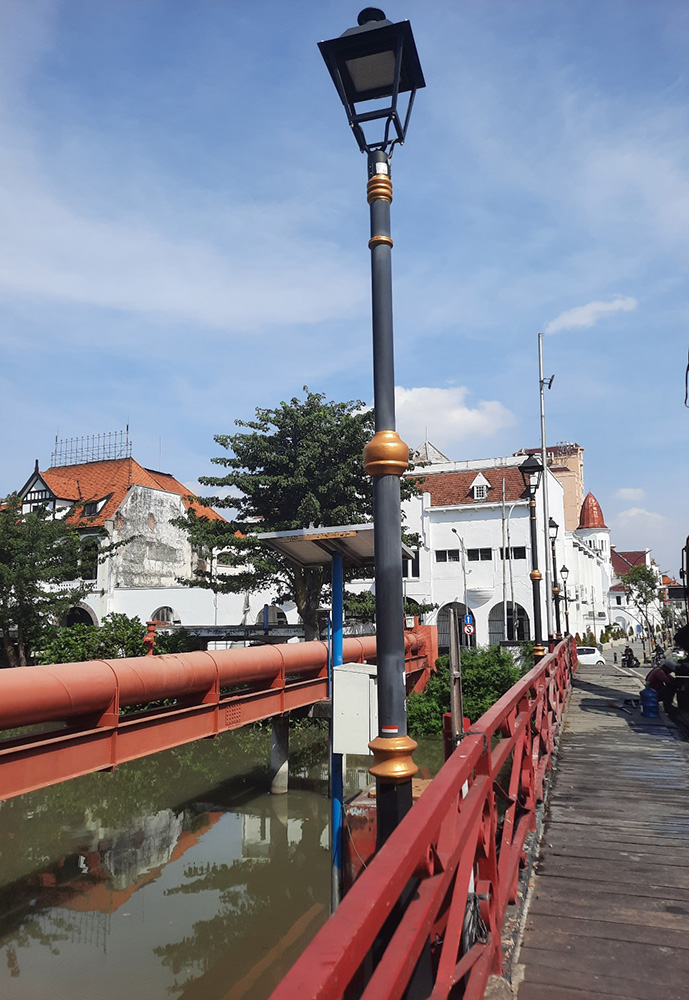
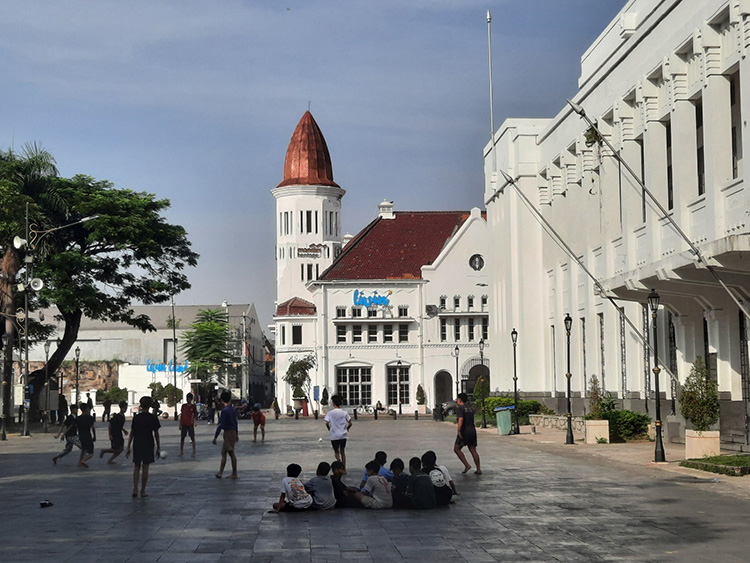
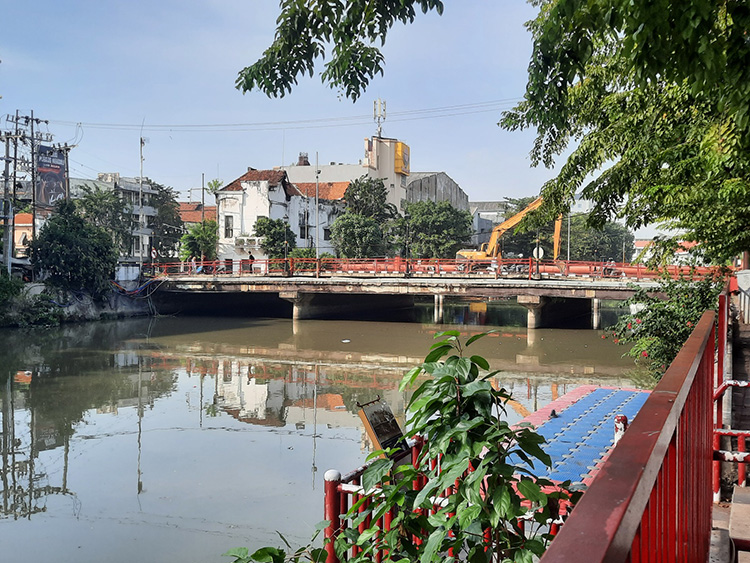
in front of the Arcadia Hotel approaching the famous Red Bridge in old town of Surabaya.
The legend of Surabaya is traditionally derived from two Javanese words:
Sura ( Suro) meaning shark
Baya meaning crocodile
According to local folklore, a giant shark and a giant crocodile once fought a fierce battle for dominance in the area. They eventually agreed to divide their territory- the shark in the sea and the crocodile on land. However the shark swam into the river of the crocodile’s territory reigniting a war. The place where they fought became known as Surabaya.
Beyond the Myth, many historians believe the animals represent a 13th century naval battle.
The Shark symbolizing the invading fleet of the Mongol Yuan Dynasty in 1293.
The Crocodile symbolizing the local Majapahit soldiers defending their land.
Surabaya is also known as the City of Heroes (Kota Pahlawan)
Residents of the city played a pivotal role in the 1945 Battle of Surabaya during the Indonesian Independence Movement. Some linguists say Surabaya means “brave in the face of danger” ( suras– an Old Javanese root word for brave, and bhaya meaning danger.)
On 17 August, Indonesia celebrated 81 years of independence.
Visiting Surabaya, it was very nice to step back into the Majapahit Hotel which holds its own story in time.
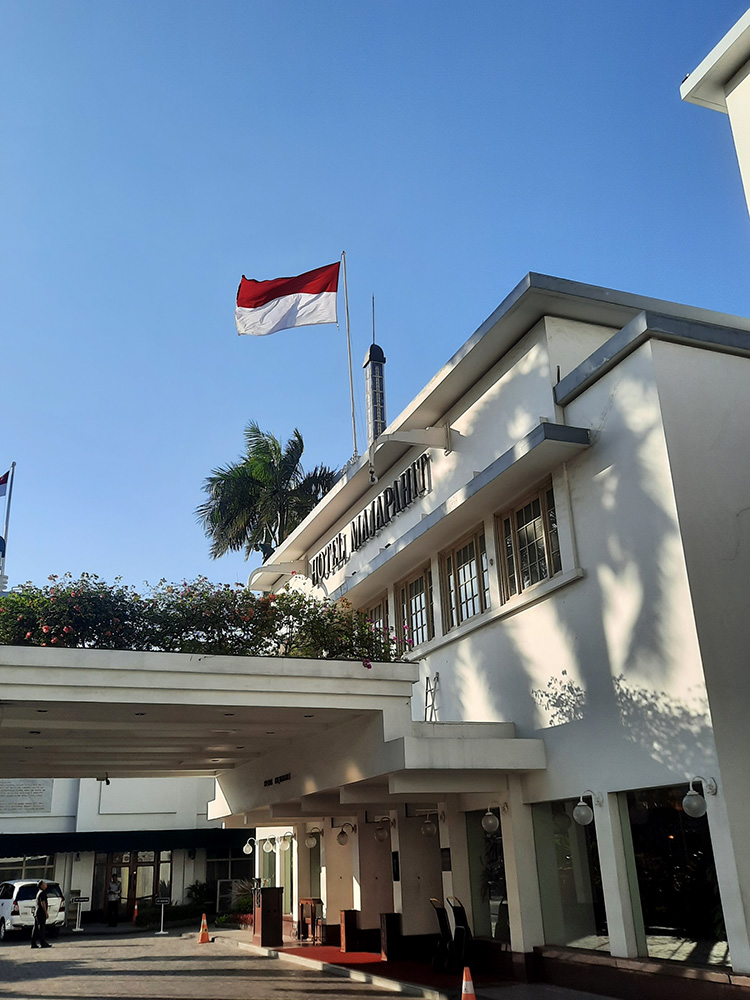
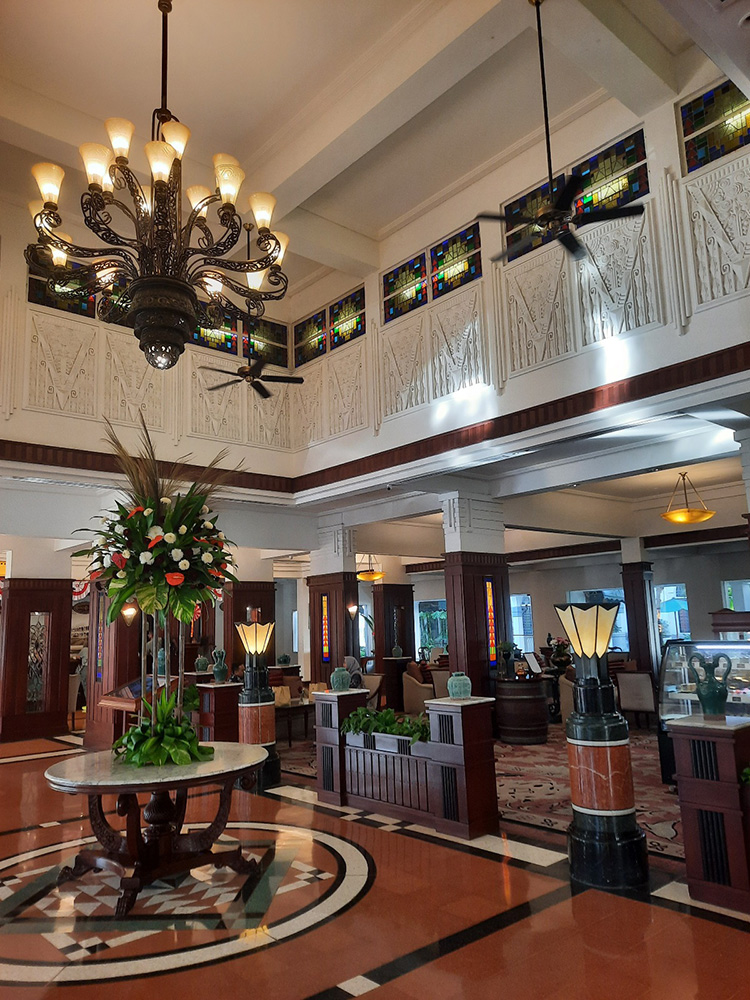
The Majapahit Hotel is a legendary landmark due to a historic events that took place here.
Following the proclamation of independence on 17 August, 1945, and following the Japanese surrender in World War II, some Dutch nationals sought to re-establish colonial rule and hoisted their red-white and blue flag at the hotel. At the time, the hotel was still known as Hotel Yamato.
Local youth and nationalist residents viewed the raising of the colonial flag as an insult and denial of Indonesia’s newly won freedom. On 19 September, 1945, a group of youth stormed the hotel, climbed on to the roof and tore off the blue stripe from the Dutch flag. Leaving only the red and white colors, they re-hoisted it as the Indonesian national flag. The incident led to continued fighting and the Battle of Surabaya on 10 November, 1945.
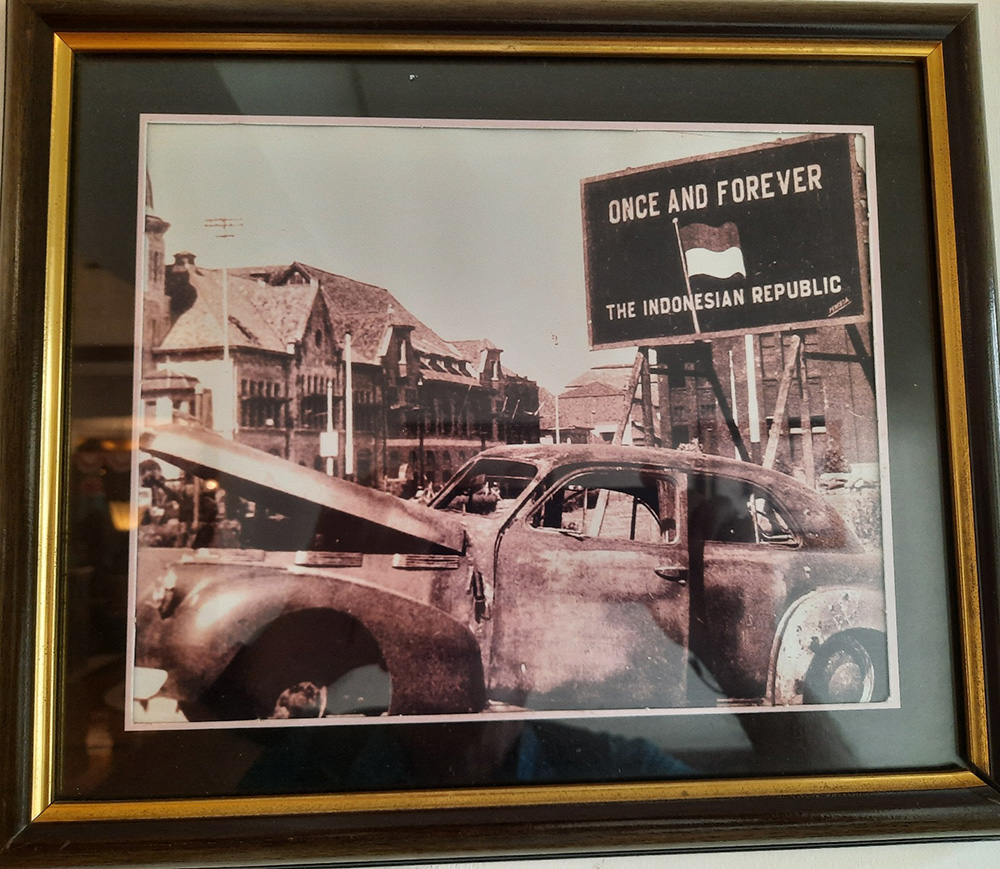
Tensions rose on 30 October, 1945 when British Brigadier General A.W.S. Mallaby was shot and killed inside his car in front of the Internatio Building near the Jembatan Merah ( Red Bridge )
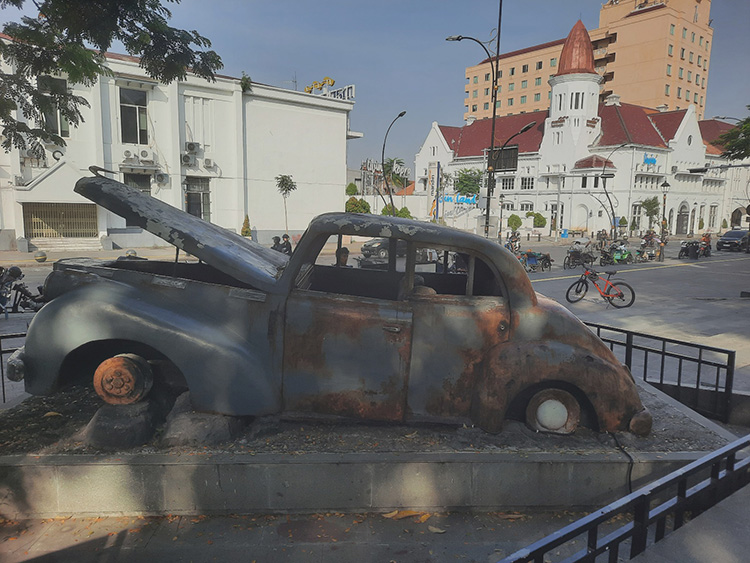
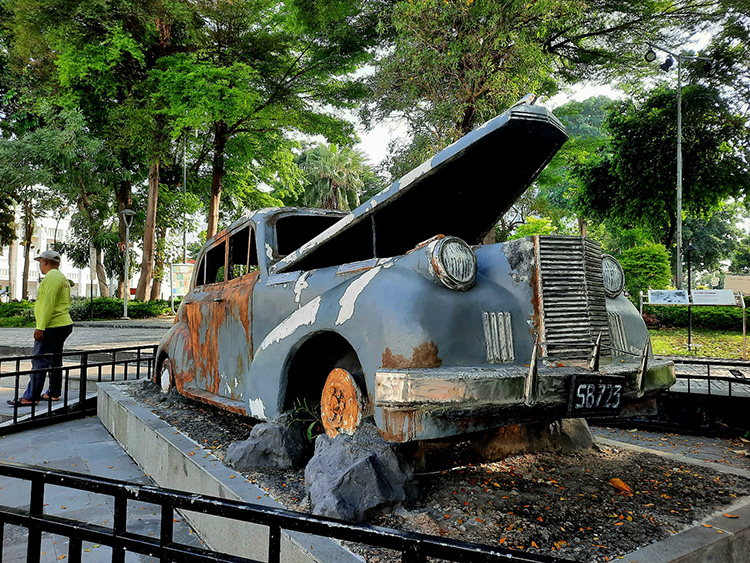
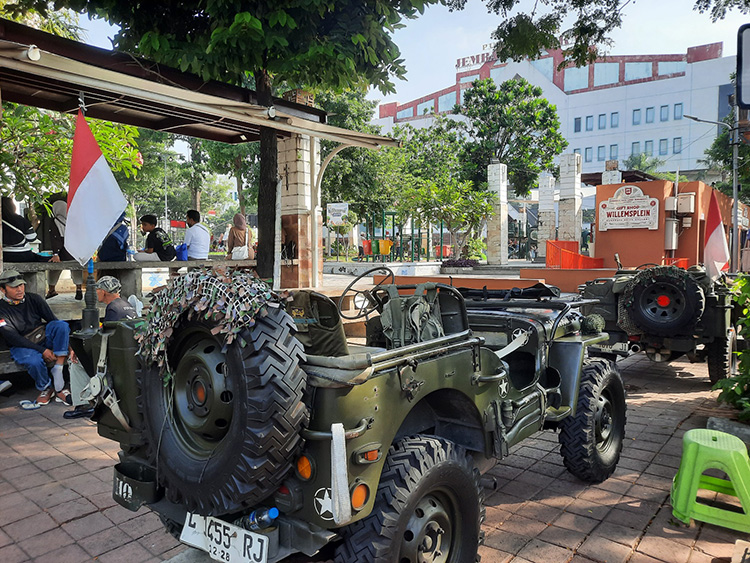
A replica of Mallaby’s car rests close to the Red Bridge.
The incident unfolded when Mallaby was traveling to spread word of a newly negotiated ceasefire. As his car approached a British outpost inside the nearby Internatio Building, it was surrounded by angry Indonesian Republican militia and crowds. Fearing for Mallaby’s safety, British troops stationed inside the building fired warning shots into the air to disperse the crowd. This sparked a panic; the Indonesian militia believed they were under attack and a chaotic firefight erupted between both sides. Amid the crossfire, an unknown Indonesian youth approached Mallaby’s vehicle and shot him through an open car window. Moments later, a grenade exploded inside or near the vehicle—either thrown by a British captain from inside the car in self-defense, or from the surrounding crowd. The explosion caused the car to violently ignite, leaving Mallaby dead and his vehicle completely burned. Unfortunately a series of military miscommunications led to this tragic event. Indonesian youth fighters believed there was an ambush by the British and Mallaby was trapped. The event outraged the Allied Command, leading to a harsh British ultimatum that ultimately triggered the full-scale Battle of Surabaya on November 10- now commemorated nationally as Indonesia’s Heroes’ Day.
The British and Allied Forces won the physical battle but for Indonesia, the battle became the ultimate symbol of nationalist resistance and patriotism. It showed the world and the Dutch that the newly proclaimed Republic of Indonesia would fight rather than surrender. The scale of the bloodshed at Surabaya brought international attention to the Indonesian National Revolution, galvanizing outside sympathy and laying the groundwork for future diplomatic and foreign support. The Netherlands finally recognized Indonesia’s independence in 1949.
Today there are local classic jeep tours operating next to the Red Bridge. Local drivers double as guides taking you on a historical ride back in time, sharing stories of the Battle of Surabaya.
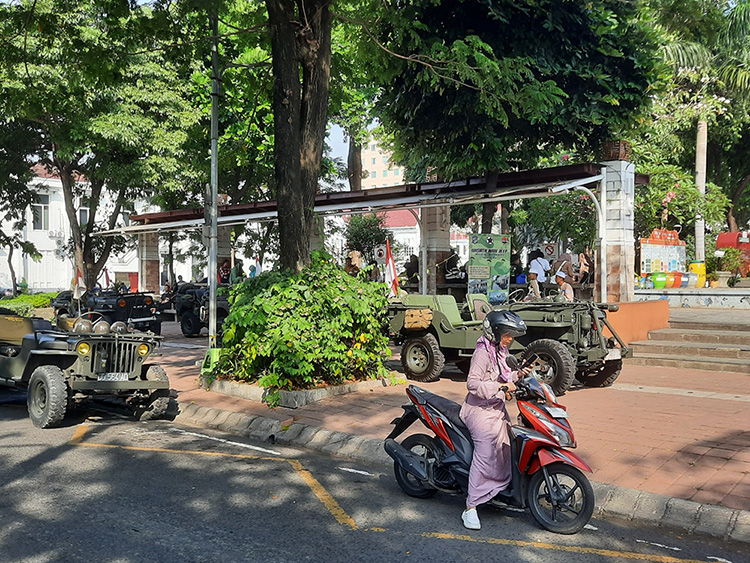
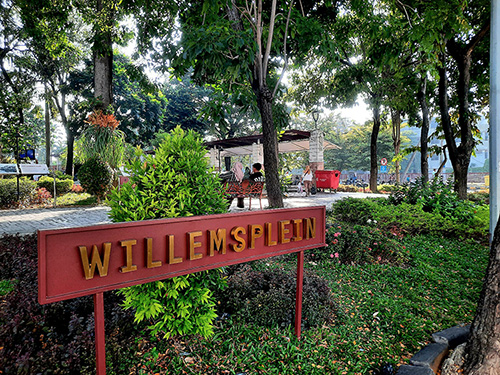
Walking around the Old Town you can see several old Dutch-era buildings:
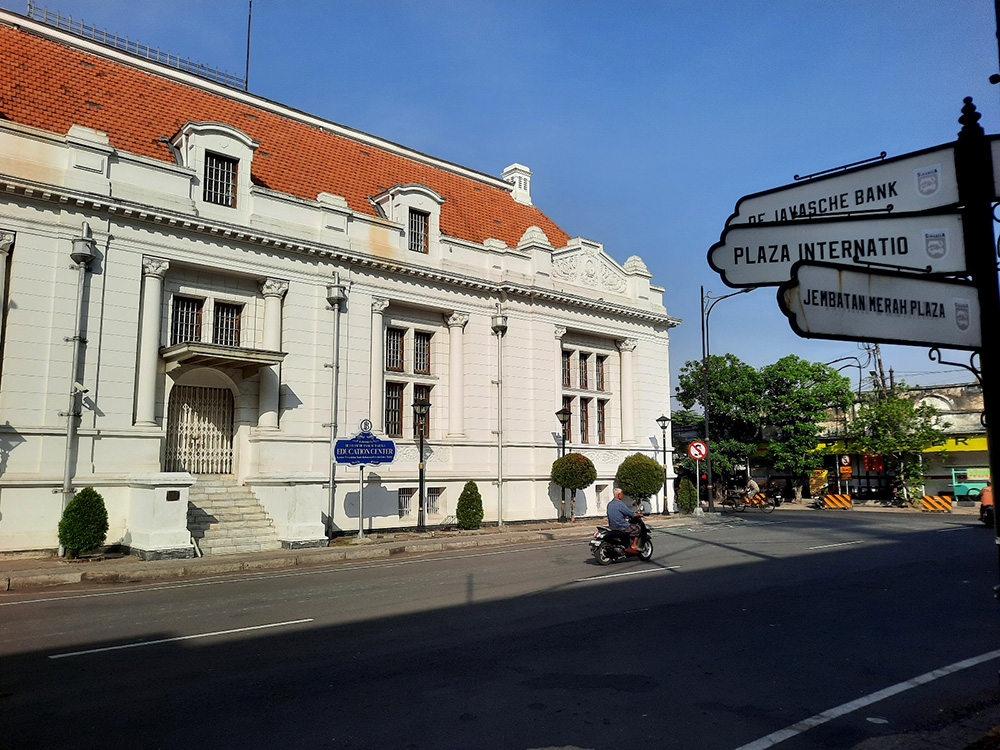
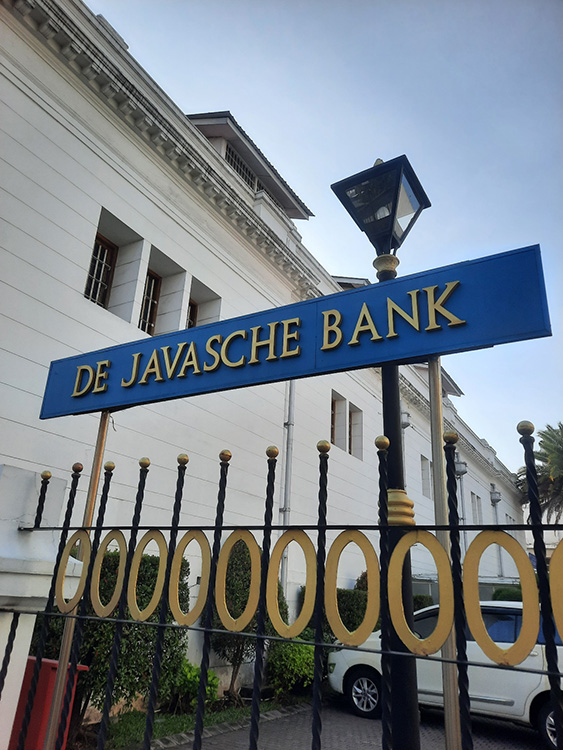
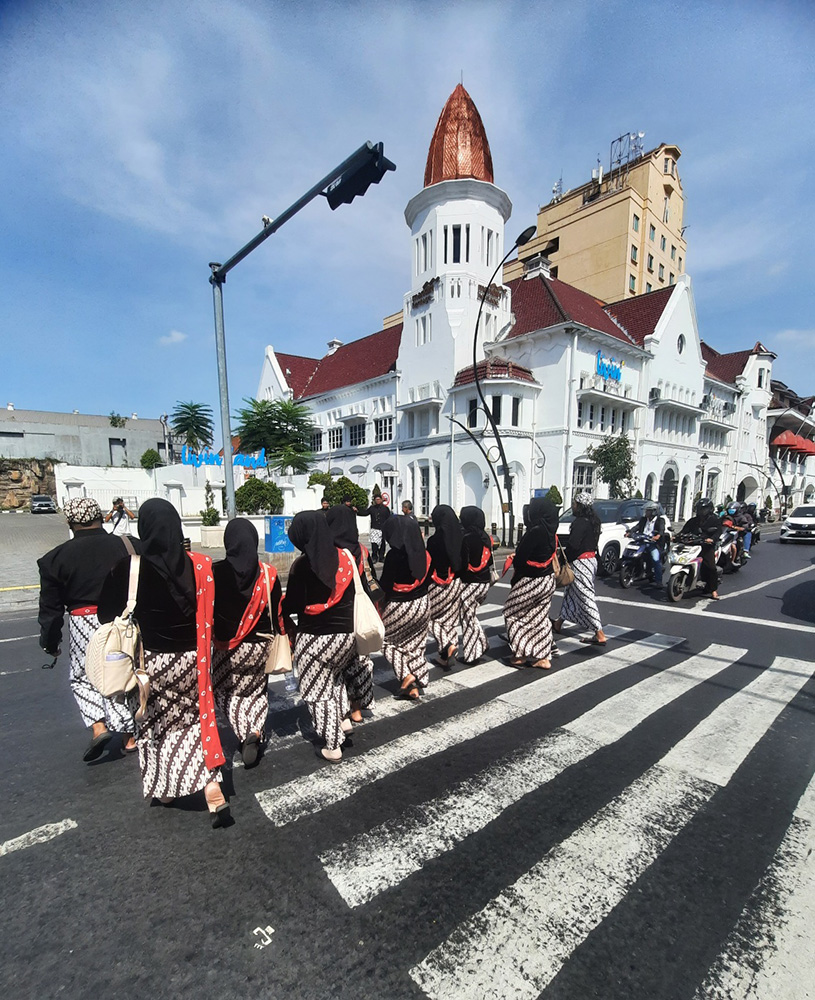
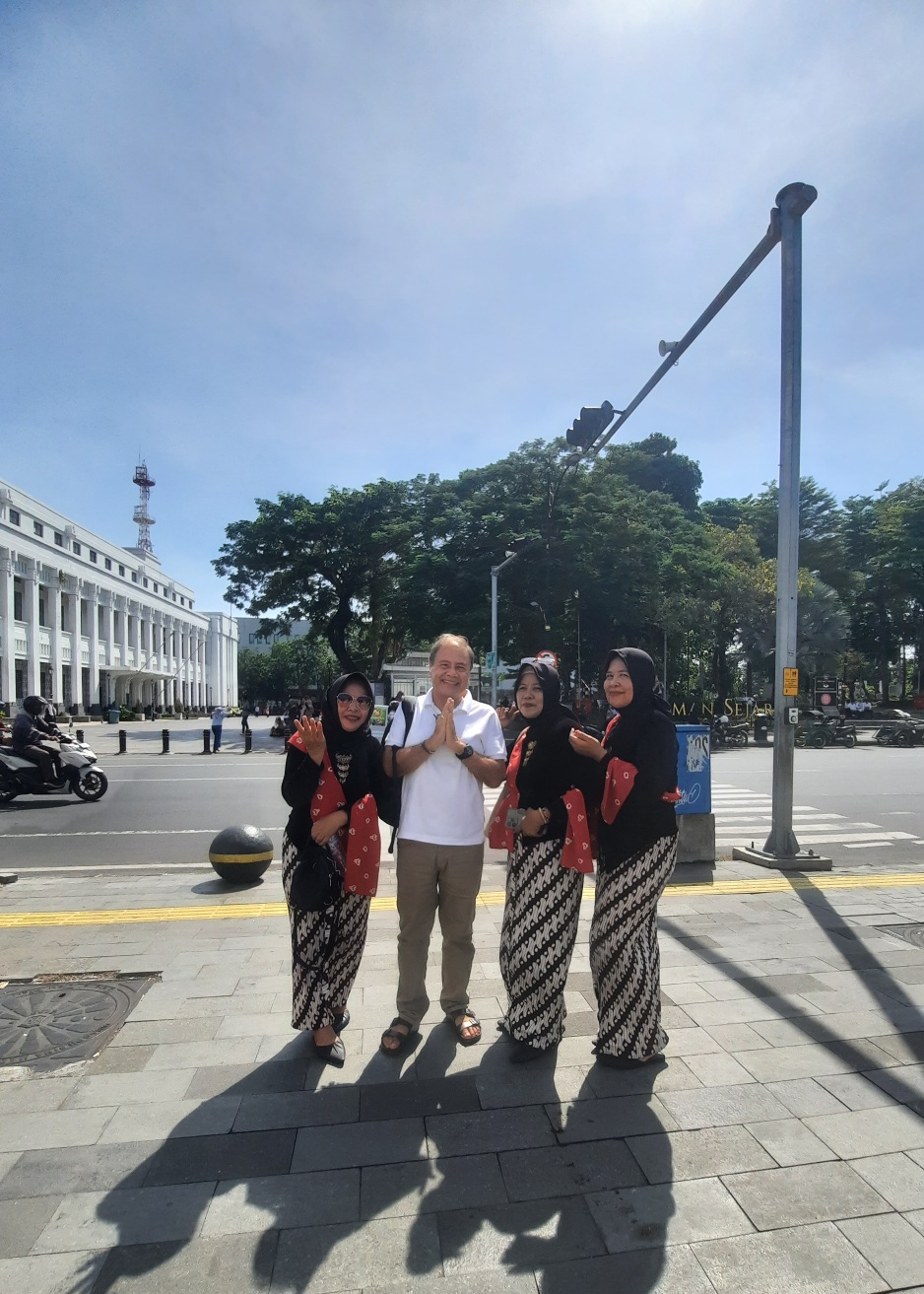
Honoring the past and making new friends in front of the Internatio Building.
Sukarno – Father of Independence
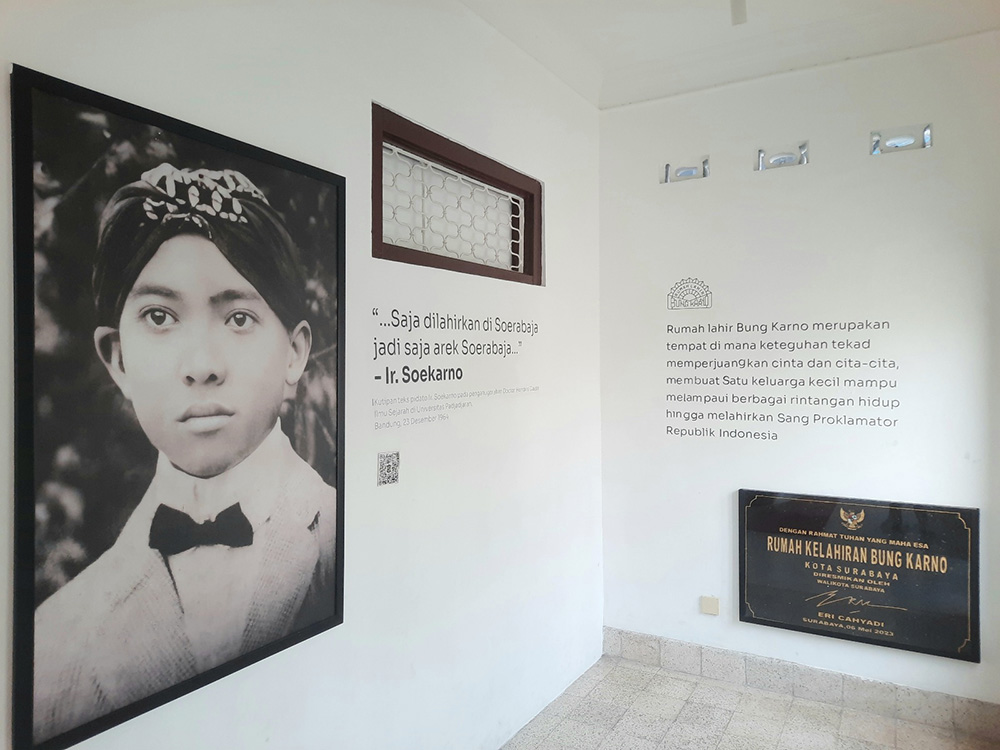
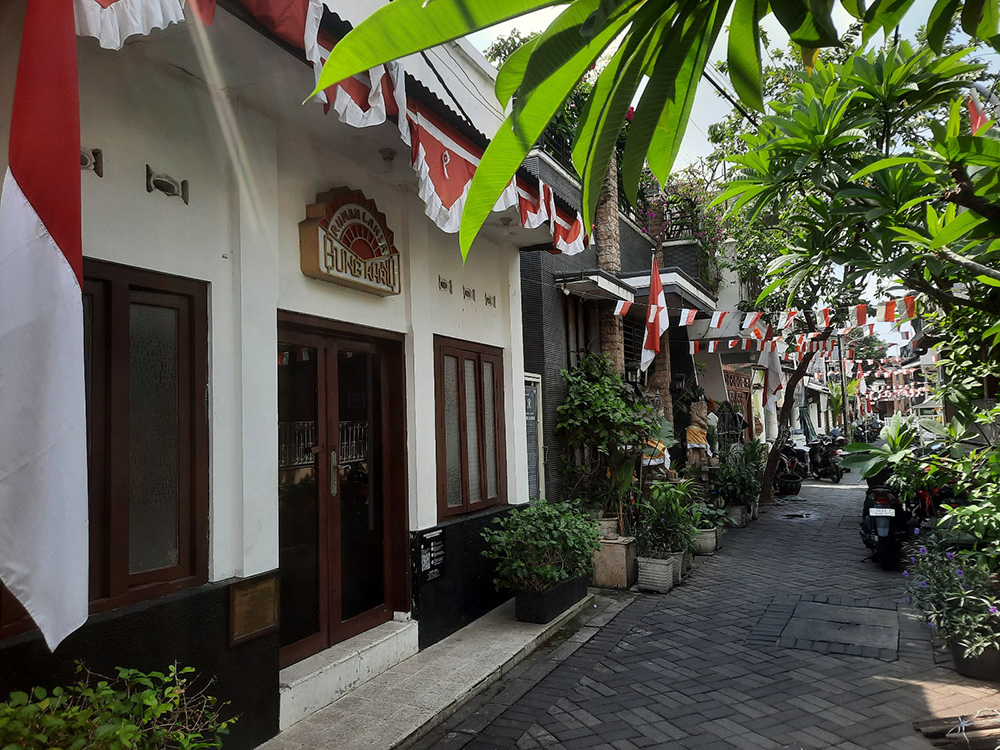
Sukarno’s birthplace and home- now a museum
Sukarno, who became the first president of Indonesia, was born on June 6,1901 in the Kampung Peneleh neighborhood of Surabaya. He was born to a Javanese Muslim father, an elementary school teacher, and a Balinese Hindu from Singaraja in North Bali. He was given the birth name Kusno Sosrodihardjo but following Javanese custom, he was given the new name Sukarno following a childhood illness.
Walking the lanes of the old Kampung Peneleh:
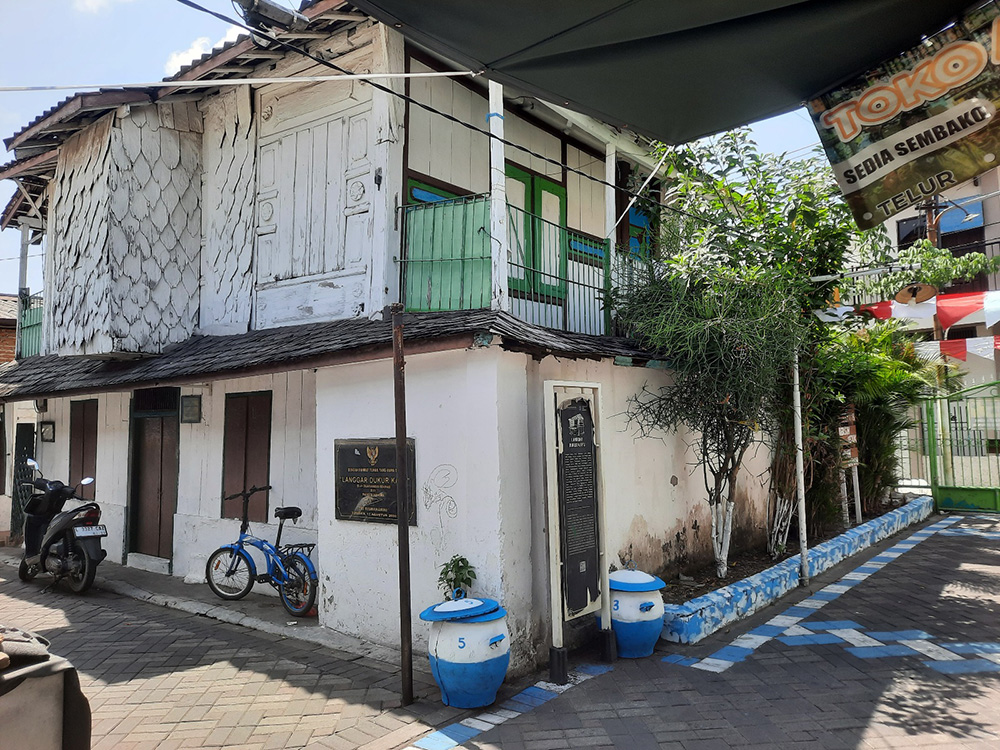
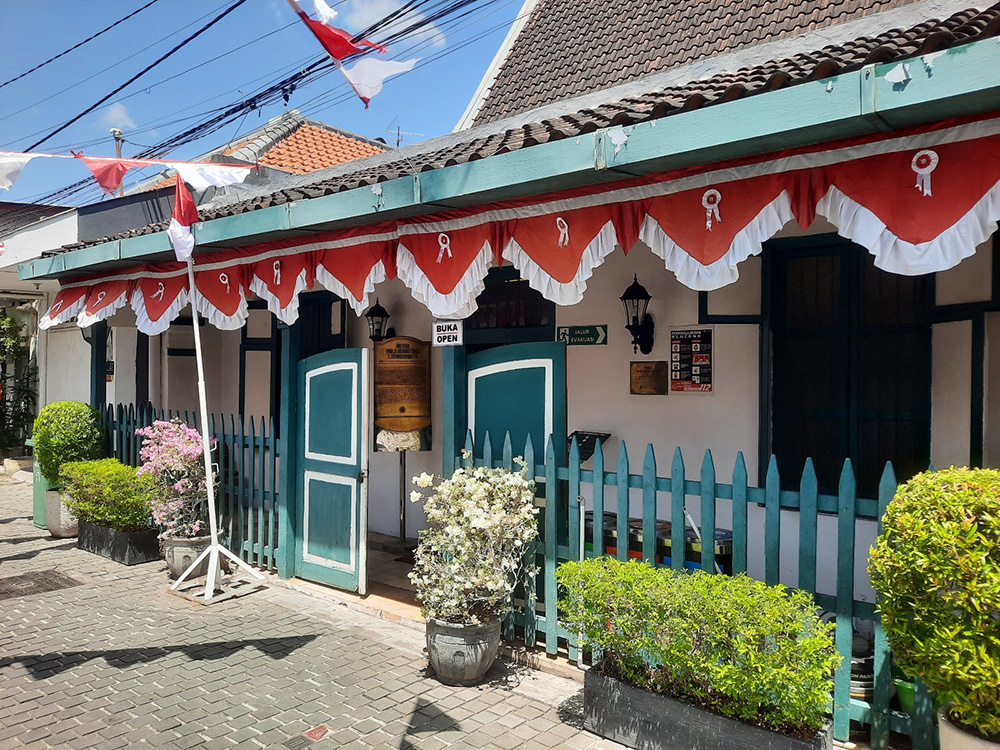
The old mosque Masjid Jami Peneleh (left) originally founded by Sunan Ampel in the 15th century.
Sunan Ampel was one of the Walisongo ( nine Sufi-mystic saints ) who blended Islamic teachings with existing Javanese traditions, art, and wayang (shadow puppetry).
Sukarno, lived nearby in the boarding house (right) of the prominent nationalist leader H.O.S. Tjokroaminoto. This home and the nearby mosque served as a central gathering point for Sukarno and other young, future founding fathers.
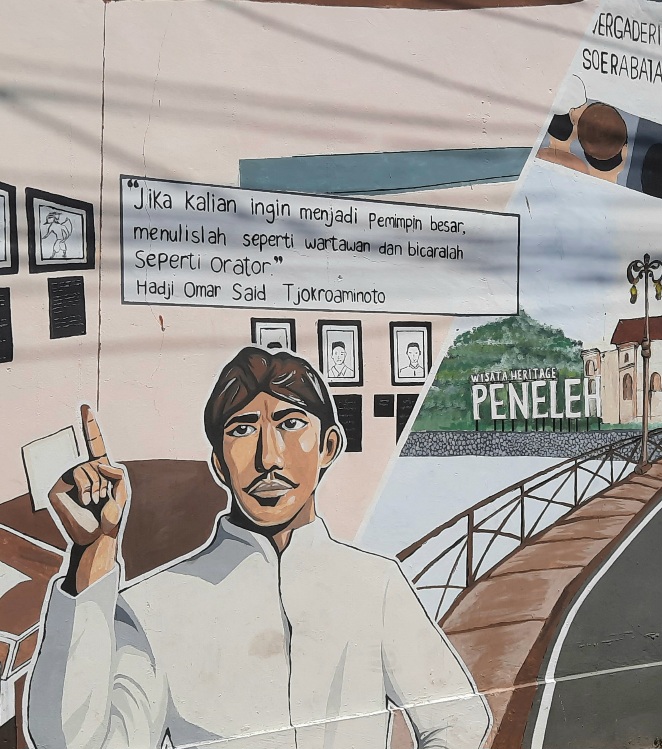
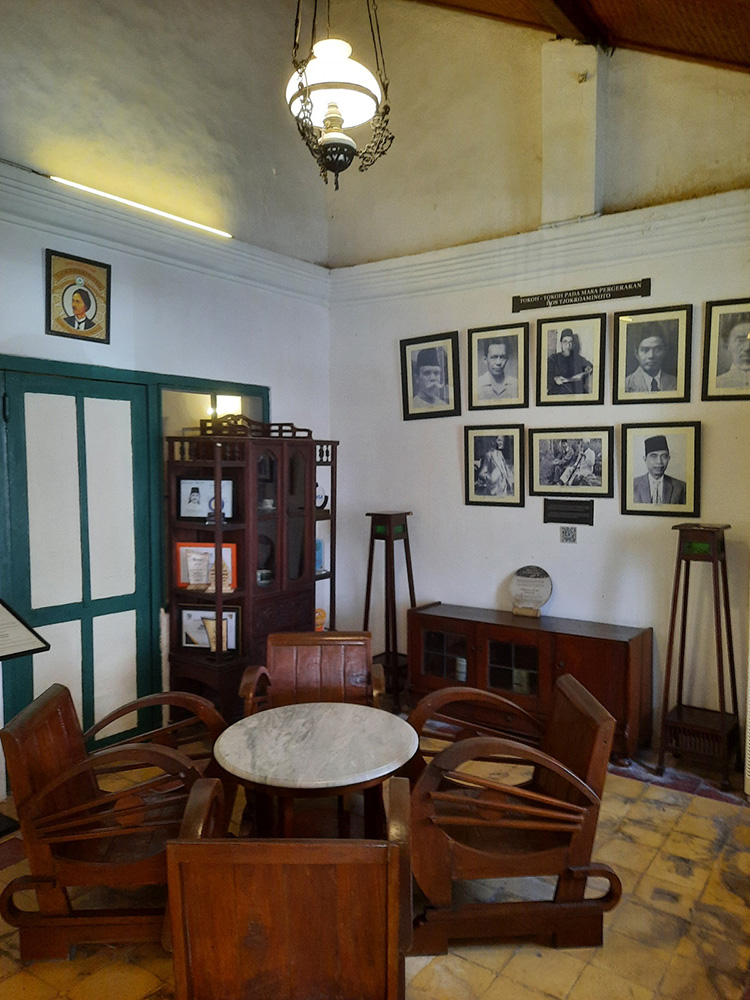
Tjokroaminoto introduced Sukarno to anti-colonial policies and public speaking.
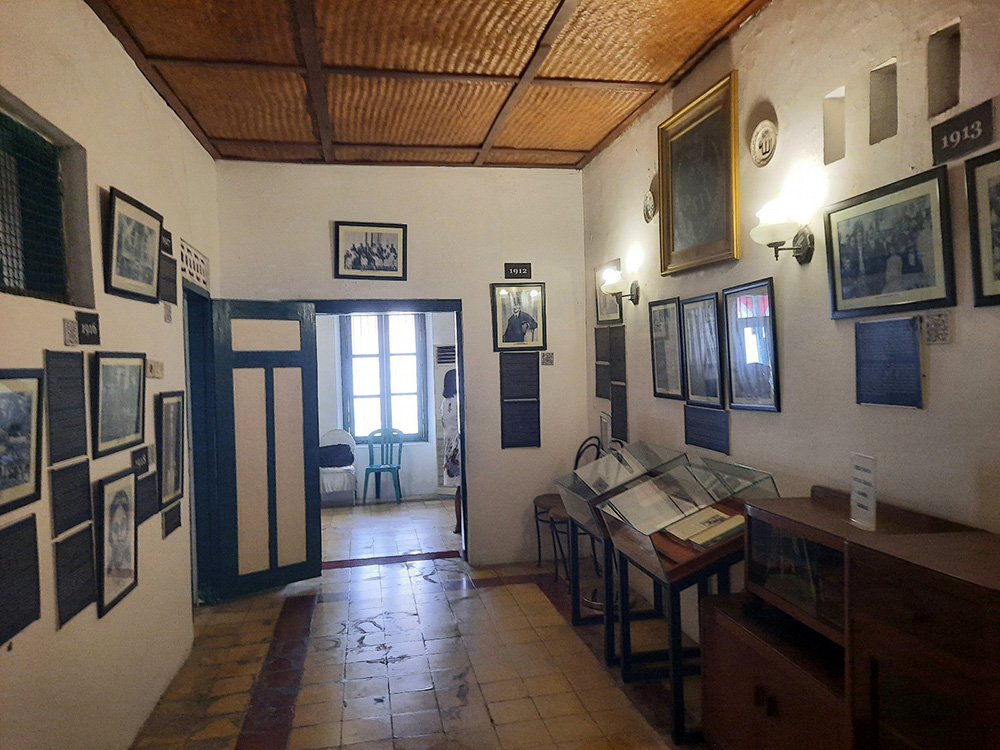
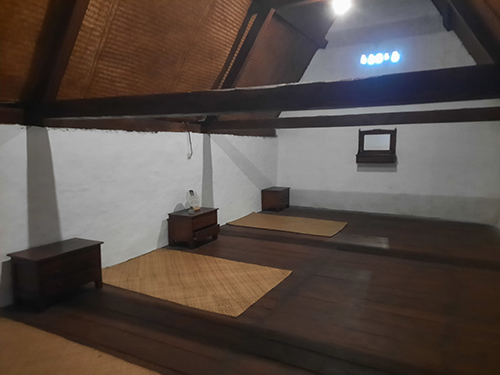
Home of Tjokroaminoto with simple sleeping area upstairs shared by Sukarno and fellow students.
Peneleh Dutch Cemetery – Makam Belanda Peneleh
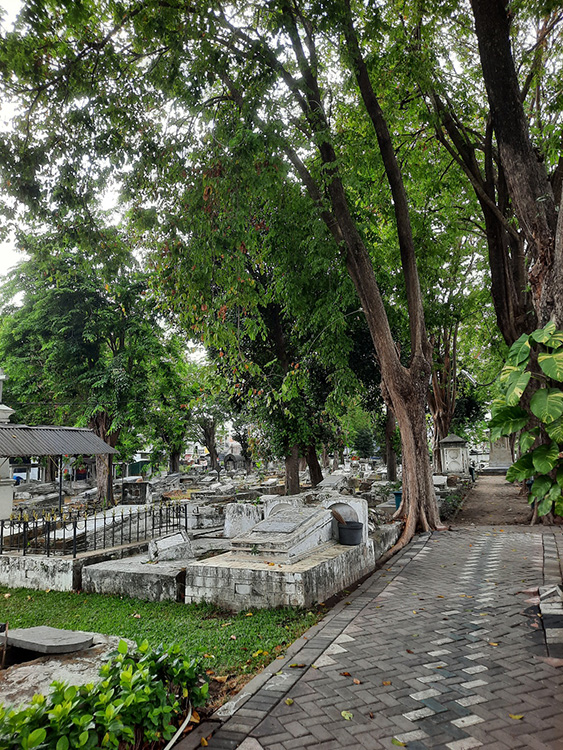
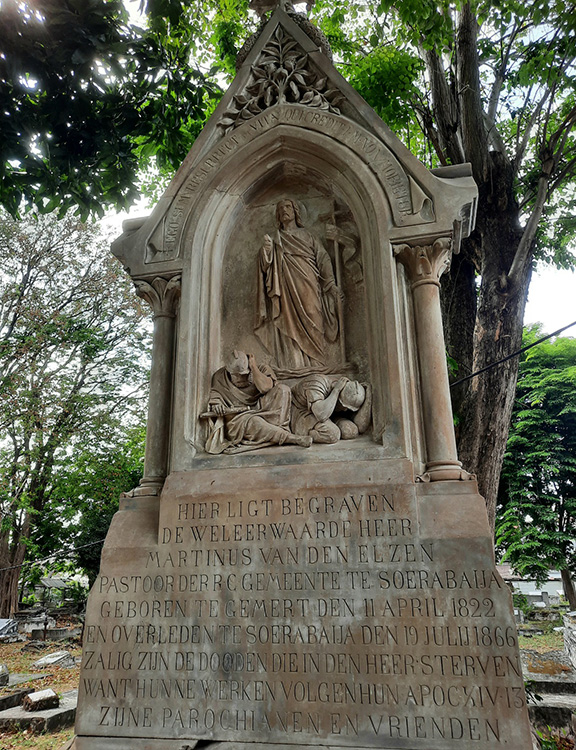
The Peneleh Dutch Cemetry functioned as a civilian European cemetery between 1847 and 1964.
Here in the shade of trees are ornate graves and the final resting places of notable officials from the Dutch East Indies including quite a number of Dutch women, widows and their children. You will also see graves of local Javanese, Chinese, and Japanese residents. Some of the headstones reading “Never to be forgotten” have cracked or shifted from tree roots. The Peneleh Dutch Cemetery is a quiet space to reflect on Surabaya’s colonial and multicultural past.
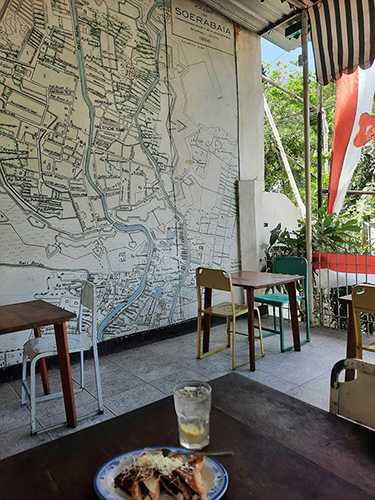
Nearby is a little coffee shop filled with memorablia of a bygone era to contemplate life not so long ago.
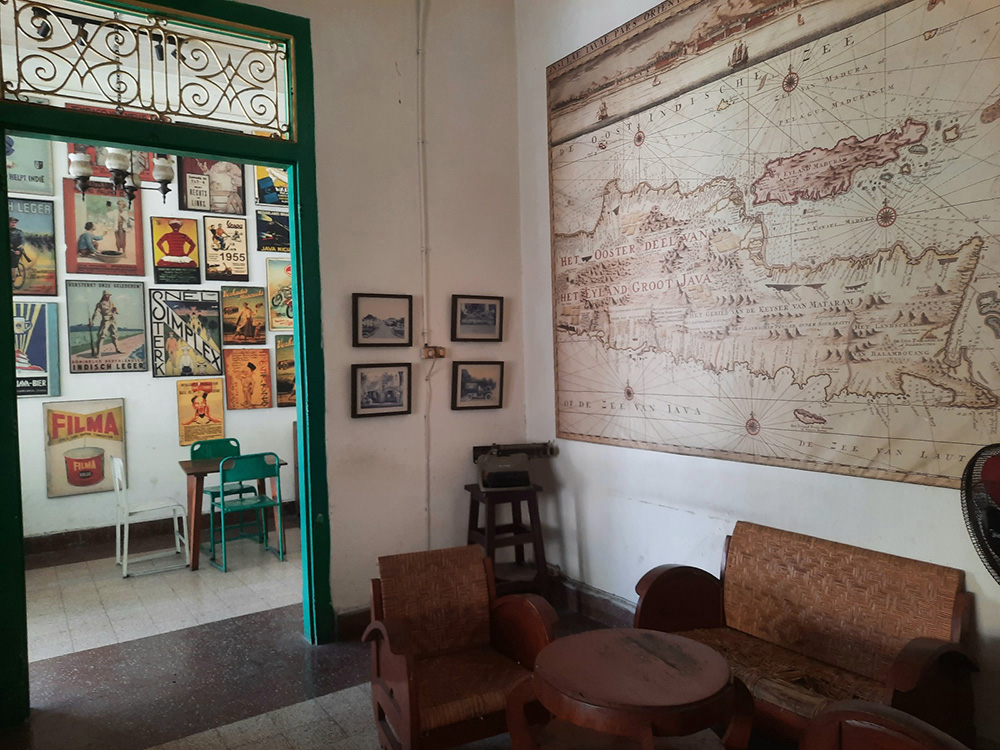
Love the old posters of a bygone era.
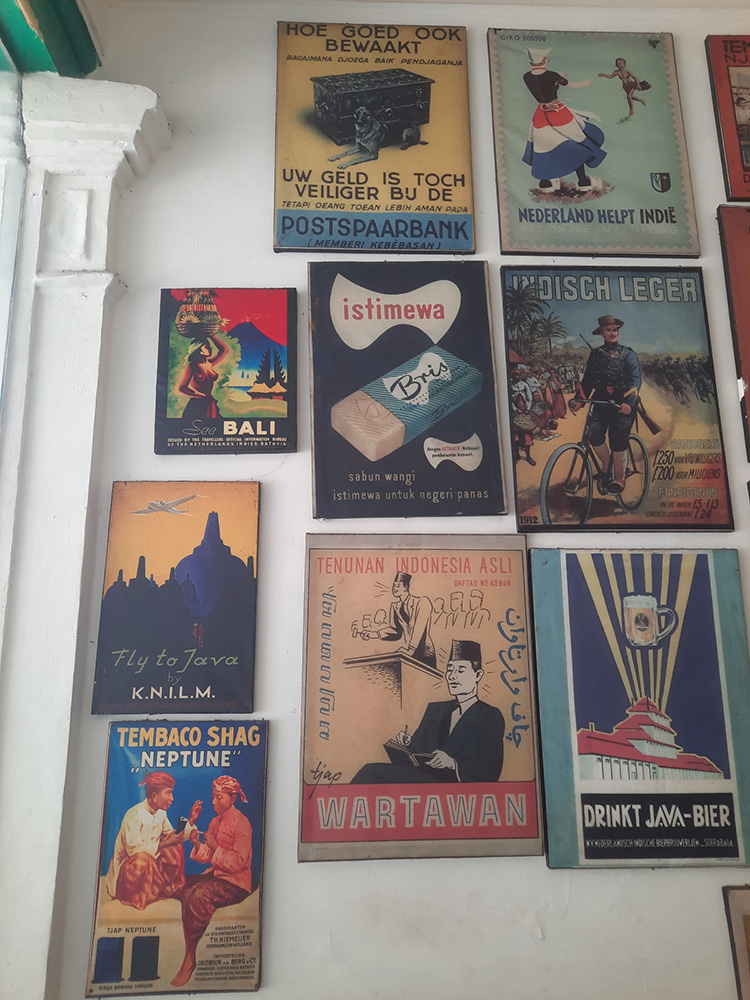
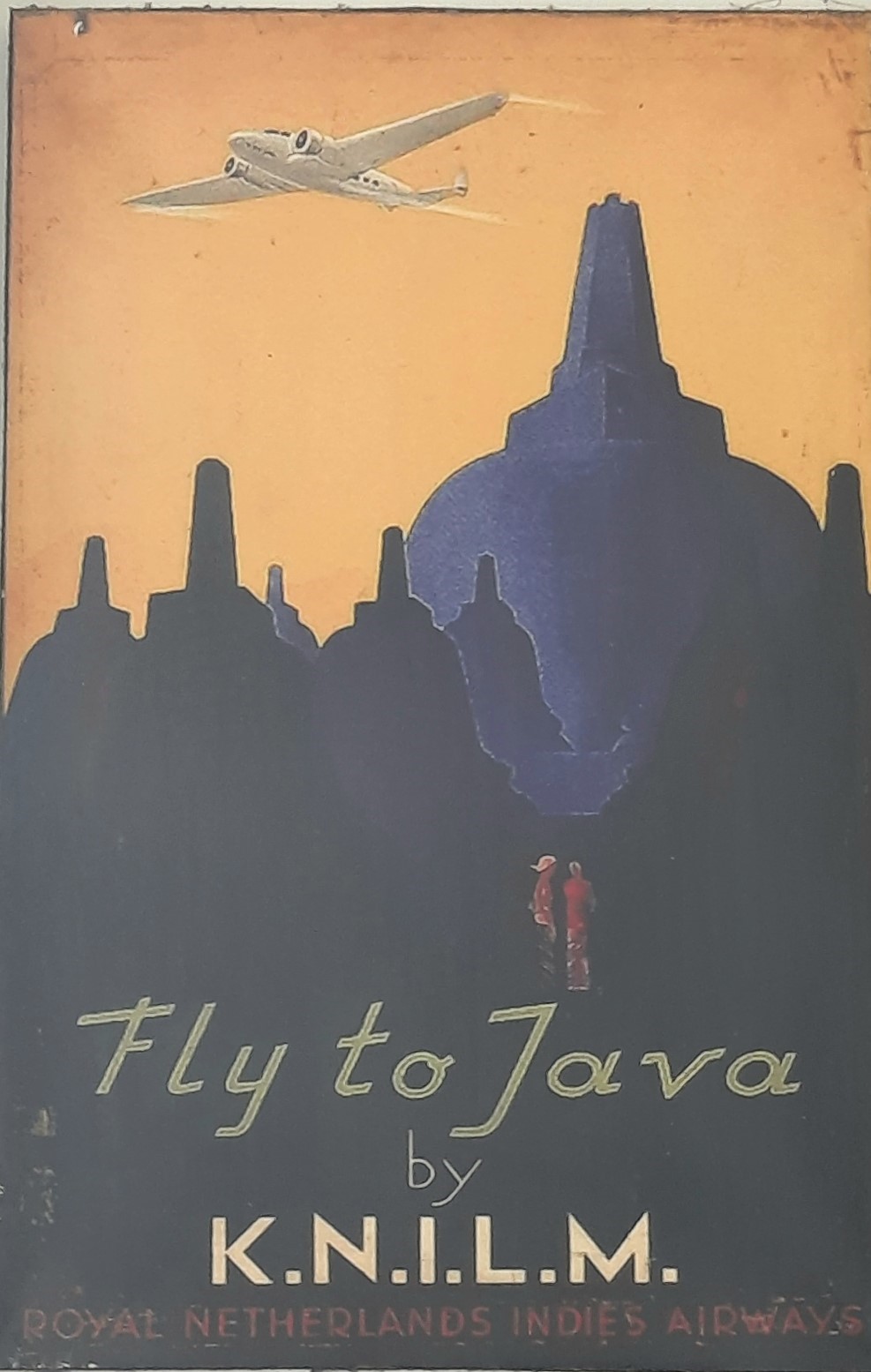
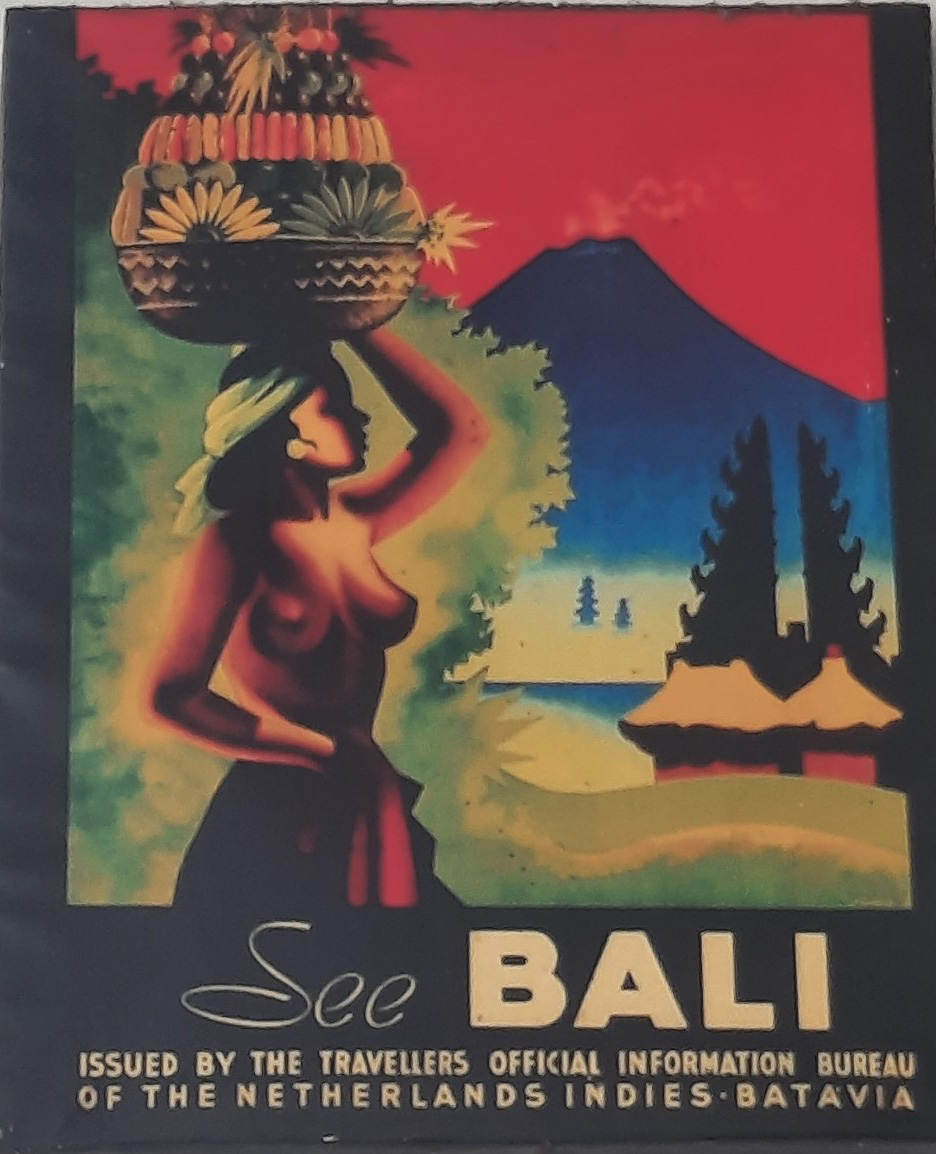
KNILM (Koninklijke Nederlandsch-Indische Luchtvaart Maatschappij or Royal Netherlands Indies Airways)
was founded in 1928, to operate flights within the Dutch East Indies.
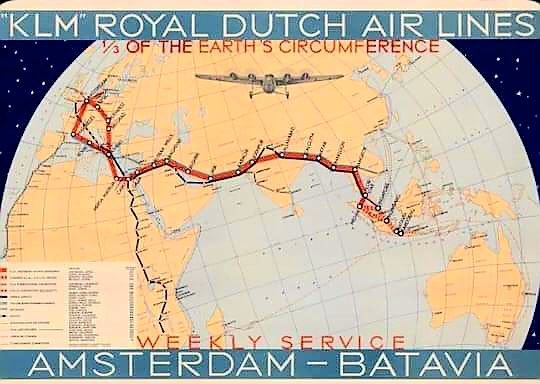
KLM Royal Dutch Airlines Route Map from the 1930s
The first test flight from Amsterdam to Batavia ( now Jakarta ) in 1924 using a Fokker F.VII took 55 days. By 1935 regular passenger and mail services using a Douglas DC-2 aircraft, KLM cut the journey down to 5.5 days making about 25 stops along the way. With overnight stops, the journey was made entirely with the same crew. Imagine the stories from those flights!
Brings back memories of my own early KLM days back in 1979 just prior to going computerized, when we still did reservations manually and hand-wrote air tickets!
KNILM was officially dissolved following World War II and assets and aircraft were transferred to a new subsidiary created by KLM known as KLM Interinsular Bedrijf- to manage inter-island flights.
Following Indonesia’s independence, the Indonesian government nationalized KLM Interinsular service and the nationalized entity was transformed into Garuda Indonesian Airways– the new national carrier.
Back in the day of Garuda service from Los Angeles to Bali- the flight made stops in Honolulu and Biak.
These flights across the Pacific also felt more like a journey- with the local Papua dancers meeting the Garuda DC-10 landing in Biak- at sunrise when it was on time. Wish I had pictures of that.
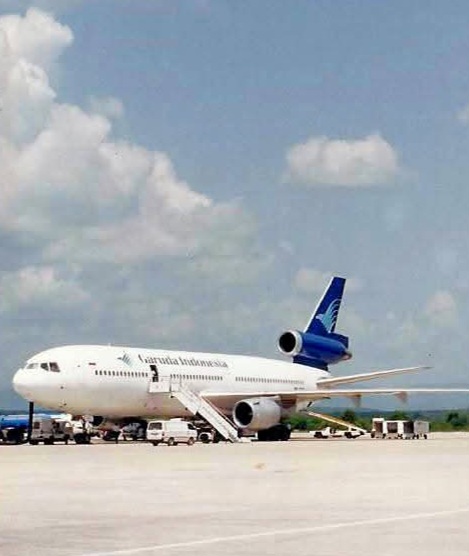
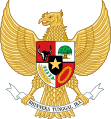
Garuda-the vehicle of Lord Vishnu became the national emblem- Garuda Panacila of Indonesia with the motto Bhinneka Tunggal Ika (“Unity in Diversity”)
Tugu Pahlawan ( Heroes Monument )
a short drive across the river from Peneleh
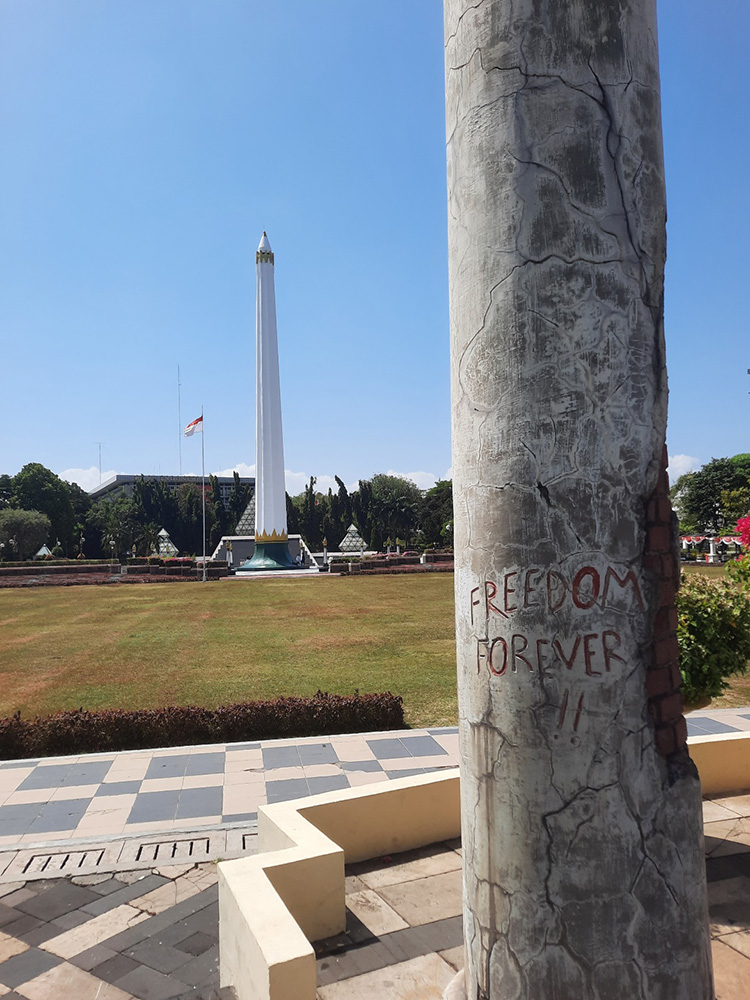
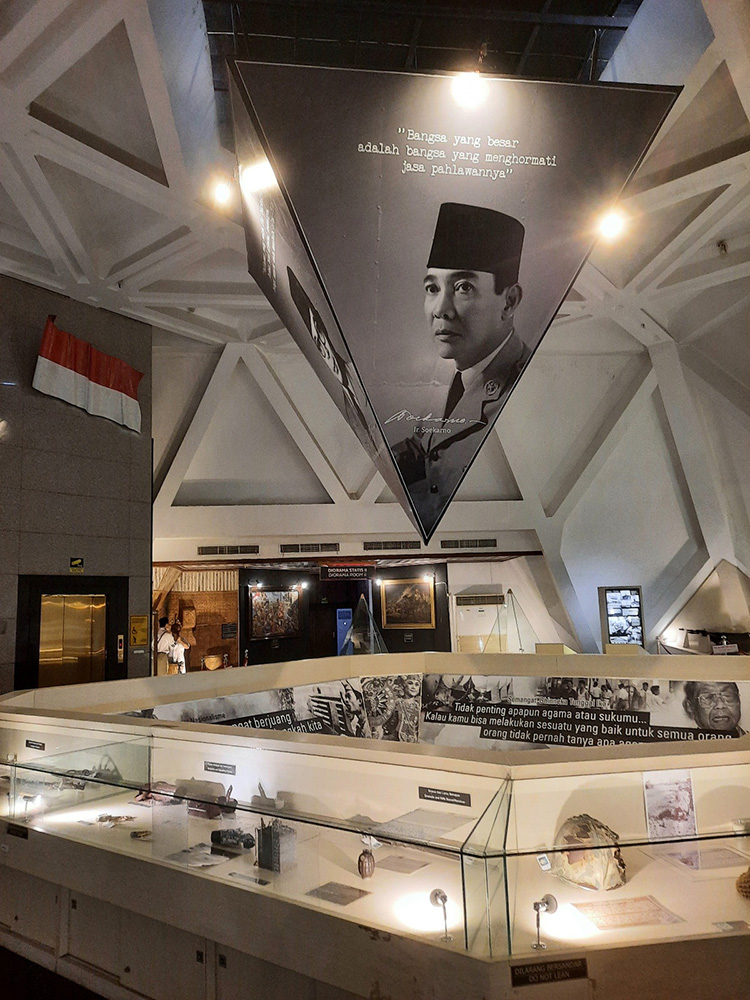
The monument standing 41.15 meters tall in the shape of an inverted nail (paku terbalik) symbolizing sharp focus and a piercing spirit, has 10 arches and 11 sections symbolizing 10 November 1945 honoring the ultimate sacrifice, resilience and unity of the Indonesian people.
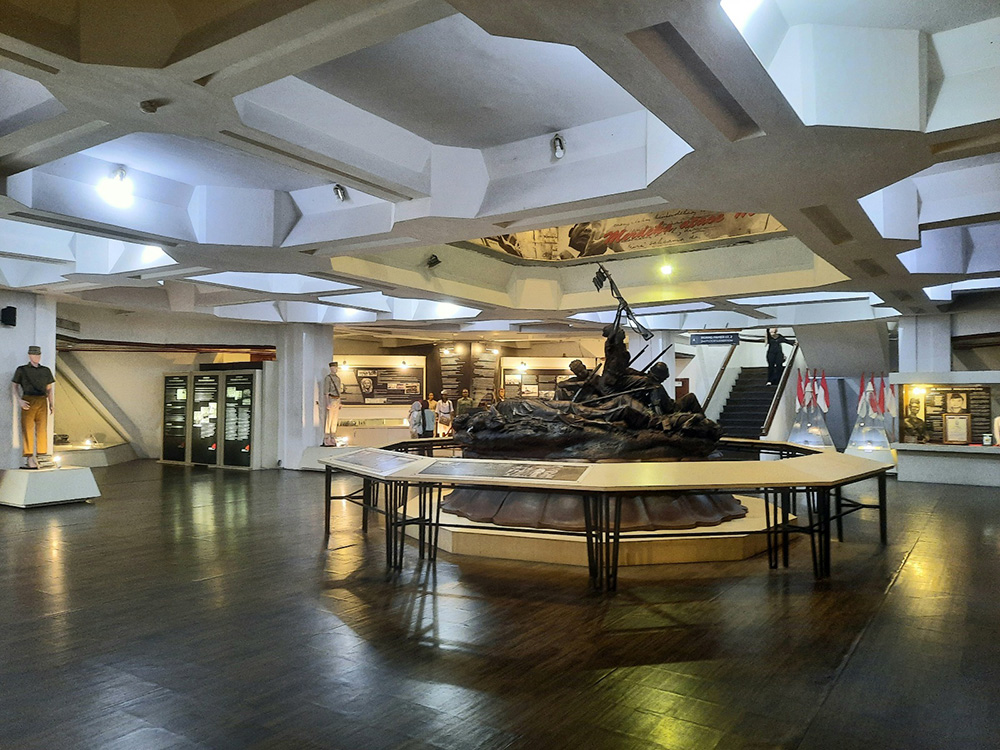
The underground 10 November Museum houses historical dioramas, weapons, audio recordings of fiery speeches, and artifacts that educate future generations on the cost of freedom.
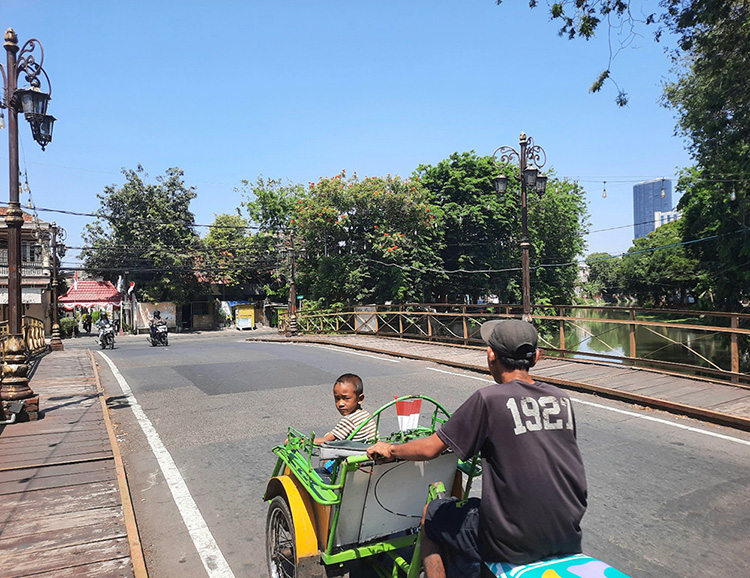
Peneleh Bridge Surabaya
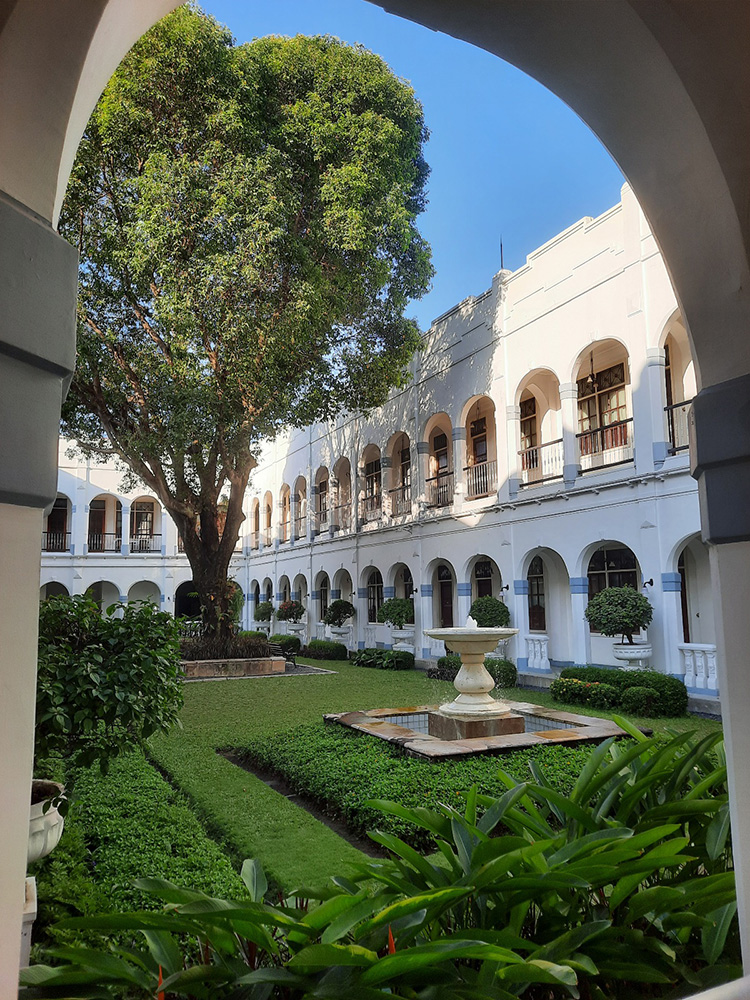
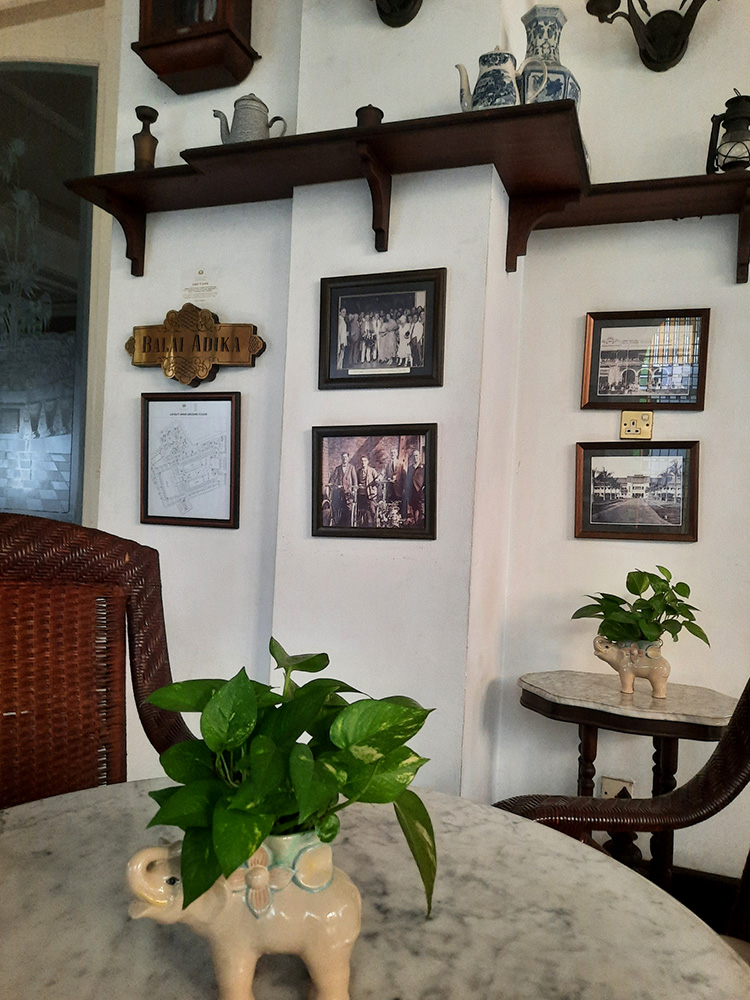
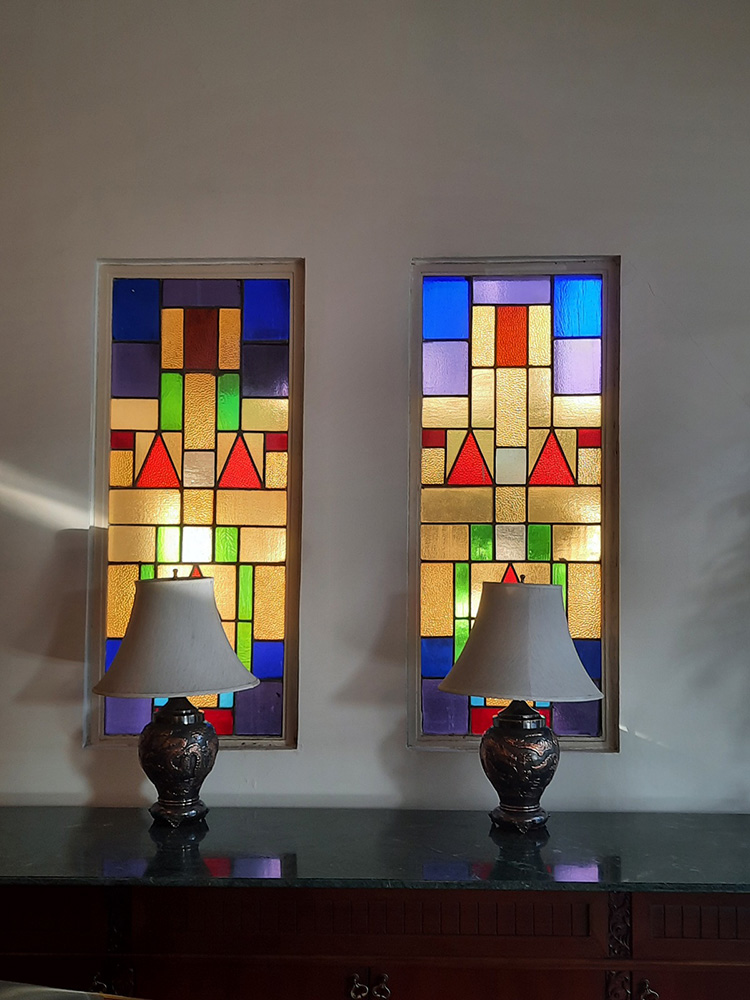
Feeling the past at the Majapahit Hotel
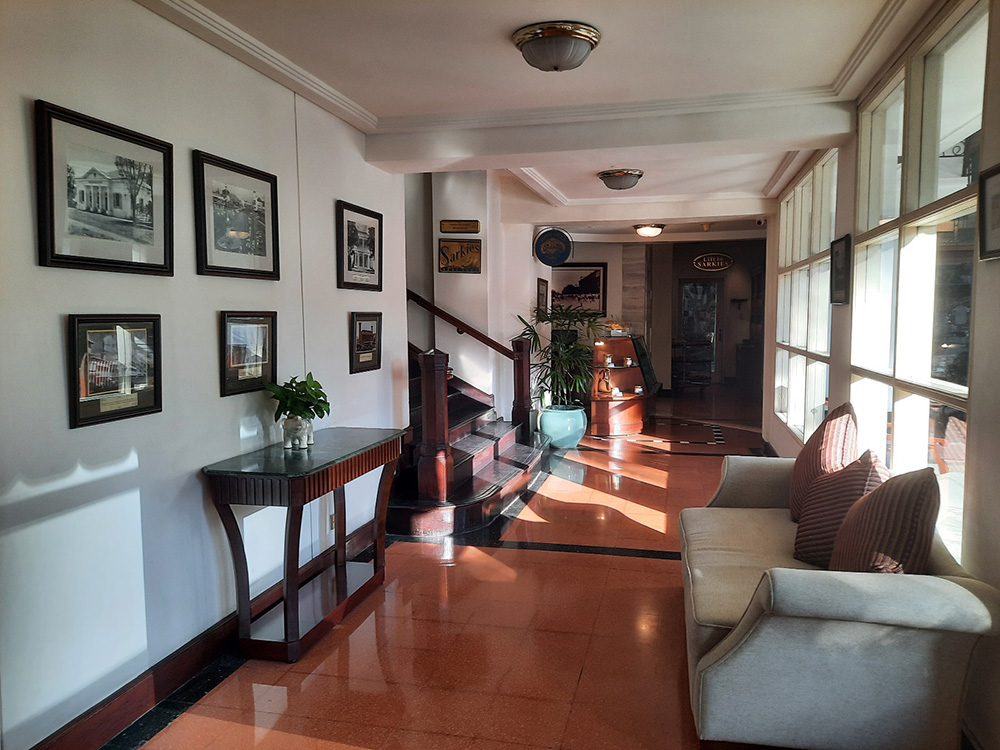
Stepping into the hotel is a lovely retreat from the heat. The hotel has gone through three name changes. Originally built in 1910 during Dutch times, it was first known as Oranje Hotel by Lucas Martin Sarkies of the famous Armenian family whose collection included Raffles in Singapore, The Strand in Rangoon, and the E&O in Penang. In 1942, the Japanese took over as Hotel Yamato until 1946 when the Sarkies family took back management. In 1969, the hotel was renamed The Majapahit and after a 10-year partnership with Mandarin Oriental Hotels, The Majapahit continues to operate on its own, honoring the former East Java Majapahit Empire (1293-1527) and preserving its 20th century colonial heritage.
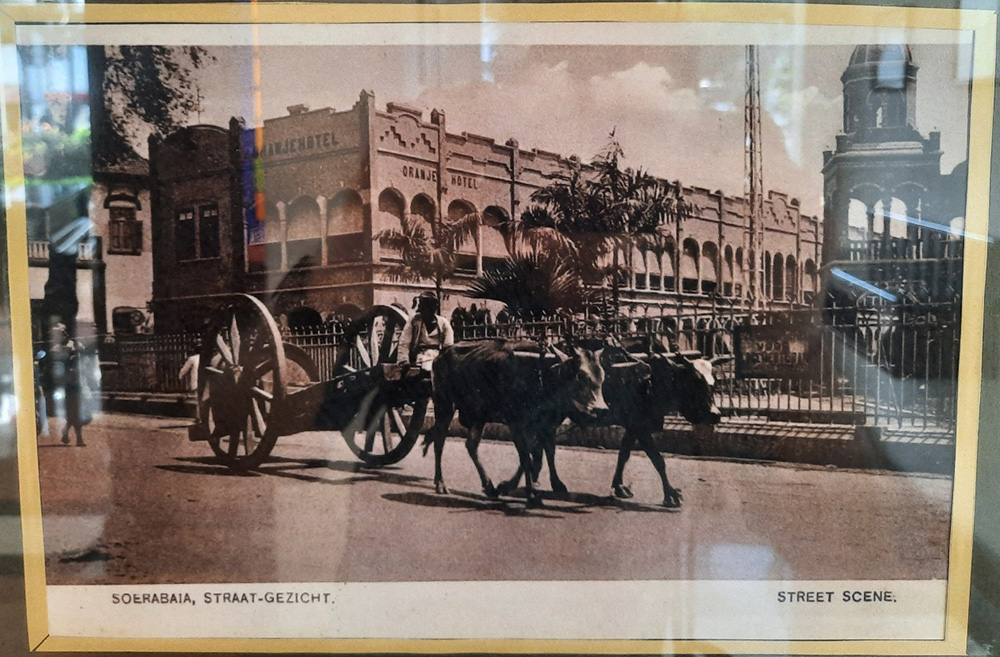
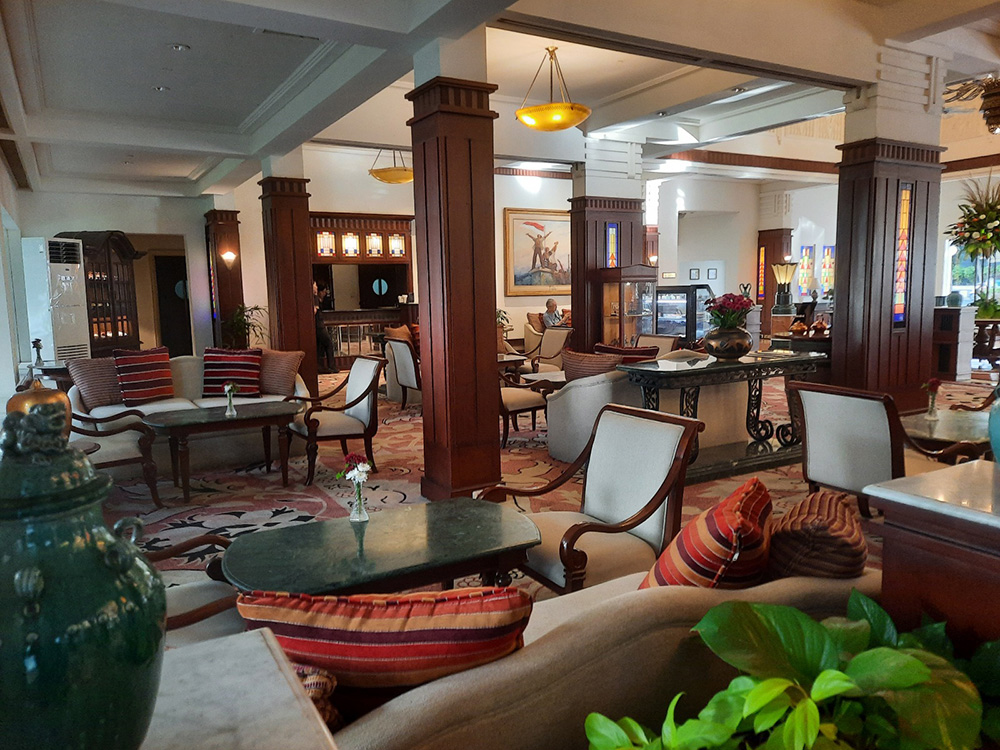
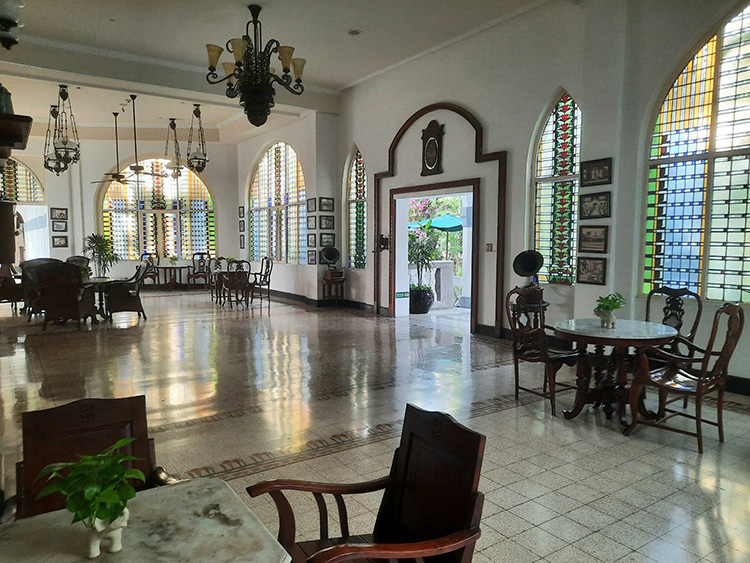
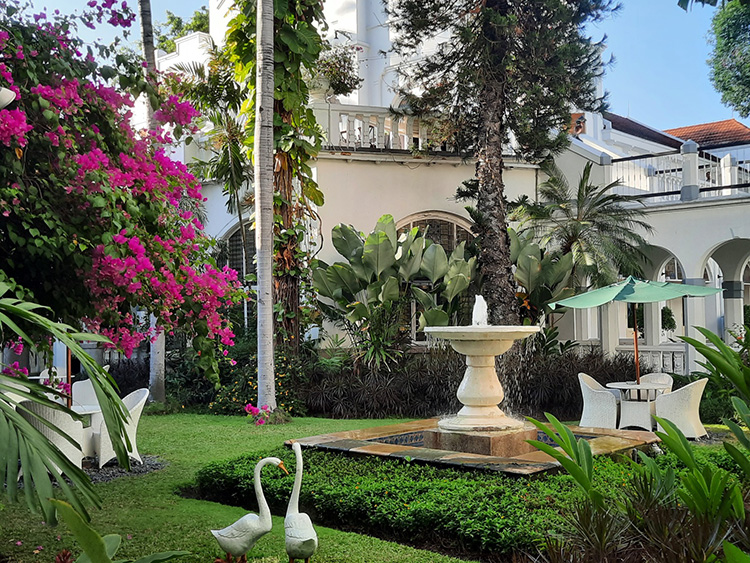
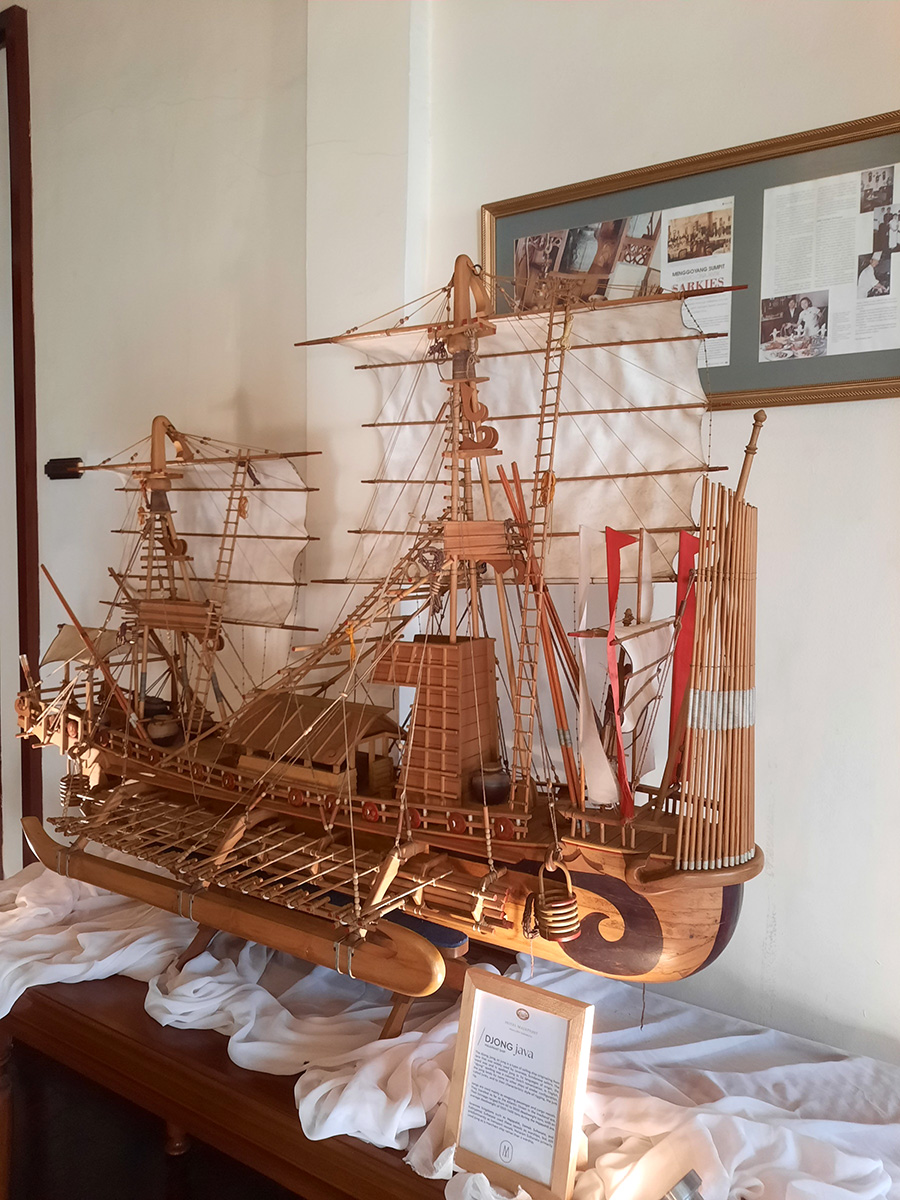
Djong Java– a model of Majapahit ship on display at the hotel.
The djong was a colonial Dutch romanization of the jong ships, similar to junks. Their tonage ranged from 40 to 2000 deadweight tons. Historical records note individual ships carried 500 to 1,000 people including sailors, merchants, and armed guards for Majapahit naval expeditions.
Cargo included cloves, nutmeg, mace, and pepper gathered from eastern Nusantara islands.
Rice, textiles, local forest products, metals, and fine crafts were traded throughout regional and international ports connecting Java with Sumatra, the Malay Peninsula, Siam, Indo-China, China, and eastern India. Large Javanese jongs actually also navigated far across the Indian Ocean and around the Cape of Good Hope.
Indonesia may be a young modern nation, but the islands carry centuries of history. European traders fought over spices which were the gold of the earth at the time. The Dutch East India Company (VOC) finally managed to control the monopoly from 1602 to 1800 after which the Dutch state took direct colonial rule. The British still had a stake in a small island called Pulau Run in the Banda Sea. Under the Treaty of Breda in 1667, this tiny island of nutmegs ended up being swapped for New Amsterdam which the British renamed New York!
Life is full of amazing stories!
Surabaya today has also grown into a city of high-rise buildings and trendy shopping malls. Often overlooked by tourists, but for those interested in history, there is alot to explore in Surabaya.
Travel more in East Java:
Blitar- where Sukarno was laid to rest, the lovely Tugu Blitar Hotel and learn about a legend of Mount Kelud: https://alamasia.net/blitar-east-java/
Candi Penataran: the largest ancient Hindu temple complex near Blitar:
https://alamasia.net/candi-penataran/
Main Indonesia Page: https://alamasia.net/asia-destinations-news-and-links/bali-and-indonesia/
Selamat Jalan!- Travel Gently and Live Consciously