connecting
people and cultures – inspiring journeys
sharing meaningful discoveries in Asia
 About Alam Asia Net
Asia Destinations News and Links
Journeys and Stories
Support Campaigns and Projects
Alam Indah Bali
Reading, Films, Music
Inspirations
Retreats
Some Favorite Images
About Alam Asia Net
Asia Destinations News and Links
Journeys and Stories
Support Campaigns and Projects
Alam Indah Bali
Reading, Films, Music
Inspirations
Retreats
Some Favorite Images

Sukarno Memorial, The Tugu Blitar Hotel and a Legend of Mount Kelud
September, 2026

Entrance to the lovely Tugu Hotel Blitar
Blitar is a small, quiet city located in the southern part of East Java- approx 70 kilometers southwest of Malang. Fertile soil from nearby Mount Kelud has helped develop the region around Blitar into a prominent agricultural and trading hub. Blitar also holds deep cultural and historical importance in Java, bridging ancient kingdoms and modern independence movements. In 1945, Blitar was the site of the Defenders of Homeland revolt against Japanese occupation forces, cementing its reputation as a “heroic city.” The first president of Indonesia, Sukarno, spent part of his childhood in Blitar, and it where he was laid to rest.

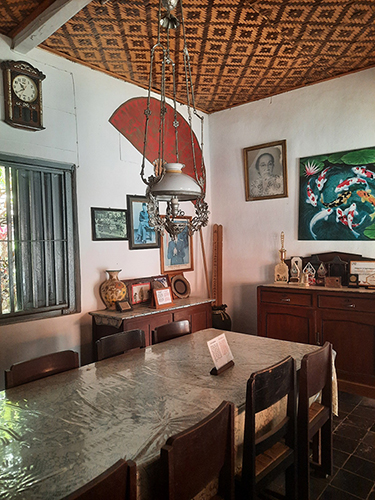
Sukarno was born in Surabaya in 1901, but his parents moved to Blitar in 1917 with his father’s teaching assignment. Sukarno’s high school years were mostly at boarding school in Surabaya but he spent school holidays with the family in Blitar. The family home known now as Istana Gebang, has been preserved as a museum housing personal family belongings, furniture and old photographs.

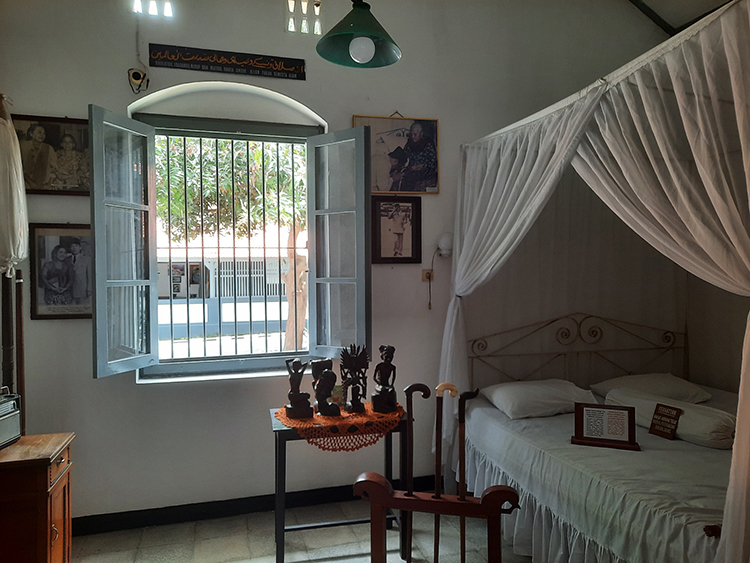
Reception/living area and to the right, Sukarno’s bedroom.


The Mercedes 190 to the right now on display was used by Sukarno in later years as president when on trips to Blitar.
Sukarno’s Tomb
Following his removal from power by General Suharto and subsequent house arrest until his death in 1970, Sukarno was buried in Blitar next to his parents.


Although Blitar being a remote resting place, the tomb of Sukarno has evolved into a popular nationalist and spiritual shrine attracting over 1.5 million visitors each year.
Bung Karno Museum and Library
Nearby the tomb this museum and library is filled with personal artifacts, rare photographs, and national memorabilia detailing the life of Sukarno who remains revered as Indonesia’s father of independence.


Sukarno’s hopes for a new beginning and meeting heads of state.


Sukarno was a powerful and charismatic leader and is often misunderstood outside Indonesia.
He stepped into leadership at a chaotic time, inheriting the massive burden of a newly independent nation. Although his fierce charisma and deep love for Indonesia was unquestionable, he ultimately fell short of achieving his vision for its future.
Learn more about the Bandung Conference (1955) where Sukarno hosted leaders from 29 newly independent Asian and African nations to promote sovereignty, self-determination, and economic cooperation outside of Western and Soviet influence:
https://alamasia.net/halo-bandung-halo-sunda/
Hotel Tugu Blitar
This delightful boutique hotel dates back to the 1850s with the main building a former residential mansion of a Javanese family. After World War II, the property was turned into a hotel. President Sukarno often stayed in one of the suites which to this day is still preserved as it was during that time.
Eventually the property was taken over by Tugu Hotel group and expanded to showcase the owners antique collections. It’s one of those wonderful places where you can wander around, absorbing the atmosphere and take lots of pictures.
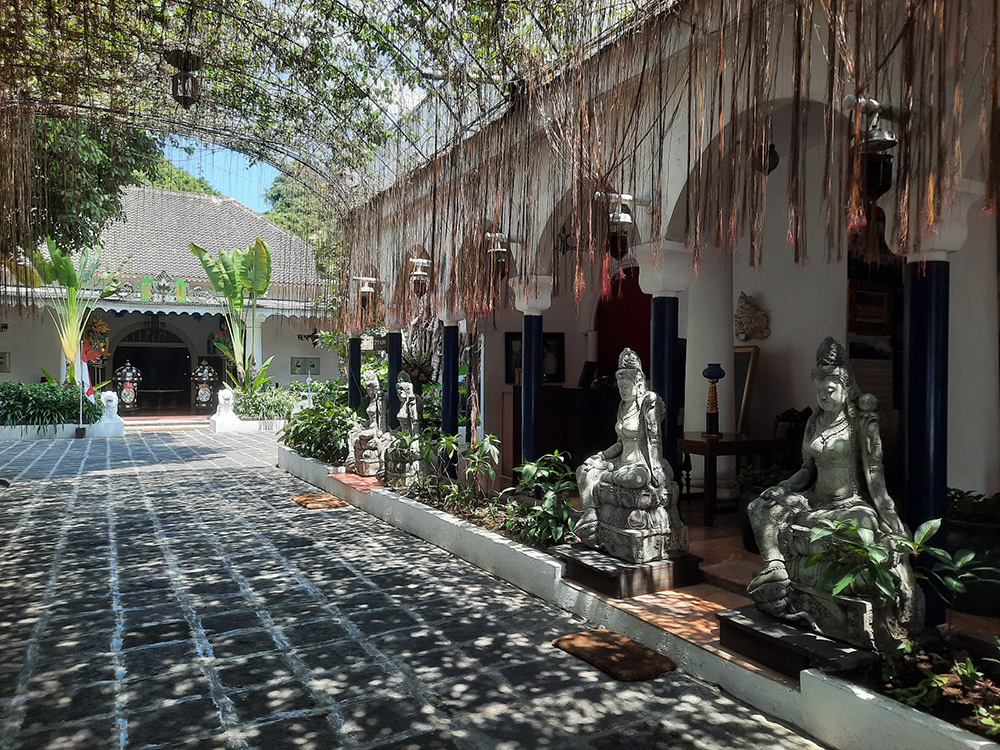
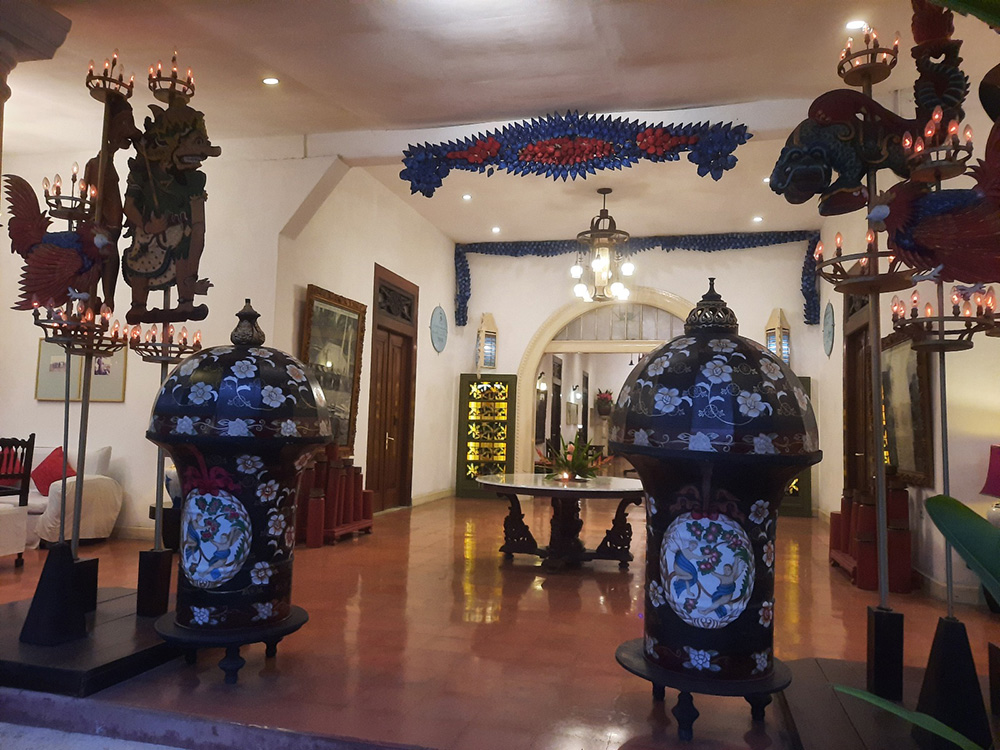
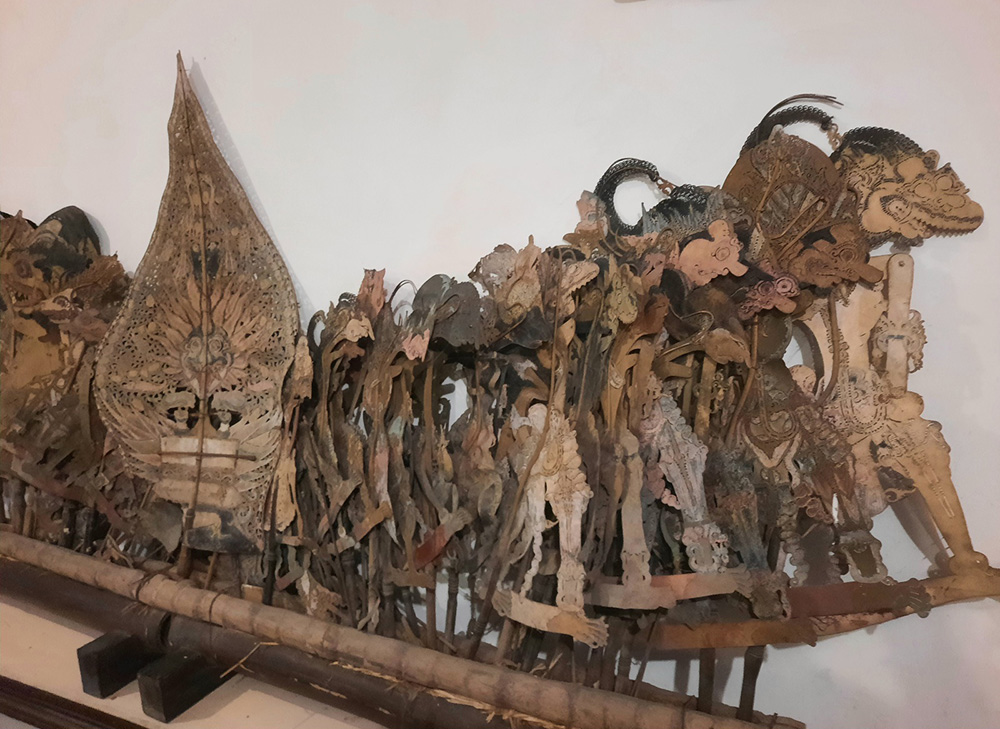
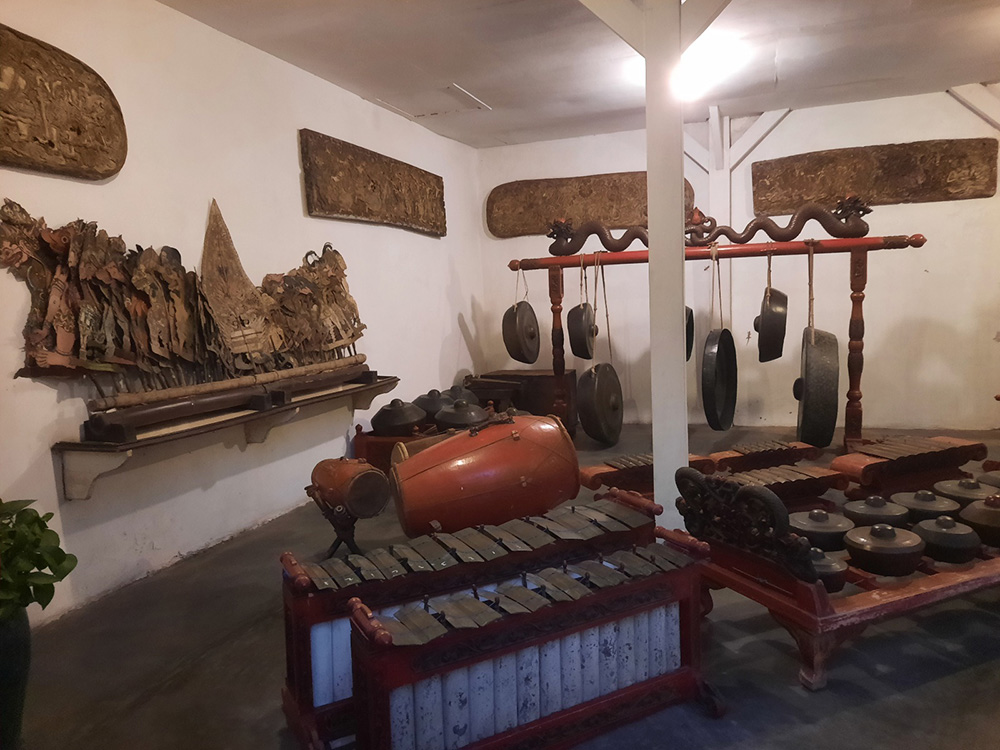

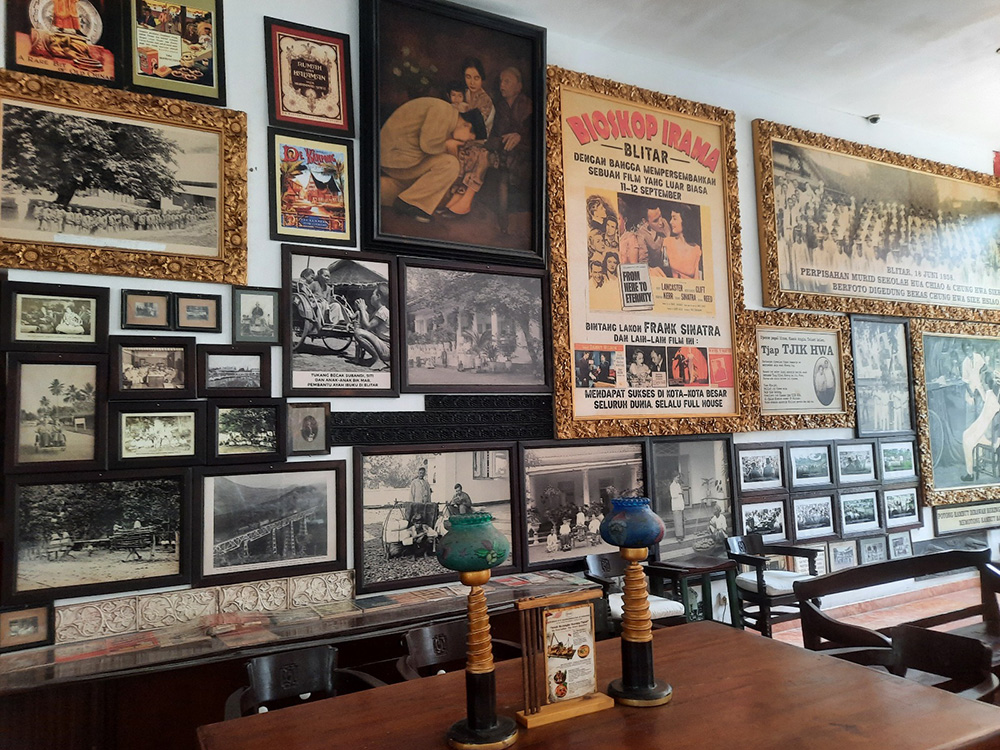

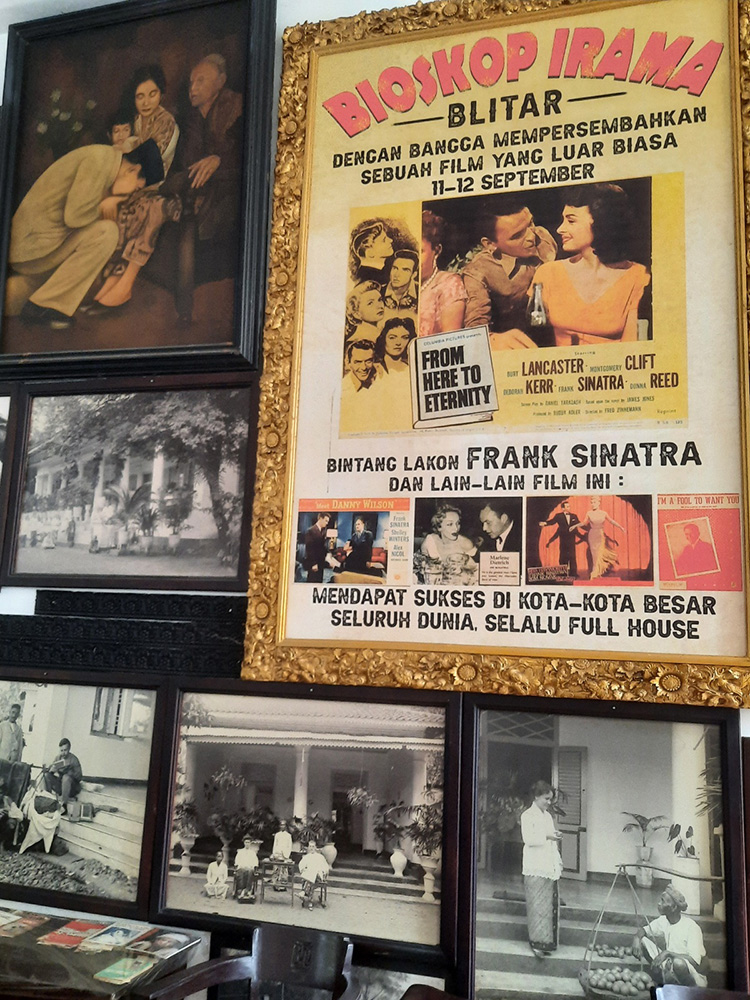
Love the poster of From Here to Eternity starring Burt Lancaster and Frank Sinatra which played in the Blitar Movie Hall. Marlene Dietrich films also showing in those days. Guess those films were not dubbed!

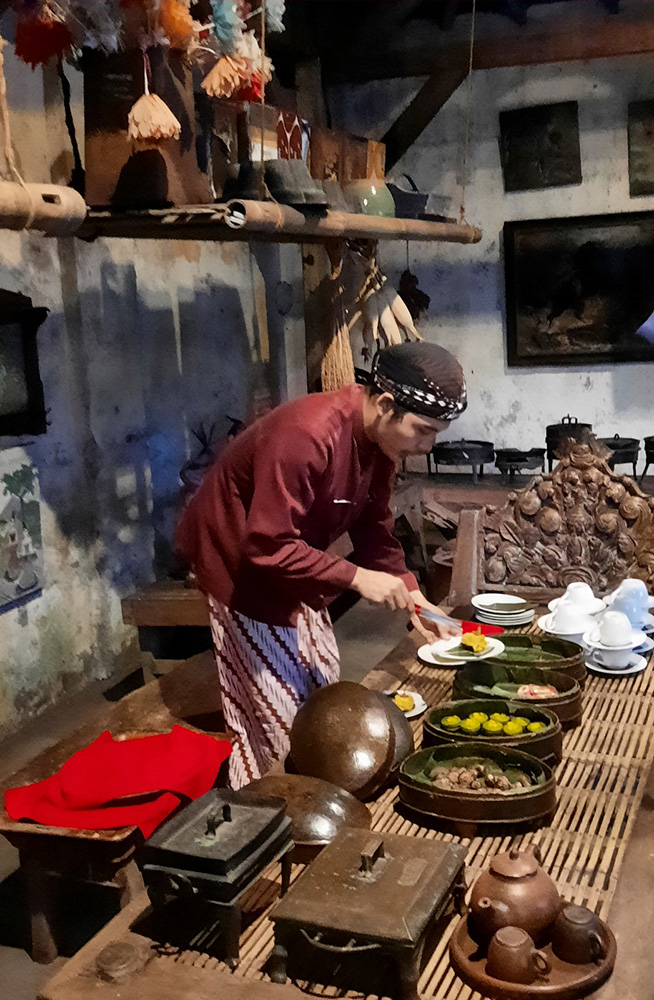
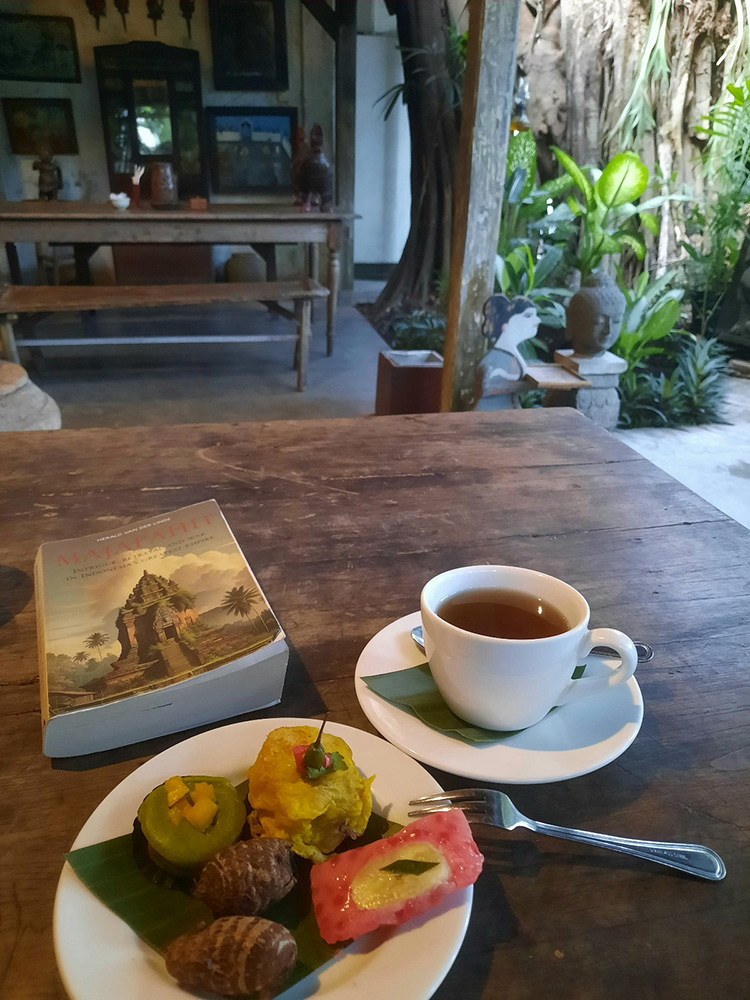
Delightful breakfast and afternoon tea at the Tugu.
Besides the suites which I could not get any pictures of, there are comfy rooms in the back garden area for a very reasonable price of around equiv. USD 20 per night!
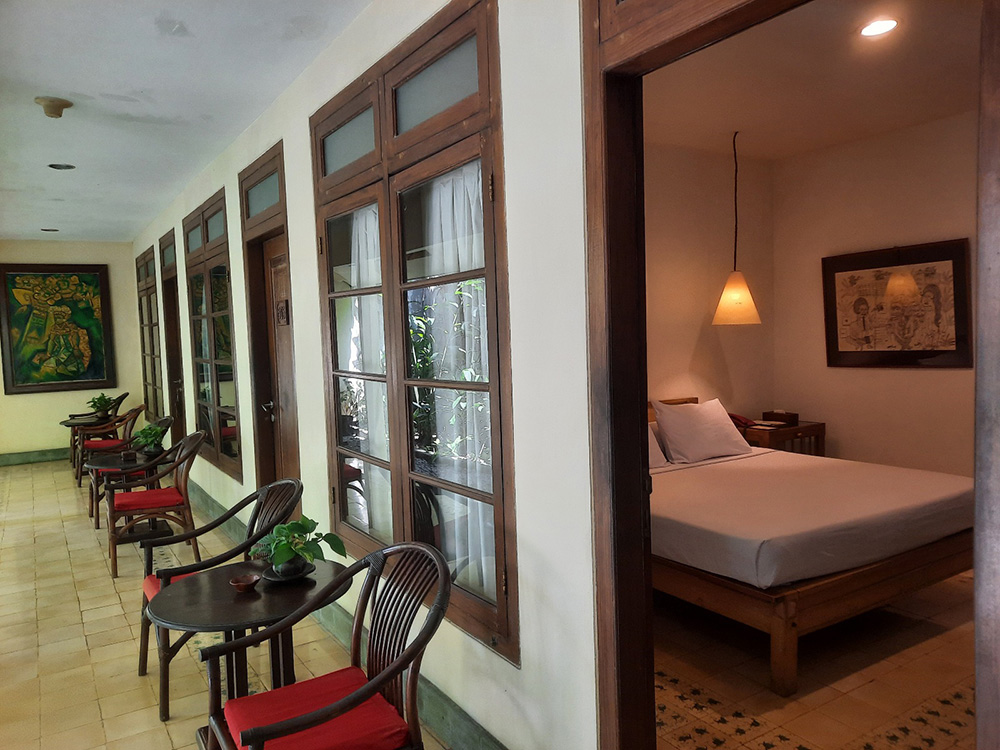
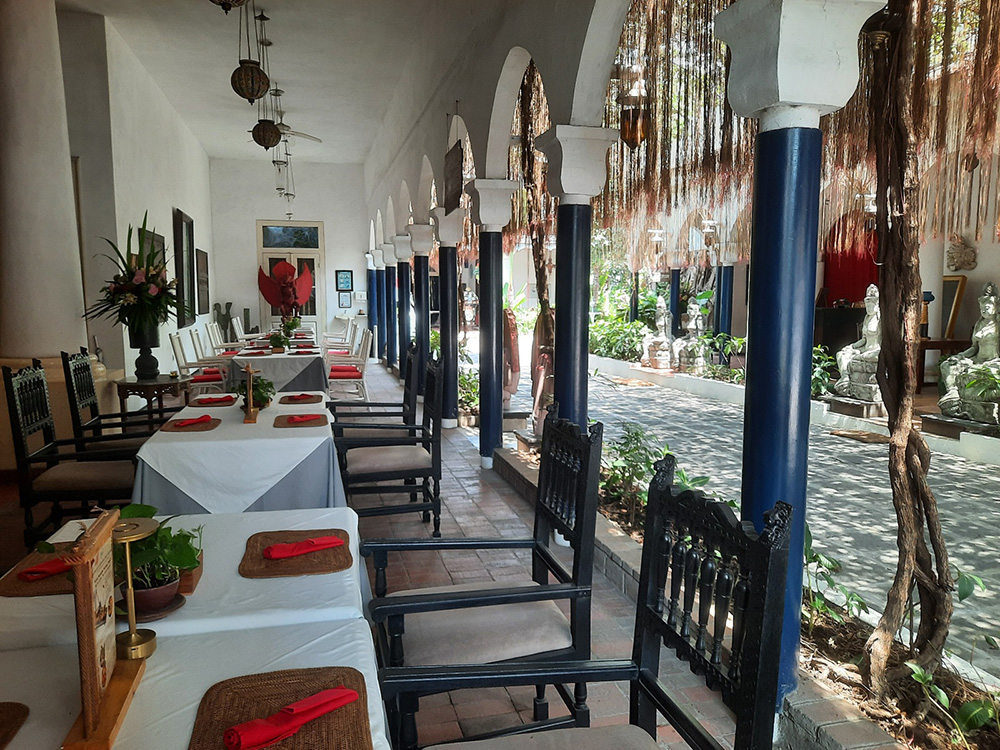
See more on: https://tuguhotels.com/hotels/blitar/
You may get to request the Presidential Suite where you can feel the spirit of Bung Karno.
The Tugu Malang is a more upscale property and a destination in itself if visiting Malang.
It is so nice to travel through Java. And train travel is easy and comfortable.
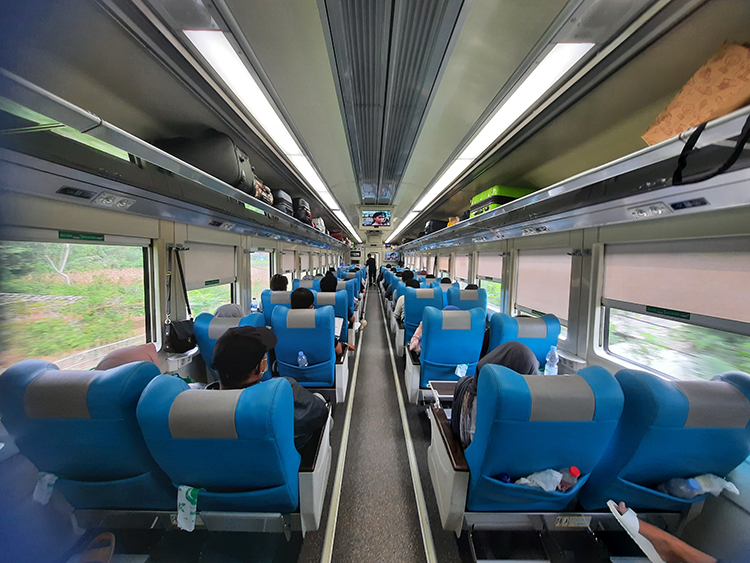
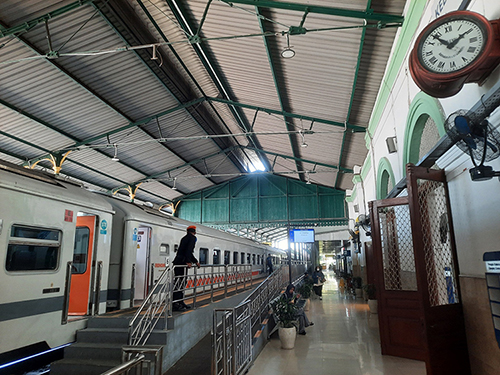
Executive Class very reasonable and worth it for the extra space, especially for longer trips.
There are also a few single seats which is nice if traveling solo.
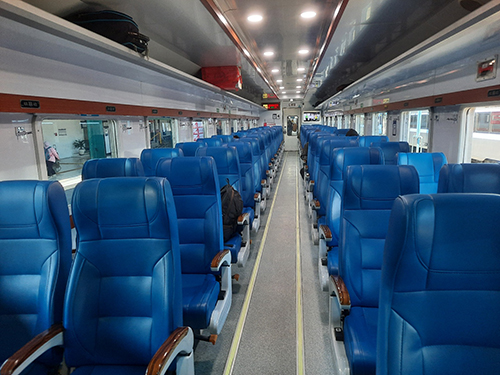
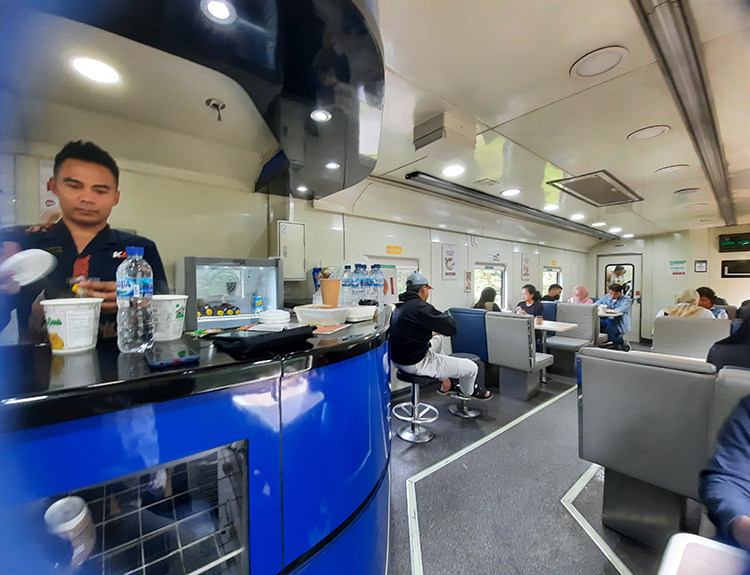
Economy class comfortable too, ideal for shorter trips. Snack car with some seating and staff also come around the train offering drinks and food directly to your seats.
So why not take a short train ride from Blitar to Kediri!
Kediri and the Legend of Dewi Kilisuci and Mount Kelud

Mount Kelud and its sacred lake- about 45 kilometers to the east of Kediri city.
An active stratovolcano 1731 meters high on the border of Kediri, Blitar and Malang regencies.
The dramatic rugged caldera and crater lake was formed from past volcanic eruptions. The lower slopes are dense green forests and plantations of pineapple, cloves and durian.
Kediri
Located in the Brantas River Valley, Kediri is a bustling trade hub and the second-largest economy in East Java province, famous for its agricultural processing, particularly sugar and tobacco.
Historically the city was the ancient capital of the Hindu/Buddhist Kediri Kingdom which flourished from 1042 until 1222. Kediri was established after King Airlangga split his Kahuripan kingdom to prevent a succession war between his sons.
Dewi Kilisuci
King Airlangga actually had a daughter- Sanggramawijaya Tunggadewi, the crown princess and designated heiress to the kingdom. Refusing the crown, she chose the quiet path of a hermit. This unexpected abdication left the royal court fractured as her brothers turned on one another, fighting bitterly over the crown. King Airlangga ended up splitting the land into two separate kingdoms.
While her brothers fought, their sister went into isolation and spiritual devotion inside the Selomangleng Cave near Kediri where she became known as Dewi Kilisuci.
Life for Dewi Kilisuci was not all peaceful in her cave. Her beauty still attracted men wishing to marry her.
The Buffalo-Head King Legend
Legends tell of powerful, non-human suitors who also attempted to force Dewi Kilisuci into marriage. Mahesa Suro had the head of a buffalo and Lembu Suro had the head of an ox.
Horrified by their appearance but terrified of their supernatural wrath if she refused them, Dewi Kilisuci devised a seemingly impossible challenge: dig two massive wells on top of Mount Kelud before sunrise—one well that smelled fragrant, and one that smelled foul or fishy.
Using their immense magical powers, both kings successfully finished digging the deep wells ahead of schedule. To carry out her trap, Dewi Kilisuci requested that both Mahesa Suro and Lembu Suro climb down into the deep wells to personally prove the distinct scents. Once they were trapped at the bottom, Dewi Kilisuci ordered her soldiers and the local villagers to rapidly dump massive stones and soil over the wells, burying both kings alive.
While both kings died in the trap, the dying words of Lembu Suro continue to be haunting. Before suffocating, Lembu Suro cast a terrifying curse vowing that every time Mount Kelud erupted, its fiery lava and ash would rain down to destroy the Kediri region in revenge. The twin wells they dug are said to have collapsed and merged into the crater lake.
Dewi Kilisuci spent the rest of her days meditating and praying for the safety of the kingdom at Selomangleng Cave.

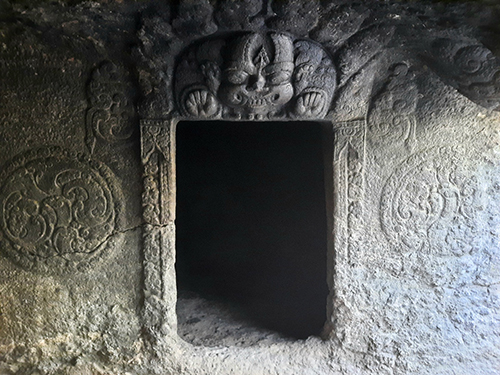
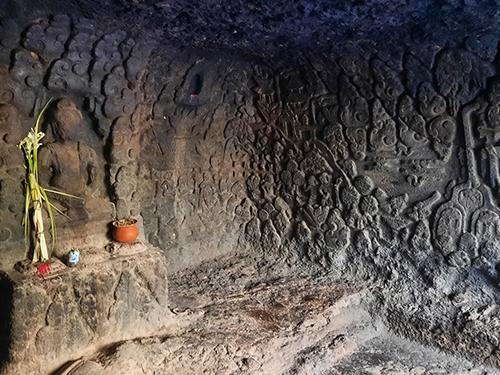
Dewi Kilisuci is believed to have achieved moksa ( spiritual liberation ) inside her cave.
To this day, local communities view both the active volcano of Mount Kelud and the dark, quiet chambers of Selomangleng Cave as profoundly sacred historical sites of devotion and sacrifice.
Annual rituals around the mountain are held offering food, prayers, and sacrifices into the volcanic crater to appease the spirits of the betrayed kings and to ward off the volcanic curse.
Mount Kelud last erupted in 2014.
Getting to Mt. Kelud is an easy 1.5 hour drive through the countryside from Kediri city. No hiking needed. From a car park filled with local food and fruit stalls, motorbike drivers can take you the last 5km up to the view point of the mountain and lake. At times hiking to the summit may be allowed with special permission.
Kediri -a relaxed, slow-paced provincial town

Simpang Lima Gumpul Monument
Styled after the Arc de Triomphe in Paris, this landmark of the city is covered in reliefs that tell the ancient history of the Kediri kingdom. Conceptualied by the regent of Kediri in 2003, the monument is a symbol of progress, prosperity and unification of modern-day Kediri people. The monument acts as a central roundabout tying together five major roadways branching off into Kediri’s regional areas. The four corners of the arch are adorned with statues of Ganesha, the Hindu deity of wisdom and guardian of obstacles.
Gudang Garam Dynasty
Kediri’s modern-day dynasty is run by the Wonowidjojo family controlling the massive Gudang Garam empire which began in 1958 producing clove cigarettes. Gudang Garam employs over 20,000 employees, mostly women who hand-roll, trim, and pack cigarettes at rapid speeds. The huge factory complex is behind massive walls. I did not get to experience the end of a shift when thousands of employees on motorbikes head home through the gates. Legally, Indonesian labor laws prohibit child labor, meaning these jobs are provided to adult women from local communities, bringing home vital household income.
If Indonesians were to smoke less, hopefully these ladies will find other employment opportunities.
The Wonowidjojo family has also diversified into heavy infrastructure, agribusiness, and aviation.
Gudang Garam developed and built the new Dhoho International airport just outside of Kediri city.

A state-of-the art facility with a 3,300 meter long runway capable of handling wide body jets. The ultra-modern terminal incorporates traditional Javanese motifs and local artwork with miniaturized candi (ancient temples). Operations began in 2024 but currently there are only 3 flights operating per week from/to Jakarta! Maybe in future there will be more air service.
So for now, it is still nice to continue from Kediri by road or train. to explore the classic cities and sites around Solo and Jogjakarta.
Solo and Jogjakarta can be reached in 3-4 hours by train to explore the classic cities and ancient sites.
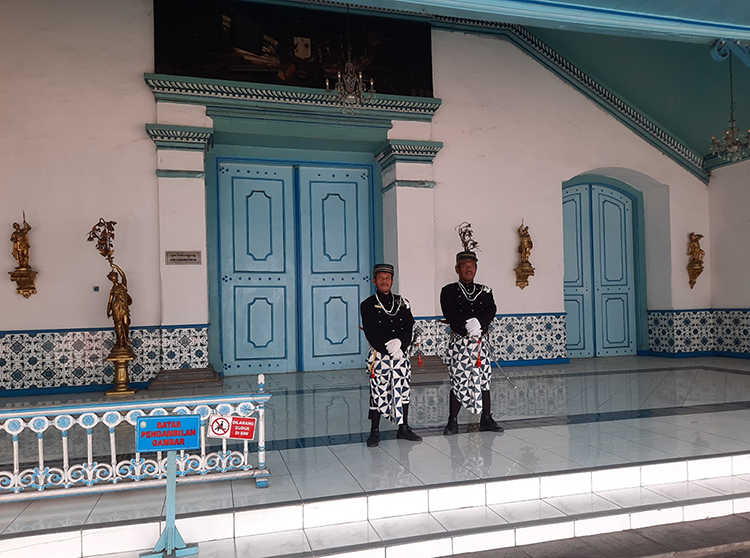
From Solo to the World: exploring royal courts and the evolution of Java Man:
https://alamasia.net/from-solo-to-the-world/
Candi Penataran- the largest Hindu temple complex near Blitar, East Java:
https://alamasia.net/candi-penataran/
Indonesia Main Page: https://alamasia.net/asia-destinations-news-and-links/bali-and-indonesia/
Enjoy the Journeys! Travel Gently and Live Consciously