connecting
people and cultures – inspiring journeys
sharing meaningful discoveries in Asia
 About Alam Asia Net
Asia Destinations News and Links
Journeys and Stories
Support Campaigns and Projects
Alam Indah Bali
Reading, Films, Music
Inspirations
Retreats
Some Favorite Images
About Alam Asia Net
Asia Destinations News and Links
Journeys and Stories
Support Campaigns and Projects
Alam Indah Bali
Reading, Films, Music
Inspirations
Retreats
Some Favorite Images
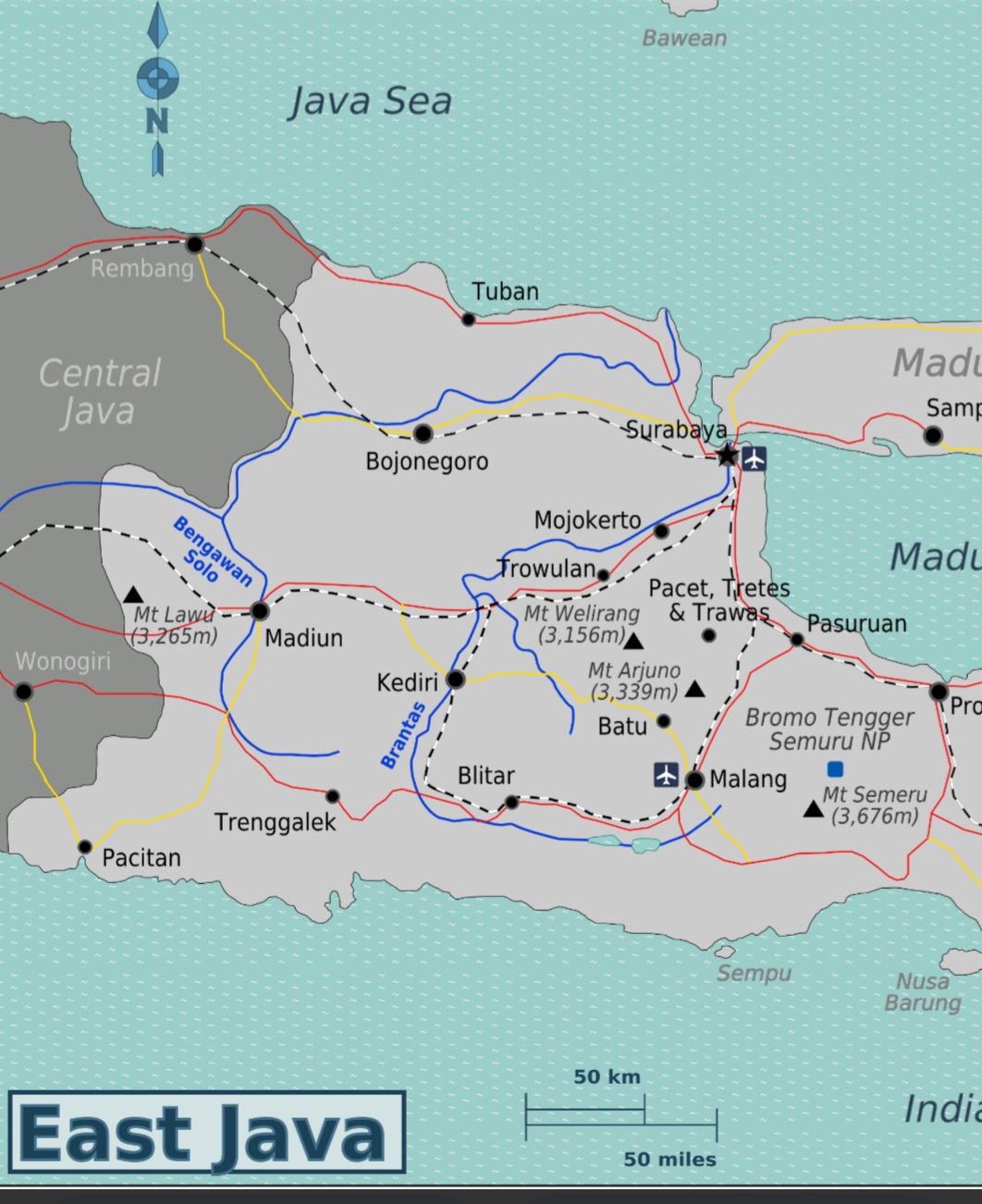
When Empires Fall, May Wisdom Arise
Ancient Kingdoms of Java and the bitter fruit which became the great Majapahit
July, 2026

Prajnaparamita, National Museum Jakarta
Seeing this precious sculpture, while visiting the National Museum in Jakarta, I felt captivated by the energy it resonated. This Prajnaparamita is truly a transcendent piece of East Java art, dating back to 13th century Singosari kingdom. In Mahayana and Tantric Buddhism, Prajnaparamita is the “great mother of all Buddhas” and the personification of “transcendental wisdom.”
While Prajnaparamita is primarily a Buddhist deity, her feminine nature as the ultimate source of all creation, wisdom, and power closely mirrors the shakti concept in Hinduism. “Shakti is the dynamic cosmic energy that animates the entire universe.” Meaning “power” or “to be able,” she represents the active, feminine aspect of the divine. Without shakti, the universe remains passive, inactive, and unmanifested.
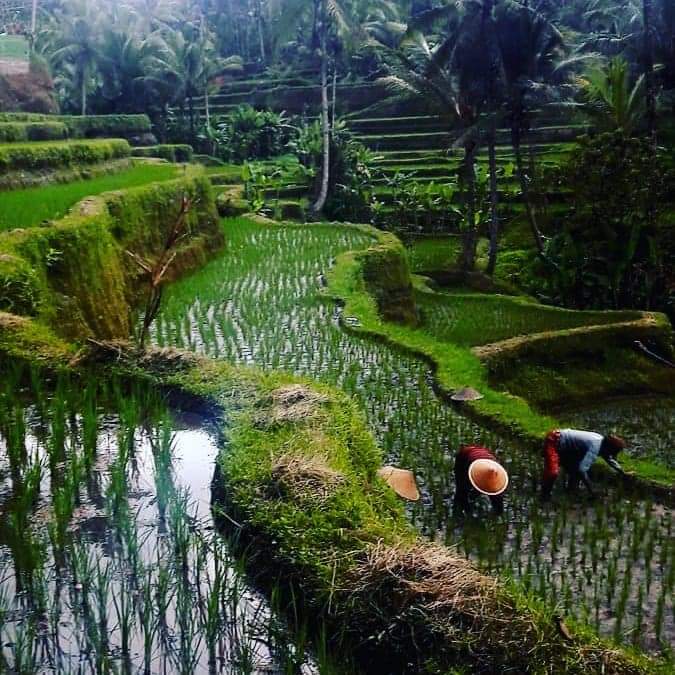
Ibu or Mother in Indonesian, is what gives us life. And Ibu Pertiwi refers to our Mother Earth, or our Mother Land. Nurturing the soil of the rice terraces is more than agriculture; it is a sacred communion with Ibu Pertwi and the rice goddess, Dewi Sri. Every act of nurturing the land is an embrace of the divine feminine—honoring the life force and eternal fertility of our planet.
In 13th-century Java, the Prajnaparamita was crafted of andesite stone-a fine-grained volcanic rock, to embody the divine feminine energy. Her serene facial expression balances meditative stillness with active wisdom. Seated in vajrasana- the perfect full-lotus cross-legged position on a lotus cushion (padmasana),
her left arm is gracefully wrapped around a blooming blue lotus (utpala) flower. Resting delicately on top of this flower is a sacred palm-leaf manuscript of the Prajnaparamita Sutra- the Heart Sutra, focusing on the concept of sunyata (emptiness) and the nature of ultimate reality- that nothing exists independently. We are all interconnected.
Her hands at her chest are in dharmachakra mudra- a gesture representing the turning of the wheel of dharma- the cosmic and spiritual law.
In Java, Prajnaparamita is revered as the Mother of Javanese Kings.
The Pararaton (Book of Kings) – a 16th century Javanese historical chronicle, immortalized this statue as a deified portrait of Queen Ken Dedes, the legendary first Queen of Singosari and the Rajasa Dynasty which eventually gave birth to the great and mostly unknown today, Majapahit Empire (1293-1527)
which would dominate regions far from the heart of East Java.


Candi Singosari near Malang, East Java where the Prajnaparamita statue was re-discovered in 1819.
This candi was also dedicated as a funerary monument for Kertanegara, the last King of Singosari.
Candi (chahn-dee) are ancient Hindu or Buddhist religious structures found in Indonesia, particularly in Java, built between the 7th and 15th centuries, representing Mount Meru-the sacred home of the gods and deities in Hindu-Buddhist cosmology. Lying along the Ring of Fire, repeated volcanic eruptions blanketed surrounding plains with volcanic ash and lava flows, burying ancient communities and candi sites. Under newly grown jungle vegetation, history was lost in time. One of the most famous candi is the 9th century Candi Borobudur in Central Java near Yogyakarta, re-discovered in 1814 by British Sir Stamford Raffles who briefly ruled Java.
Volcanic eruptions were not the only reason ancient kingdoms were lost. As the dominant religion in Java shifted from Hinduism and Buddhism to Islam around the 15th century, many temples were simply abandoned. Volcanic ash, while destructive, also contains nutrients which in time re-fertilizes the soil. It can also act as a protective time capsule, preserving intricate carvings and structures that archaeologists uncover today.
The Prajnaparamita statue, discovered during Dutch colonial exploration in 1819, had been buried underground for centuries. Protected from the elements, the statue was unearthed in almost pristine, perfect condition. This precious Prajnaparamita became a prized-gift between colonial officials and was subsequently transferred to the Netherlands in 1820. Deposited into the royal collections, the Prajnaparamita eventually became the crown jewel of the Rijksmuseum voor Volkenkunde (National Museum of Ethnology) in Leiden, where it remained for 158 years until its repatriation back to Indonesia in 1978.
At the museum in Jakarta, I could not help but feel Prajnaparamita needed to come out of her glass case! Shouldn’t this divine feminine energy radiate more to the world which has sadly suffered from so much destruction by man? Does this statue have healing powers, or does it present itself as a reminder of our own intuitive wisdom we tend to lose contact with in a modern world of polarity, ego and greed?
The Cycle of Life within Java Kingdoms
The birth of the Majapahit Empire is deeply rooted in a bitter drama of political betrayal and foreign invasion. Majapahit refers to: maja-the fruit of the maja tree and pahit meaning bitter.
Following the decline of the Mataram Kingdom of Central Java- home to the Sanjaya and Saildendra Hindu-Buddhist dynasties of 8th-10th centuries, power shifted to East Java which went through two centuries of power plays and dramatic sagas.
A Divided East Java
The story needs to go back to King Airlangga who united Java and Bali back in 11th century.

Airlangga- depicted as Lord Vishnu ( the preserver ) riding the mythical Garuda.
His father was Balinese King Udayana Warmadewa who had married a Javanese princess who became Queen Mahendradatta. These marriages often formed political alliances across the straits.
At the age of 16, Airlangga was sent from Bali to Java to marry his cousin. Tragically, during the wedding celebration in 1006, the palace was burned and attacked by the rival uncle king of his bride. Airlangga escaped and lived in the jungle for several years as a hermit planning to re-take and re-build the kingdom. After accumulating wisdom through meditation, Airlangga was able to establish the Kahuripan kingdom with his Queen Consort, uniting a fractured Javanese state into a prosperous empire. Prioritizing infrastructure, agriculture, and international trade, Airlangga laid the foundational legacy for later Javanese empires like Majapahit.
The daughter of Airlangga was meant to be the rightful heir to the kingdom, but she chose to renounce her crown to become a Buddhist nun, living her life in spirtual devotion. So in order to prevent a civil war between his two sons who were both contesting the throne, Airlangga divided the Kahuripan kingdom into two realms: Kediri to the west, and Janggala to the east.
Eventually under King Kameswara (1115-1130) the Kediri kingdom experienced its golden years promoting the arts and literature. Kameswara married a Janggala princess Dewi Krana which unified the two kingdoms. Their royal union also inspired the Panji Folktales which celebrate love and political unity.
Stories of romance, adventure and spiritual quests have also been adapted into wayang puppetry performances in Java.
A mysterious takeover by Kertajaya (1194-1222)
By 1194, Kertajaya (also known as Dandang Gendis or Srengga) mysteriously conquered the throne and was of no good. He arrogantly oppressed people and attempted to force the religious clergy to worship him as a god. The oppressed Brahmins fled to the neighboring vassal state of Tumapel where they formed a secret allliance with a rebel leader, Ken Arok.
The Kidnap and the Curse of a Keris– and the founding of Singosari Kingdom
Intrigue and power struggle continued with a warlord of Tumapel, Tunggu Ametung, who served under Kertajaya. Tunggu Ametung kidnapped a beautiful woman and forced her into marriage. She was Ken Dedes, daughter of a Buddhist priest Mpu Purwa. Discovering his daughter was kidnapped, the priest cursed Tunggu Ametung, decreeing that he would die by a keris– a sacred dagger.
Ken Dedes was prophesied as a Nareswari—a divine woman destined to bear a royal dynasty.
Ken Arok was the bodyguard of Tunggu Ametung. He had felt a radiant light emanating from Ken Dedes which he interpreted as a divine sign. His spiritual teacher declared that any man who married Ken Dedes would become king and she would bear children who would rule Java. To fulfill the prophecy of Mpu Purwa, Ken Arok commissioned a supernatural dagger and killed Tunggu Ametung. He then overthrew Kertajaya and took Ken Dedes as his own wife. Together they became the ancestors of the Rajasa Dynasty and founded the Singosari kingdom.
From the stories, Ken Dedes endured immense personal tragedy and trauma after becoming queen. Her life was marked by heartbreak stemming from the violent, power-hungry men around her. Ken Arok and Ken Dedes had three children, but Ken Dedes also had one son by Tunggu Amapel named Anusapati. Ironically the same keris that was used to kill Tunggu Amapel, killed Ken Arok by Anusapati, taking revenge for the murder of his father. Anusapati became the second king of Singosari only to be killed, again with the same keris, by Panji Tohjaya- a son of Ken Arok from a concubine.
Tohjaya was not highly regarded by court nobles and was viewed unworthy to rule. Within a few months, a coup took place led by two cousins- Ranggawani, also known as Wisnuwardhana- son of Anusapati, and Mahisa Cempaka, also known as Narasimhamurti, – grandson of Ken Arok and Ken Dedes. Tohjaya was forced to abdicate during the coup and the two cousins threw the cursed keris into the sea where legend tells of it becoming a dragon!
A New Dynamic Union
The union of these two cousins brought together the Shiva-Bodhisattva energies. They were of the lineage of Ken Arok, who was viewed as an incarnation of Shiva, and Ken Dedes, the Bodhisattva of transcendent wisdom. The unification of Shiva ( pure, formless consciousness) and Shakti ( the active, feminine cosmic engery) symbolized achieving a cosmic balance in ruling the kingdom.
This energy was passed on to Kertanegara– son of Ranggawani, who became the last king of Singosari.
( Mahisa Cempaka did not have a male heir. )
Trade Routes and New Alliances
Kertanegara was a devout practitioner of Tantric Buddha-Shiva syncretism. He projected this spiritual power outward, securing trade routes and naval dominance across the region. The Pamalayu Expedition targeted the declining Srivijaya Empire based in Sumatra in 1275, and then during the Pabali Expedition in 1284, the island of Bali was conquered and brought into the realm of Singosari.
Singosari-Champa Alliance
Securing trade routes was key to successful power and Kertanegara formed and alliance with Champa- a Hindu empire of modern-day Central Vietnam, to counter the expanding naval and military power of Kubali Khan’s Mongol empire. A strategic marriage linked Singosari and Champa with King Jaya Simhavarman III of Champa marrying a Javanese princess ( Tapasi), the younger sister of Kertanegara.
Both kingdoms feared Mongol encroachment and aimed to protect the vital maritime trade networks of the present day South China Sea which was referred to as the Champa Sea to the Chams, and later the Eastern Sea, to the Vietnamese. Kublai Khan had already attacked and occupied parts of Champa before sailing to Java.
New Geopolitical Challenges and Threat of the Mongols
Kublai Khan sent successive envoys demanding that Java submit to Mongol rule. In 1289, Kertanegara famously refused this demand and scarred the face of the Mongol envoy Meng Qi. Knowing that a massive punitive expedition was likely, Kertanegara needed to consolidate both military and spiritual defenses. Kertanegara deified himself as a Shiva-Buddha. He performed rituals that were believed to place him at the center of a cosmic mandala, granting him the divine power to obliterate negative forces. Kertanagara’s religious practices invoked wrathful deities such as Bhairava and Mahakala.
These wrathful forms of Shiva were not viewed as evil, but as divine protectors.
Kala sculptures mounted above temple entrances represent powerful mythological and protective concepts. Placed above doorways, the grim, fanged face of Kala guards the inner chambers from evil spirits. Kala is also the deity of Time reminding worshippers that noone can escape the ultimate laws of karma.
Statues of Chamundi, a fierce warrior goddess and incarnation of Durga, were also found at Candi Singosari. Standing on a pedestal of skulls, Chamundi was not only revered as a demon slayer, but as a protective divine shakti energy of Shiva, capable of vanquishing both internal spiritual ignorance and external threats.
Today, the famous original masterpieces associated with Chamundi and Bhairava are preserved in historical collections like the National Museum of Indonesia and the National Museum of Leiden.
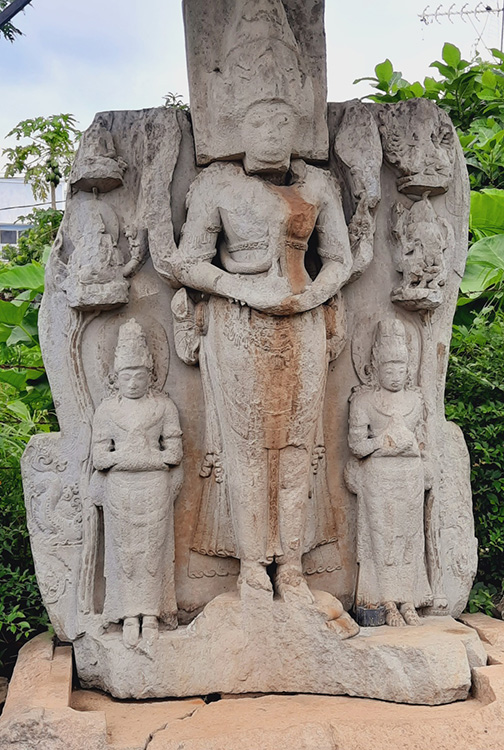

Above a statue of Parvati and her attendants and one of the guardian Dwarapala statues at Candi Singosari.
The Singosari Temple itself was never fully completed as Kertanegara was assassinated in 1292 by Jayakatwang, a prince of Kediri. He launched a rebellion against Kertanagara with his ambition to restore Kediri’s former independence. Exploiting Kertanagara’s pre-occupation of esoteric rituals, Jayakatawang’s forces ambushed and killed Kertanagara. It is said that Kertanagara had also been caught off guard while his rituals included the indulgence of palm wine.
The Fall of Singosari and Transition to Majapahit while tricking the Mongols
Jayakatwang’s rebellion dismantled the authority of Singosari as several ministers were also assassinated. Jayakatwang proclaimed himself ruler, briefly reviving Kediri but his victory was short-lived.
Raden Wijaya, Kertanegara’s son-in-law, evaded capture and went into exile. He had married the last daughter of Kertanagara, known as Gayatri Rajapatni.
Seeking to regain power, Raden Wijaya allied himself with the Mongol naval armada sent by Kublai Khan in response to Kertanagara’s refusal to submit tribute. The Mongols were now set out to defeat Jayakatwang. Raden Wijaya helped guide the Mongol invaders to besiege Jayakatwang’s stronghold in 1293. Once Jayakatwang was defeated, Raden Wijaya launched a surprise attack on the Mongols and drove them off Java- quite amazing. The Mongols were not accustomed to Java’s tropical climate and terrain of dense jungles. Wijaya timed his betrayal to coincide with the changing monsoon winds. If the Mongols had stayed much longer, they risked being trapped in Java for another season, facing starvation and tropical diseases.
Establishing a new base in the northern plains of East Java, Raden Wijaya and his men, very hungry and tired, found a maja tree with its bitter tasting fruit. They then called their new kingdom Majapahit.
Majapahit translating directly from Javanese as bitter maja, carries the history and legends of the founding of this empire which became one of the most powerful states in Southeast Asian history.
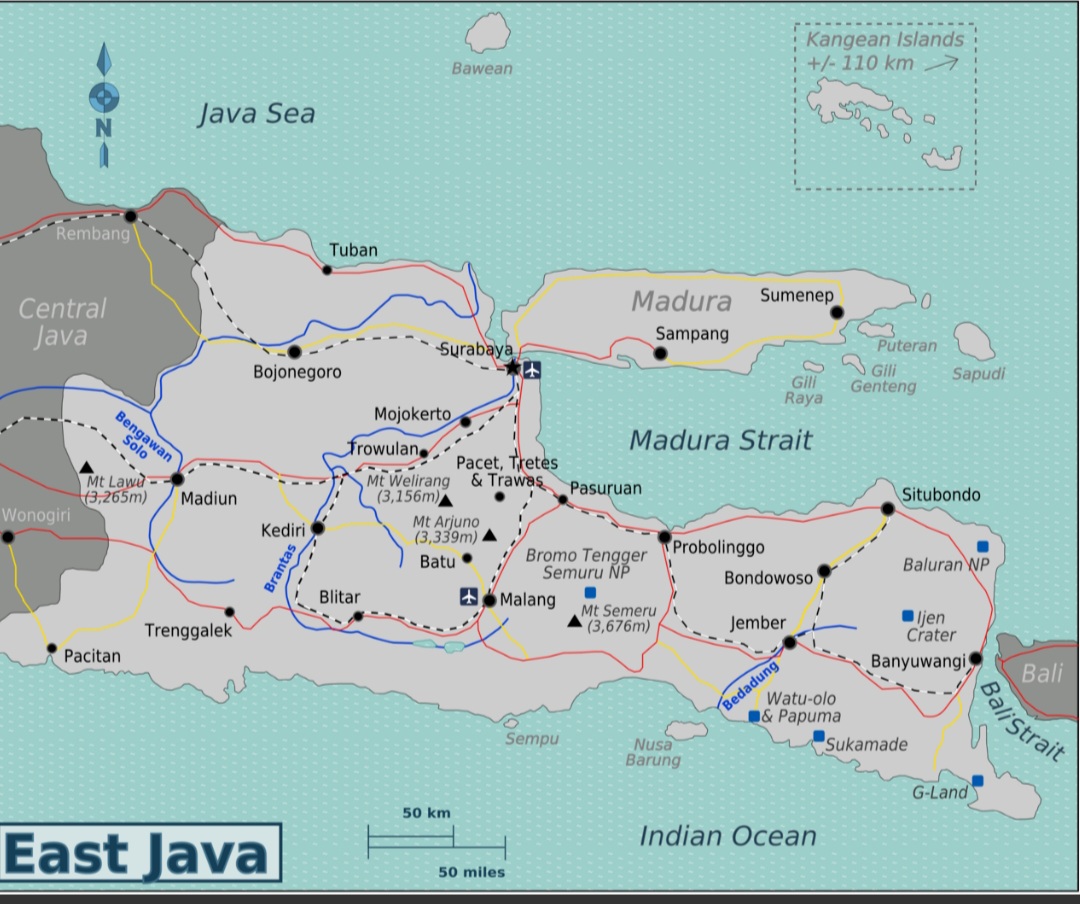
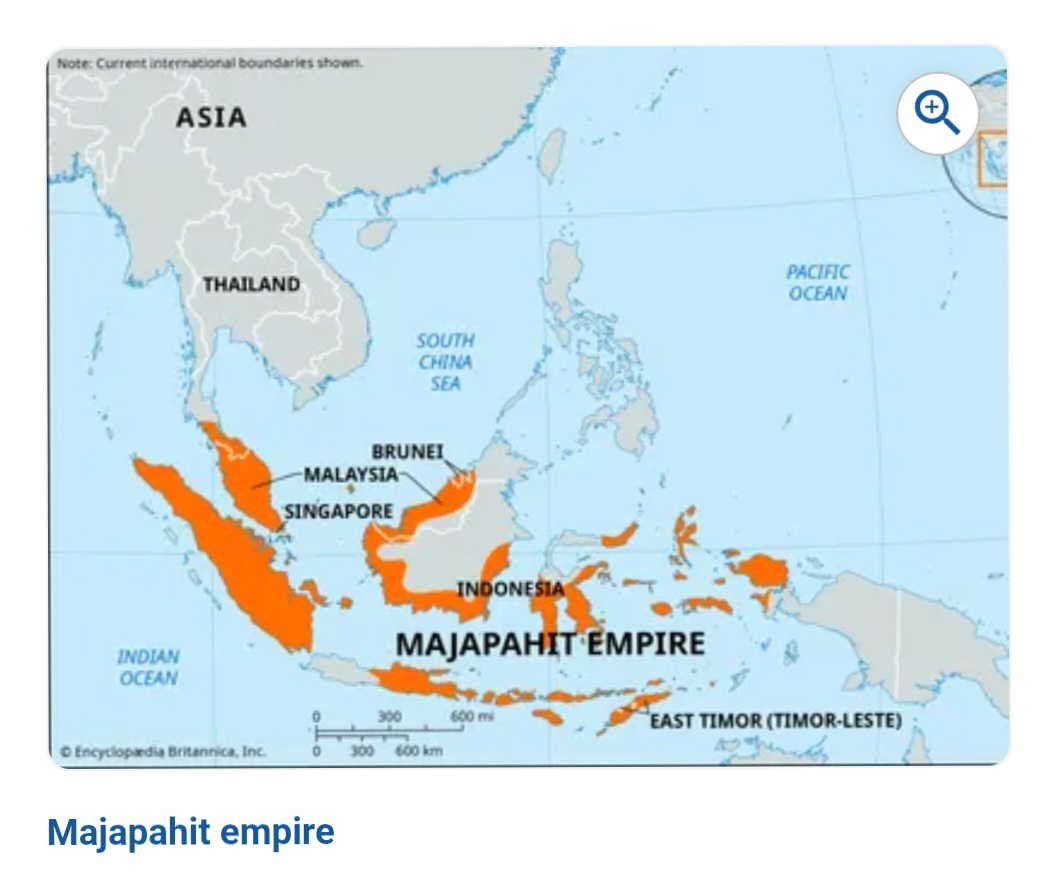
By mid 14th century, Majapahit had reached its full territorial expansion as recorded in the Old Javanese poem Nagarakertagama.
After brilliantly outmaneuvering both the rebellious kingdom of Kediri and the invading Mongol forces of Kubai Khan, Raden Wijaya ( great-grandson of Ken Arok and Ken Dedes) laid the foundation of the empire along with Gayatri Rajapatni ( last daughter of Kertanegara) who served as closest advisor, securing the support of the old Singosari elite.
However another period of intrigue took place with the son of Raden Wijaya from his earlier wife, a Melayu princess. He was Jayanagara and Raden Wijaya appointed him as crown prince and heir. Raden Wijaya passed away peacefully at the end of his 16-year reign. Following his death, he was deified as the Hindu god Harihara (half Shiva, half Vishnu). Jayanagara then ruled from 1309-1328 but not being fully of Javanese royal blood, his legitimacy was questioned. And Jayanagara had a reputation of poor behaviour. He made the mistake of sexually harassing the wife of his trusted royal doctor. Infuriated by this action, the doctor stabbed and killed Jayanagara, it is said during a medical examination of a boil on his back.
The throne was then officially to go to Gayatri Rajapatni, but she preferred to retire as a Buddhist nun.
As she and Raden Wijaya had no son, Gayatri Rajapatni appointed the crown to their last daughter Tribhuwana Tunggadewi.
The Reign of a Queen
Tribhuwana is widely celebrated in Javanese history for wielding her power with a profound blend of diplomacy and wisdom—hallmarks of an era often described as harnessing powerful “feminine energy” for statecraft. Queen Tribhuwana carried the highest ancestral bloodline of the Rajasa Dynasty, the royal house that founded and unified the ancient Javanese empires.
During her reign, she appointed the legendary prime minister, Gajah Mada, who went on to declare his famous Sumpah Palapa – a vow to unite the entire Nusantara archipelago under Majapahit.
Operating as a visionary leader alongside Gajah Mada, Tribhuwana oversaw the massive military expansion of the empire, including the conquering of Bali in 1342.
After her mother Gayatri died in 1350, Tribhuwana stepped down to allow her son, Hayam Wuruk to take the throne. However, she remained a highly influential figure in the royal advisory council, continuing to guide the empire into its golden age.
Throughout Indonesia today, you will notice streets named after Gajah Mada and Hayam Wuruk.
Famous names many visitors may not realize refer to former respected leaders. It is felt that Majapahit was the foundation of modern Indonesia.
Bhinneka Tunggal Ika originated as a philosophical concept in the Majapahit Empire to promote religious tolerance between Hinduism and Buddhism. Modern Indonesia adopted it as the national motto to unify a diverse population across thousands of islands, ethnicities, and faiths.
Majapahit was a sprawling thalassocracy (maritime empire) of Nusantara ( meaning archipelago).
The empire’s wealth and dominance was built on the control of regional trade routes and agriculture. Thriving ports of Java hosted a cosmopolitan mix of Chinese, Arab, Indian, and Persian merchants.
The empire generated immense wealth by taxing spice traders and receiving tributes from vassal states.
Trowulan: an Inland Capital
Although a dominant maritime empire, the capital was established inland at Trowulan, which also developed agriculture with highly fertile rice production sustaining the large population. The location of Trowulan in Mojokerto Regency was strategic for defense with access to a network of rivers reaching the coastal ports while also providing a natural buffer against any potential coastal raids.
Cultural and Artistic Flourishing
The epic Nagarakretagama written in 1365 by court poet Empu Prapanca, details the empire’s vibrant arts, complex religious rituals with lavish royal courts. The era produced distinctive red-brick architecture fine gold jewelry, and intricate terracotta reliefs. The priesthood held high positions of respect, and women played prominent roles in society and government.
Internal Fragmentation and Decline of Majapahit
We are reminded nothing is permanent and over time the empire declined. It was a gradual process rather than a sudden conquest. The shift involved a mix of internal division and religious conversion.
Following the deaths of the legendary ruler King Hayam Wuruk and his prime minister Gajah Mada in the late 14th century, the empire weakened. A bitter succession civil war known as the Paregreg War (1401 – 1406) drained the empire’s military and economic resources. Without a strong central authority, distant trading ports and vassal states stopped paying tribute and declared independence.
The Rise of Islamic Trade Routes
Arab, Indian, and Malay Muslim merchants established thriving trading hubs along the northern coast of Java and the Strait of Malacca. Coastal Javanese princes and merchants began converting to Islam to secure lucrative trade alliances. As the coastal vassals converted, they cast off religious and political authority of the Hindu-Buddhist Majapahit court, further fracturing the empire.
Sufi Missionaries
The Sufis were mystical practitioners of Islam who focus on an inward, direct spiritual experience of the Divine. The primary Sufi missionaries and traders who laid the groundwork in Java between 14-16th centuries are historically represented by the Wali Songo (the Nine Saints) who integrated into Javanese culture, synthesizing Islamic teachings with local pre-Islamic mysticism which formed a uniquely syncretic Javanese Islam.
Chinese Trade Expeditions of Zheng He
Arab and Indian Muslim traders came from the west, but there were also Muslim Chinese traders.
Admiral Zheng He was a Muslim from China’s Yunnan province Hui ethnic group. When Ming Dynasty armies conquered Yunnan, Zheng He was captured as a boy, castrated and made an imperial eunuch.
He rose to become an Admiral, leading the massive Ming naval expeditions known as the treasure voyages between 1405 and 1433. His voyages included visits to Java which led to trade contracts and the establishment of Chinese consulates. The naval fleet brought thousands of people from various professions. Zheng He intervened in the Majapahit Civil War (1404–1406) by visiting feuding courts, brokered peace to secure trade routes, and also significantly supported the early spread of Islam in Java by establishing Chinese-Muslim communities, building mosques, and promoting cultural integration.
It is incredible to imagine Zheng He- a boy stripped of his family and castrated at a young age, growing up to become the Emperor’s trusted admiral, commanding fleets of hundreds of massive ships across the Indian Ocean.
The Rise of Demak Sultanate and the Fall of Majapahit
The rise of Demak, the first major Islamic state on north coast of Java, served as the final turning point. Led by Raden Patah (a Muslim nobleman with ties to the Majapahit royal family), Demak actively expanded its influence. By the late 15th to early 16th century, Demak and its coastal allies overshadowed the exhausted Majapahit, culminating in the final collapse of the empire in 1527.
Exodus to Bali
Following the defeat, many members of the Majapahit royalty, nobility, and artisans fled east to the island of Bali, ensuring the survival of Majapahit’s Hindu-Buddhist traditions there today.
Visiting Majapahit Sites Today
The remains of ancient Majapahit sites are off the main tourist trails but they are easily accessible and very worthwhile to see.
Trowulan is approx two hours drive by car from Surabaya, or by train as far as Mojokerto.
Coming from Yogyakarta or Solo to the west, approx four drive by car, depending on traffic, or take the train as far as Jombang where onward transport can be arranged. This makes for an easy stopover on the overland Java journeys.
Some of the famous red-brick temple structures have been restored in manicured grounds. The Majapahit Museum could use some sprucing up, but a local guide can help explain the many sculptures on display.
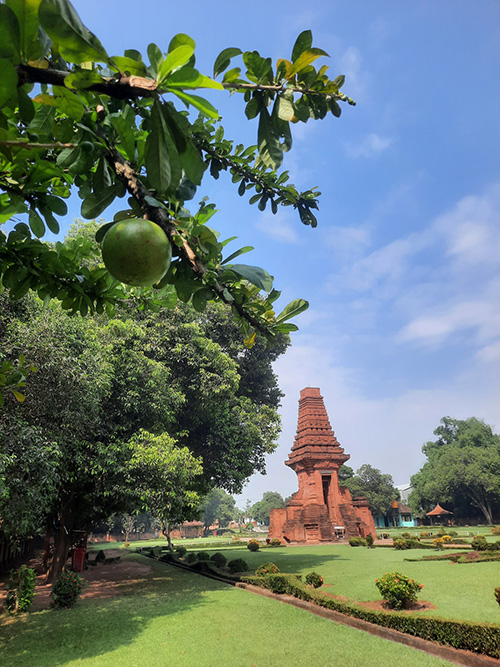

Candi Bajang served as a royal gateway to a royal palace complex. Above is a maja tree with its bitter fruit. Although I was told the actual fruit found by Raden Wijaya and his men was different- more like the bael fruit, rarely found in the area today.
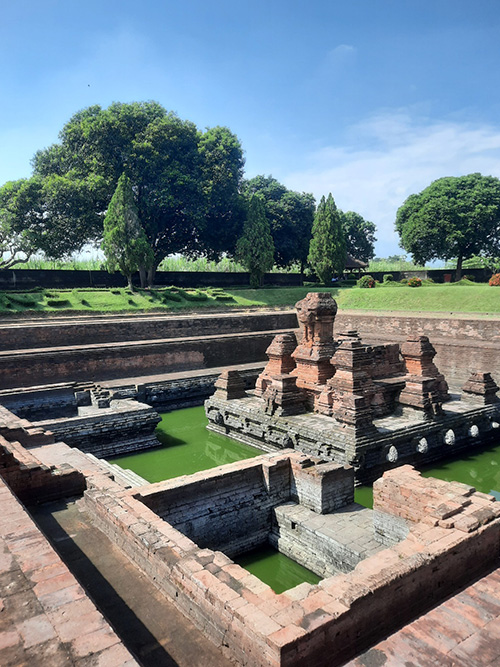
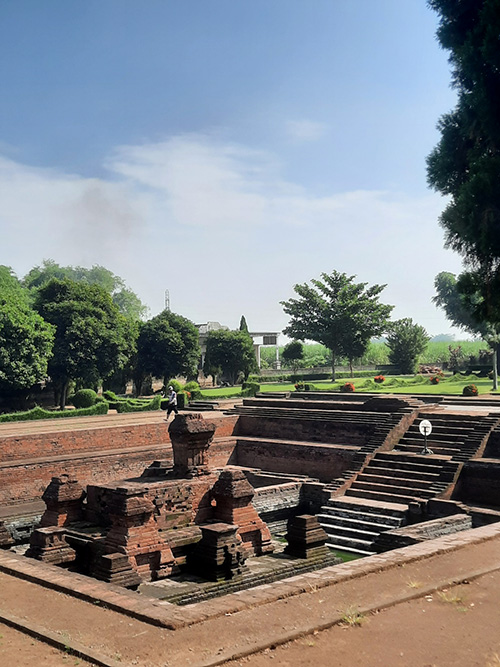
Candi Tikus was a royal bathing pool where purification rituals were conducted. The complex was also part of an advanced urban water system, serving as a reservoir to collect, filter and distribute water to surrounding residential areas. The central tower is shaped like a mythical Meru mountain dedicated to holy water and the mountain gods. The name “tikus” – meaning rat, was given by the locals when the ruins were discovered buried in the ground in 1914, as it served as a nesting ground for for rats.

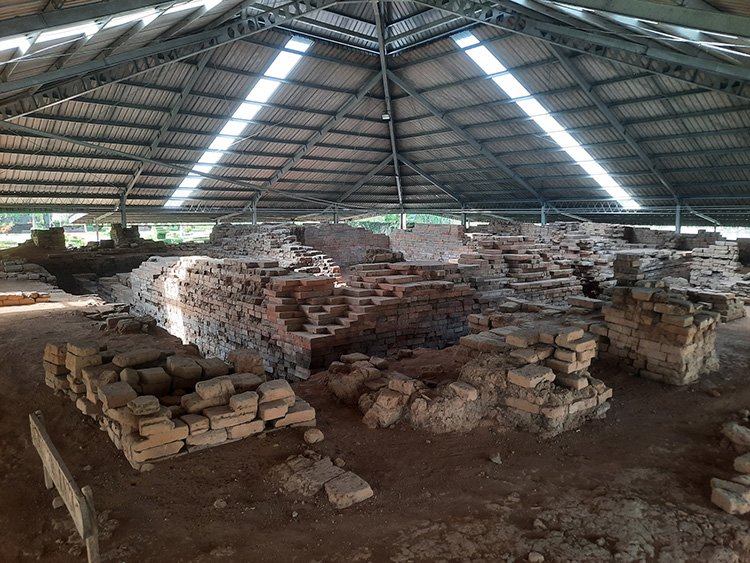

Grha Pawitra Trowulan Homestay is a simple, but charming little guest inn next to sugar-cane fields.
The owner Pak Eko is a wealth of knowledge and can loan you a bicycle to explore the quiet roads to sites of Candi Gentong– still under excavation, but said to have been constructed to host the Sraddha ritual—a grand, royal death-anniversary ceremony dedicated to Hayam Wuruk’s mother, Tribhuwana Tunggadewi. Nearby is the Sleeping Buddha Temple where locals come to worship.


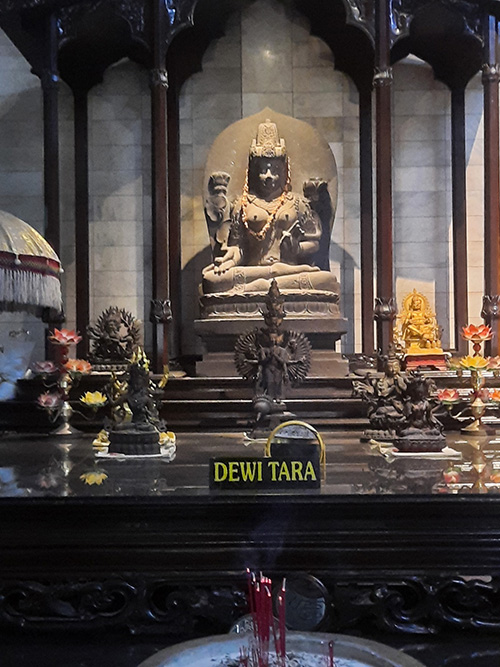
Candi Brahu which has been beautifully restored, served as a place of worship for important ceremonies.
To the right above is a serene statue of Goddess Tara, located within the prayer hall of the Sleeping Buddha Temple.
Candi Rimbi
Dedicated to Tribhuwana Tunggadewi


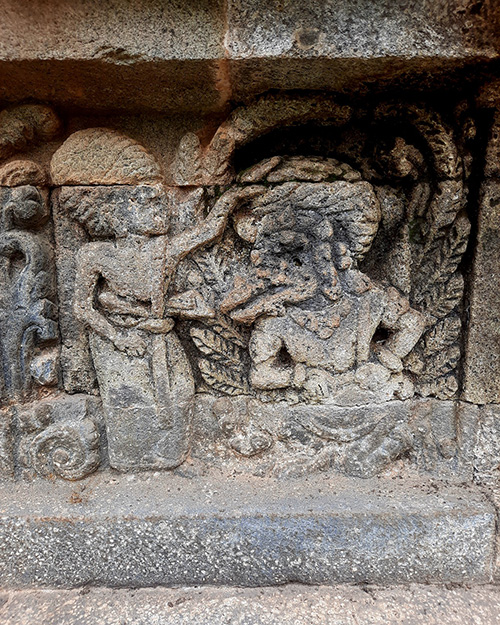
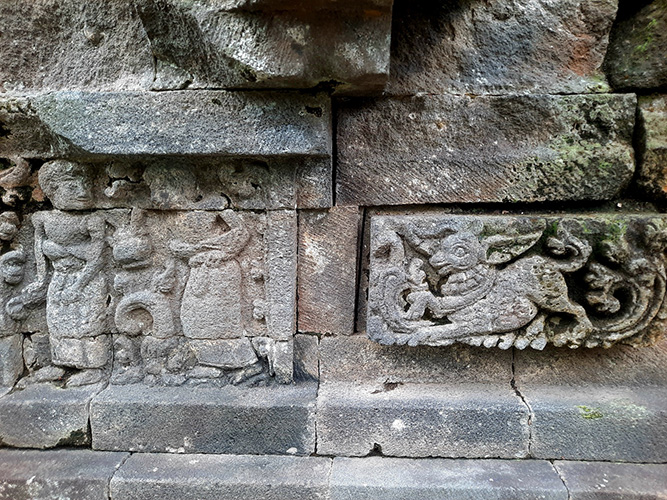

Candi Rimbi is located about 30 minutes drive from Trowulan at the foot of the Anjasmoro mountains.
The site is the mortuary temple and final resting place for Tribhuwana Tunggadewi. The death ceremony at Candi Gentong was performed to help free the soul and invoke blessings for the kingdom.Tribhuwanas earthly remains after cremation were honored and immortalized at Candi Rimbi alongside statues of Goddess Parvati- the central image above is housed at the National Museum in Jakarta.
Unlike most Majapahit-era temples constructed with red brick, the main body and base of Candi Rimbi was built with andesite stone, while only the foundation is made of brick. The reliefs at the base of the temple depict daily agrarian life and animal fables. One of the reliefs is thought to represent the myth of Garudeya– an ancient legend about the giant half-eagle, half-human deity, Garuda. It recounts the heroic quest to free his enslaved mother from the wicked serpent goddess Kadru and her dragon (naga) children. Garuda was required to bring the Amrita ( the nectar of immortality) symbolizing the ultimate victory of freedom, devotion, and filial duty.
So here we end paying respects to the mother.
Tribhuwana Tunggadewi, descendant of Ken Dedes and Gayatri Rajapatni embodied the qualities of Prajnaparamita.
I recently read a quote in Buddhist Door Global (BDG):
“Prajnaparamita teaches that liberation arises not by rejecting the relative world, nor by clinging to the absolute, but by realizing both without attachment. This is precisely what Bhinekka Tunggal Ika expresses in poetic form. Diversity (bhinekka) is not denied. Unity (tunggal) is not imposed. Truth lies in seeing that neither stands alone.”
The Duality of the Divine Feminine
The qualities of Prajnaparamita encompasses both the serene, nurturing wisdom of goddesses like Saraswati ( creativity and learning ) and Dewi Sri ( agriculture and fertility) as well as the protective, fierce power found in Durga. When ego, oppression, or chaos threaten the balance of the universe, the nurturing energy transforms into a warrior spirit to subdue demons, to protect cosmic order and to eradicate illusions clearing obstacles on the path to enlightenment.
“Ultimately, Prajnaparamita dissolves the boundary between “soft” and “wrathful,” embodying what spiritual scholars describe as a union of inexhaustible, gentle tenderness and diamond clarity. You can explore more about her philosophical depth through the Spirit Rock overview on the wisdom of emptiness.”
Read more about the History of Majapahit in a book published in 2024:
Majapahit: Intrigue, Betrayal and War in Indonesia’s Greatest Empire by Dutch author and historian Herald van der Linde.
https://www.goodreads.com/en/book/show/210408024-majapahit
I look forward to reading this book myself filled with more layers of history and perhaps more accurate than my own compilings and research, and I just love the stories!
There are many more ancient sites to explore in Java filled with layers of history and legends.
Several Prajnaparamita sculptures have been discovered in Indonesia outside of Java. The most famous Sumatran example is the Muarajambi Prajñāpāramitā, which was excavated at the Candi Gumpung site within the Muaro Jambi Temple Compounds in Jambi. This Sumatran sculpture was not found in perfect condition though. It was discovered headless and in a fragmented, poor state.
If you have read through this story of saga, do you think it is time to restore more balance in our world by uncovering the wisdom of the Dewi? With the way the world is heading, for the sake of humanity, perhaps the wisdom will need to be programmed into AI.


Borobudur, Central Java and rice terraces at the foot of Mt. Ijen, East Java.
More on Central Java and Travel Overland – Click Below:
https://alamasia.net/asia-destinations-news-and-links/bali-and-indonesia/java/
Indonesia Main Page: https://alamasia.net/asia-destinations-news-and-links/bali-and-indonesia/
Travel Gently and Live Consciously