connecting
people and cultures – inspiring journeys
sharing meaningful discoveries in Asia
 About Alam Asia Net
Asia Destinations News and Links
Journeys and Stories
Support Campaigns and Projects
Alam Indah Bali
Reading, Films, Music
Inspirations
Retreats
Some Favorite Images
About Alam Asia Net
Asia Destinations News and Links
Journeys and Stories
Support Campaigns and Projects
Alam Indah Bali
Reading, Films, Music
Inspirations
Retreats
Some Favorite Images
Royal Courts and the Evolution from Java Man
September, 2026
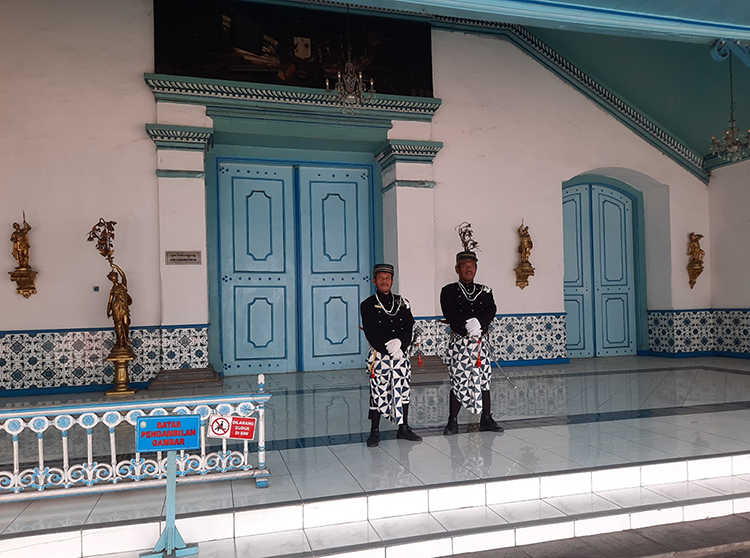
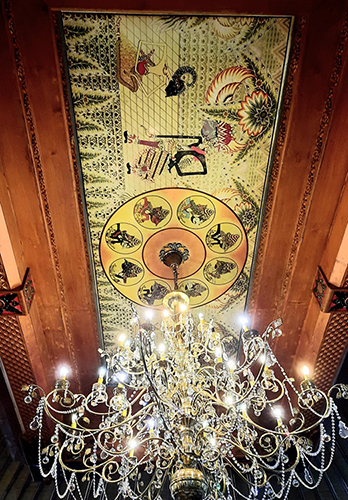
Keraton Kasunanan Surakarta Hadiningrat-the Kraton of Solo
Solo is the traditional, more popular name of Surakarta– the official administrative name of the city located 65km to the east of Yogyakarta.
Following the fall of the Hindu/Buddhist Majapahit empire in late 15th century, the Central Java Islamic Sultanate of Mataram slowly rose to power which encompassed modern-day Yogyakarta and Solo.
Power struggles continued as the norm however with a split of Mataram in 1755. The split was triggered by a bitter royal succession dispute compounded by intrigue of Dutch interference. King Pakubuwono II signed an agreement giving the Dutch East India Company (VOC) extensive control over the internal decisions of the kingdom. Insulted by this submission, the king’s brother, Prince Mangkubumi, launched a prolonged rebellion in 1747 against both the crown and the Dutch forces.
The Giyanti Treaty of 1755 brokered by the VOC permanently halved the Mataram empire.
Both Solo and Yogyakarta are cultural epicenters of Javanese heritage, sharing arts like batik and gamelan. However, Yogyakarta emerged with greater modern political relevance because its leadership fully aligned with the Indonesian revolution, whereas Solo’s nobility was seen as compromised by the colonial past.
Following Indonesia’s declaration of independence in 1945, the young republic continued to face external threat when Allied and Dutch forces returned to reclaim the territory. Sultan Hamengkubuwono IX of Yogyakarta pledged full allegiance to the new republic. Yogyakarta was also a geographically natural fortress with Mt. Merapi to the north and the Indian Ocean to the south. With Jakarta in chaos, Yogyakarta became tha national capital from 1946 to 1949. After the war, Yogyakarta was granted Special Region ( Daerah Istimewa ) status where the reigning Sultan automatically serves as regional governor for life.
The Solo Kraton today is an active cultural institution and the official residence of the royal family.
Visitors today can step back in time exploring the public areas and museum.
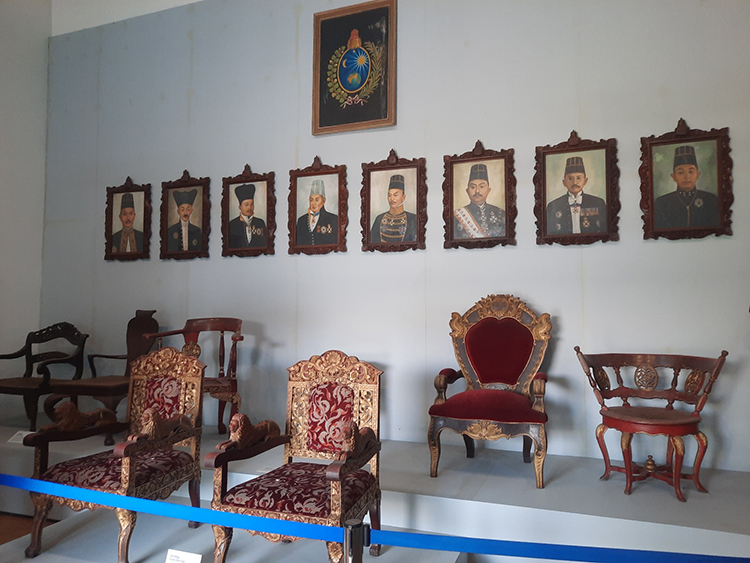
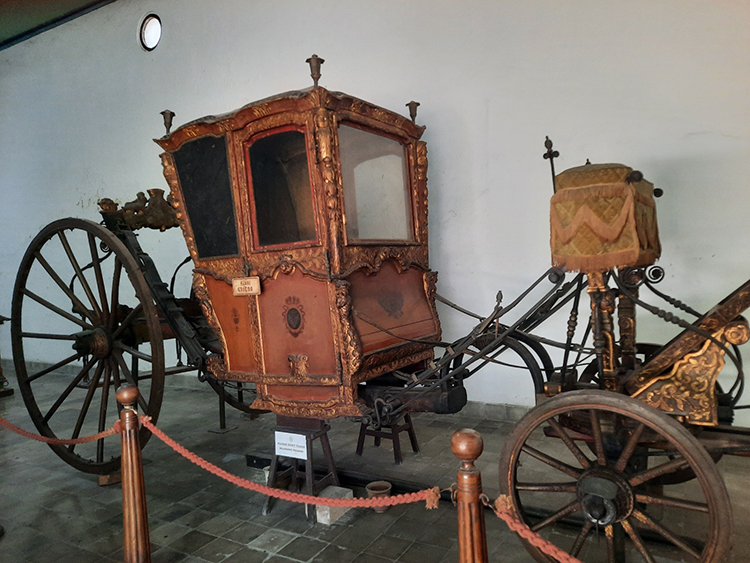
portraits of Surakarta royals and a royal carriage gifted by the Dutch VOC
While the Solo Kraton no longer holds formal political power, it remains a highly revered symbol of the Mataram Kingdom’s legacy.
Pura Mangkunegaran
A further split within the Solo royal family occured in 1757 with Prince Raden Mas Said (later Mangkunegaran I) revolting against the Dutch VOC and a puppet Solo court.
Today Pura Mangkunegaran maintains itself as an autonomous domain within the city.
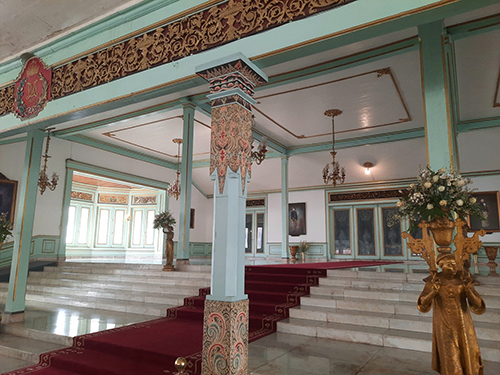
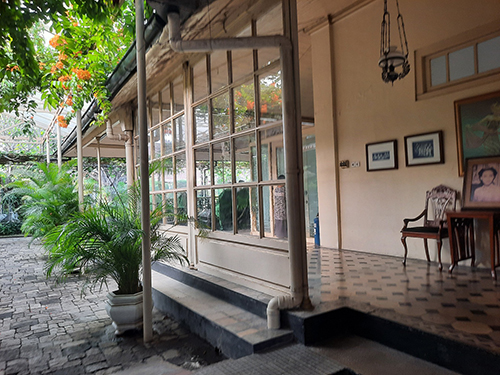
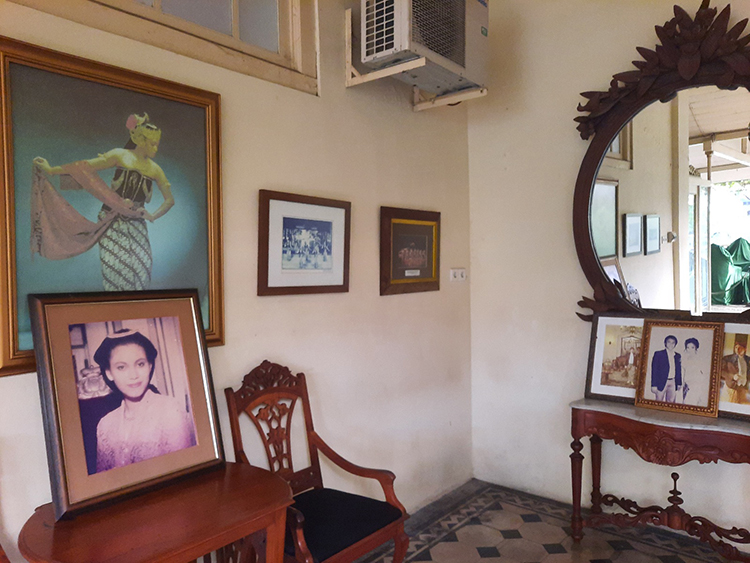
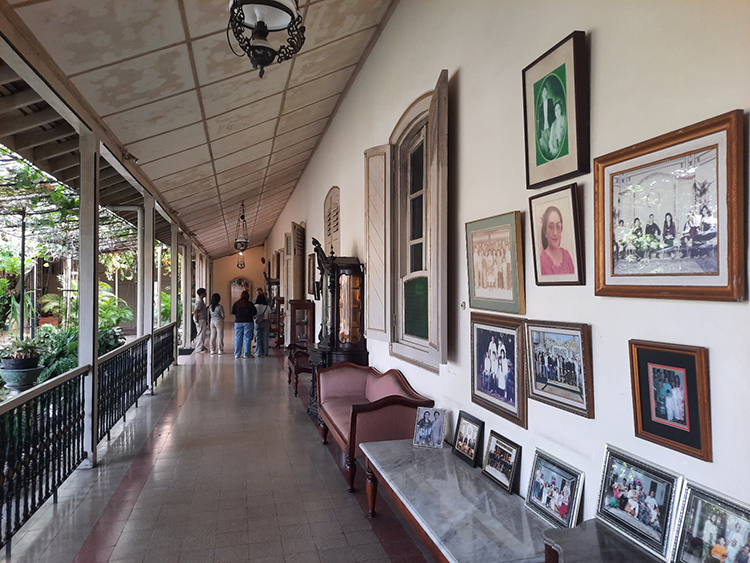
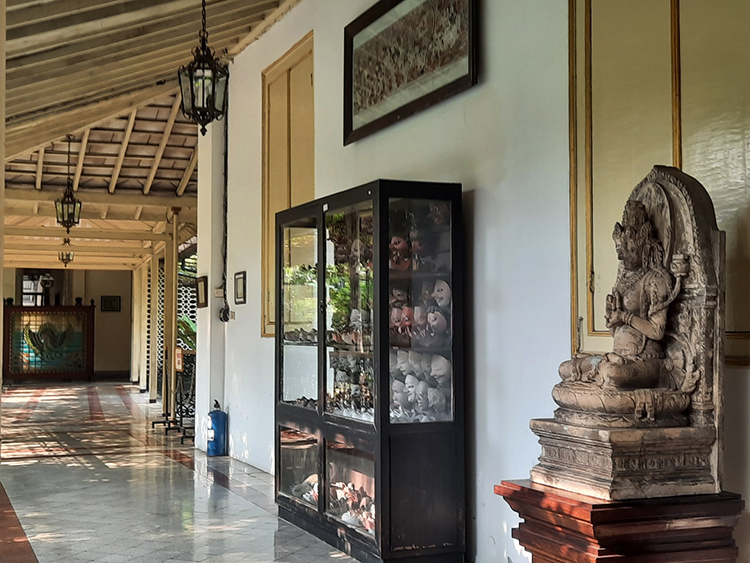
Pura Mangkunegaran is a center for preserving traditional arts. Many of the Mangkunegaran family members were highly accomplished, elite dancers and choreographers bringing their dance to global stages. It was special to visit on a Wednesday while dance rehearsals were taking place.
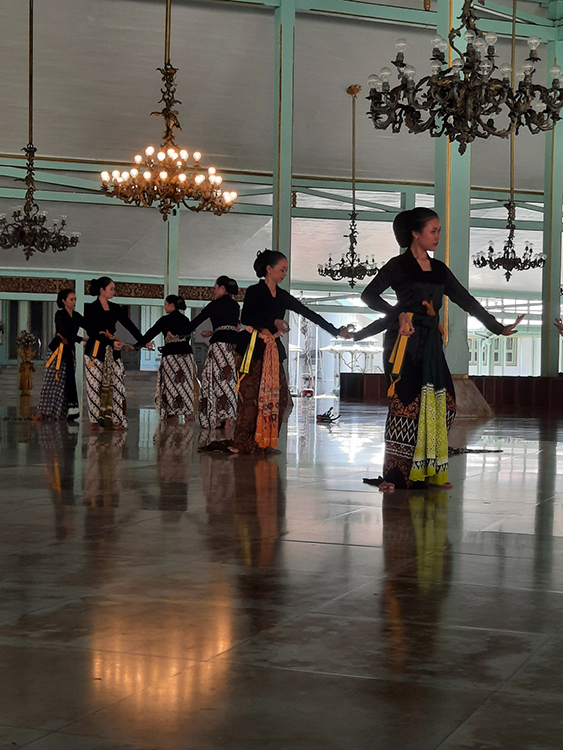
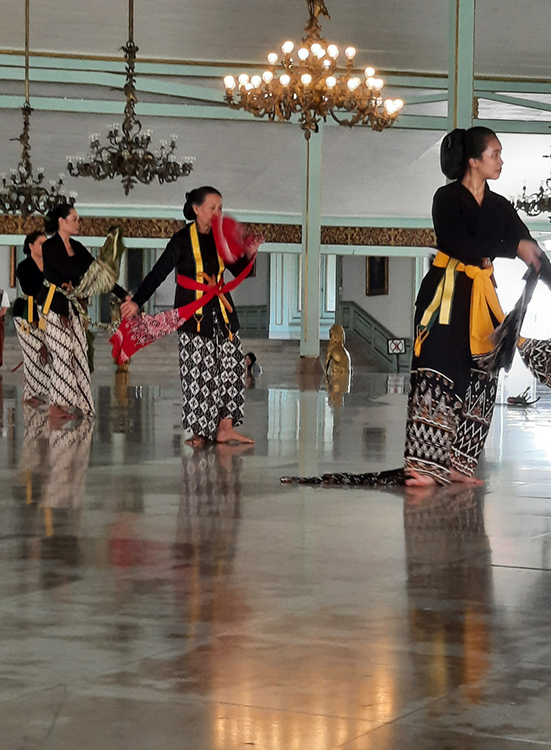
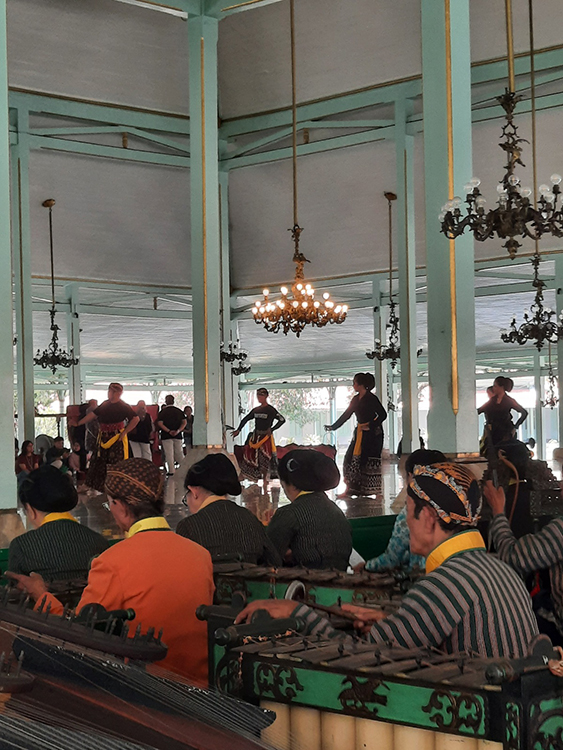
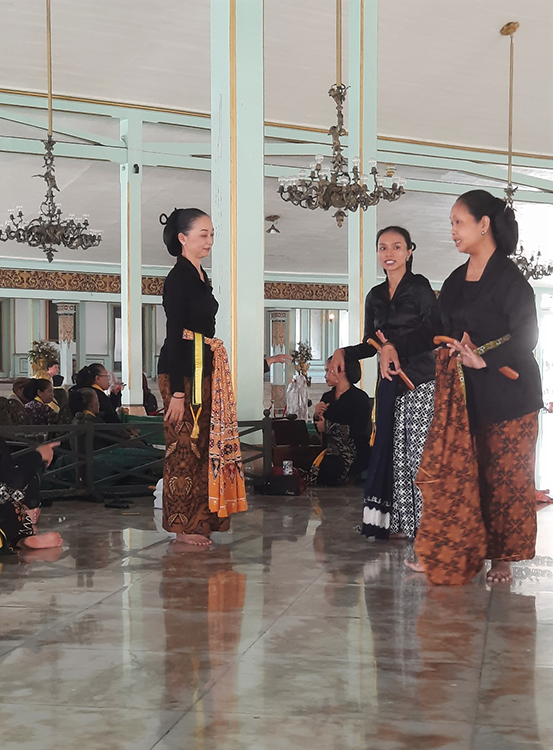
I could sit for hours listening to the soft Javanese gamelan and watching the refined dance movements.
It is an art form that bridges ancient history with modern society today and hopefully can continue to be appreciated.
Home of Batik
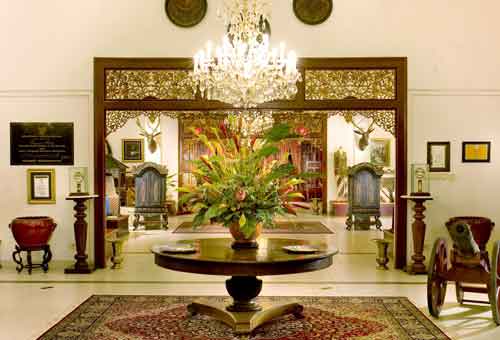
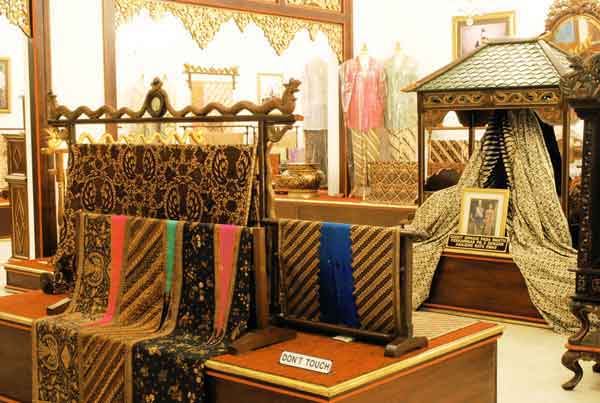

House of Danar Hadi Museum in town is a world-class heritage center and museum dedicated to the art, history and preservation of Indonesian batik.
https://danarhadibatik.com/en/danar-hadi-world
Kampung Kauman
There are loads of local markets to explore in Solo filled with batik and for a relaxed walkabout, it is nice to explore the lanes of Kampung Kauman filled with shops and cafes.

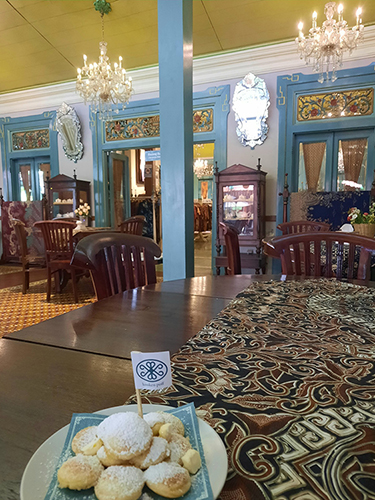
Kampung Kauman-where you can also partake in batik workshops and enjoy coffee with Poffertjes! – a real delight left behind by the Dutch.
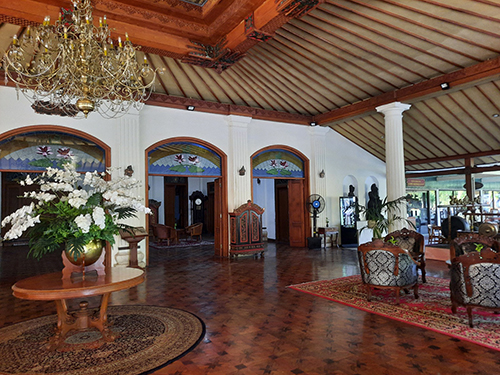
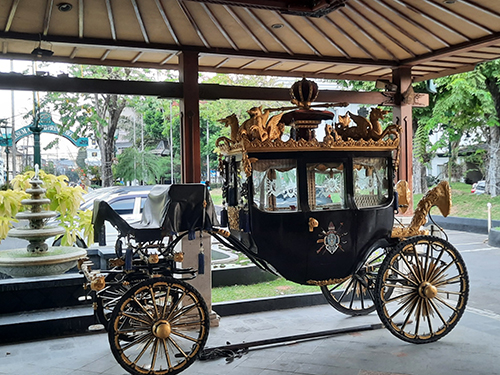
The Kusuma Sahid Prince Hotel- not far from Pura Mangkunegaran is a timeless classic place. Popular for weddings and special events, the hotel can be very busy, but otherwise a quiet haven to enjoy- with a chariot that can perhaps get you back home safely before midnight.
https://sahidhotels.com/kusuma-sahid-prince-solo/
While enjoying the civilized culture including the poffertjes, it is amazing to think how we humans have evolved…
from Java Man
Not far from Solo to the north is the Sangiran Early Man Museum housing the prehistoric collection of the Sangiran archeological site- where half of the world’s Homo erectus fossils were discovered.
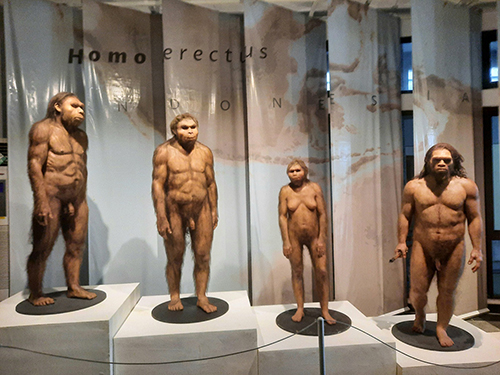
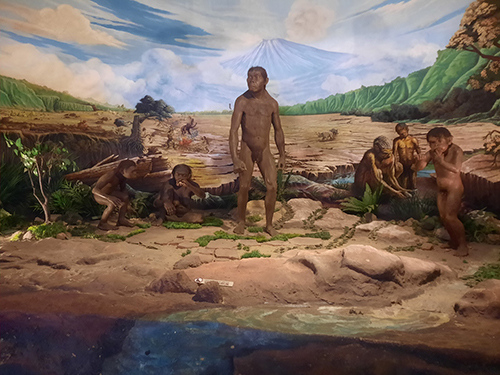
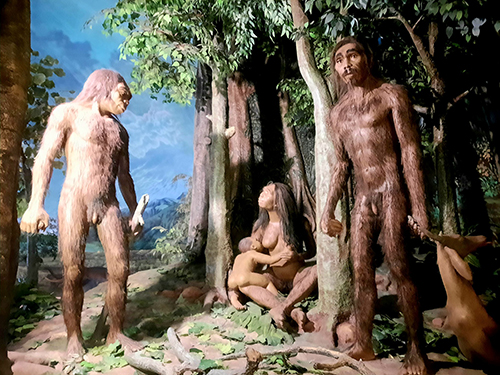
Who was Java Man?
Homo erectus first evolved in Africa around 1.9 million years ago and migrated to Asia spreading through South and Southeast Asia. During the Ice Age, low sea levels exposed the Sunda Shelf creating land bridges that connected the islands of Sumatra, Java, and Borneo to the Asian mainland. Homo erectus crossed these land bridges to reach Java roughly 1.5 to 1.8 million years ago, making Java one of the furthest eastern points of their ancient migration. When sea levels later rose, these ancient humans became isolated on the island.
The “Missing Link” was discovered in 1891 by Dutch scientist Eugène Dubois along the Solo River.
Java Man (originally named Pithecanthropus erectus- meaning early ape-man) was one of the first found specimens of Homo erectus. This discovery provided an early scientific conclusion connecting ancient primates to modern humans.
Homo erectus walked upright on two legs, but had a smaller brain than modern humans and is also believed to be among the first of human ancestors to use fire and craft stone tools.
Scientists later realized human evolution is not a straight line from an ape to a human, but a complex tree with many branches. There went the idea that we humans descended directly from orangutans, however one can say that orangutans are still amongst our closest living relatives sharing 97% of our DNA.
Another mystery is the ancient dwarf-man (Homo floresienses) which lived on the eastern island of Flores. Islands like Flores to the east of Bali and the “Wallace Line” were never connected by a land bridge. Although it is believed Flores man may have been a descendant of Java man- how could they have traveled across the seas? Some theories say they were swept out to the sea by natural debris during tsunamis or violent storms. But could they have known how to build rafts?
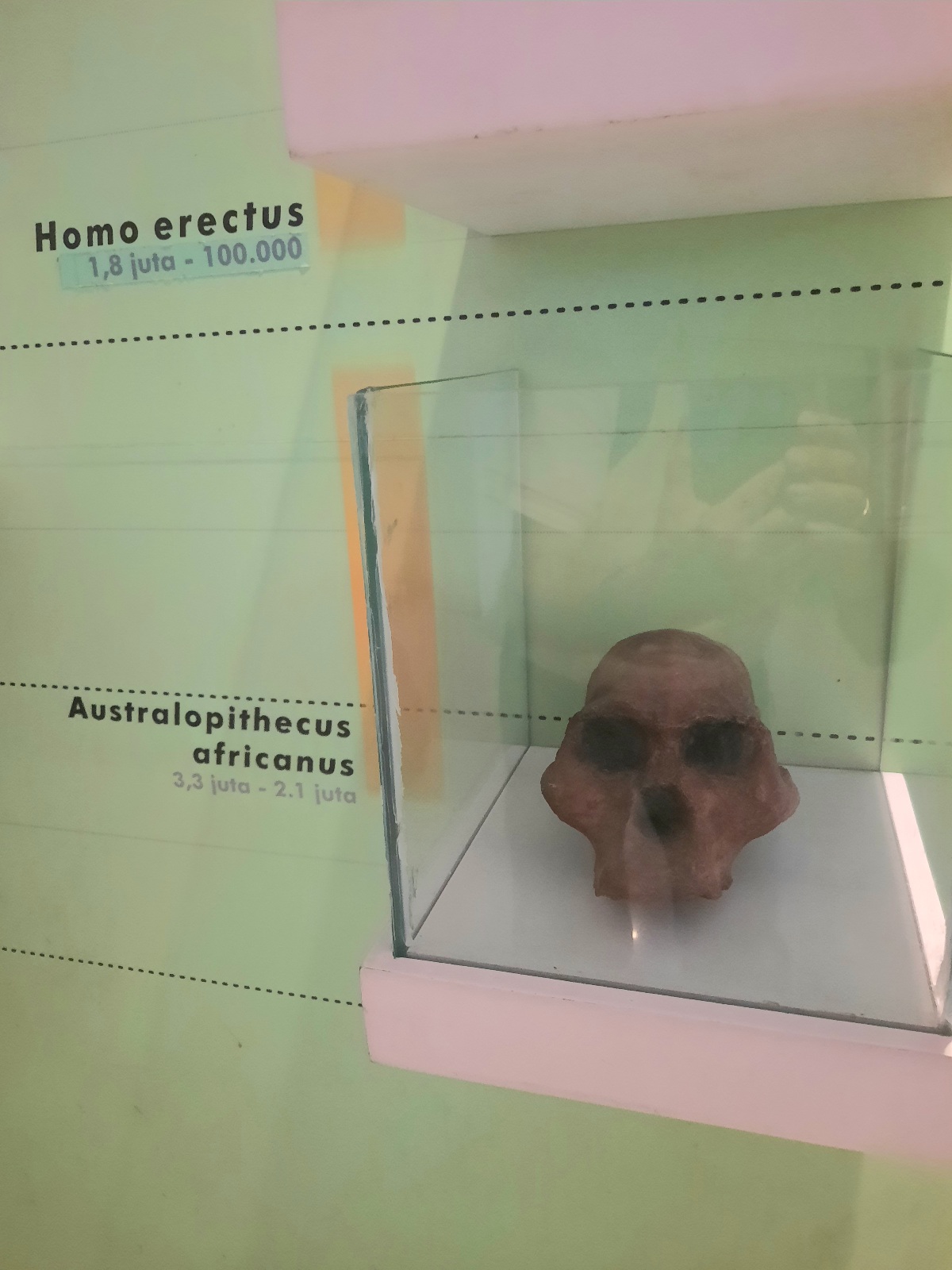
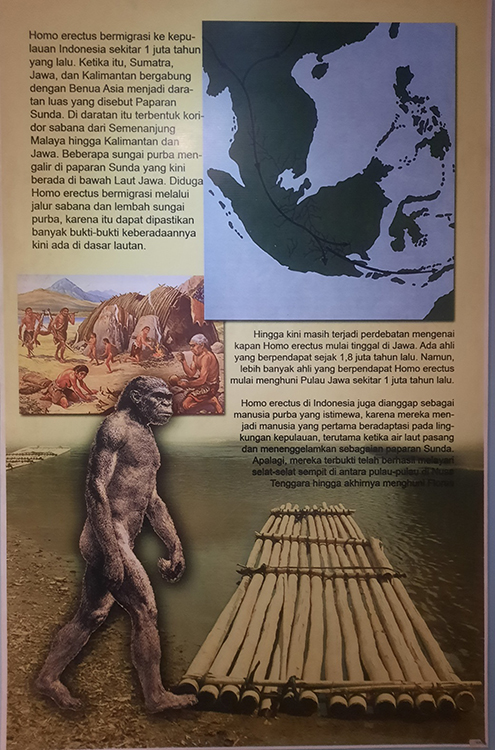
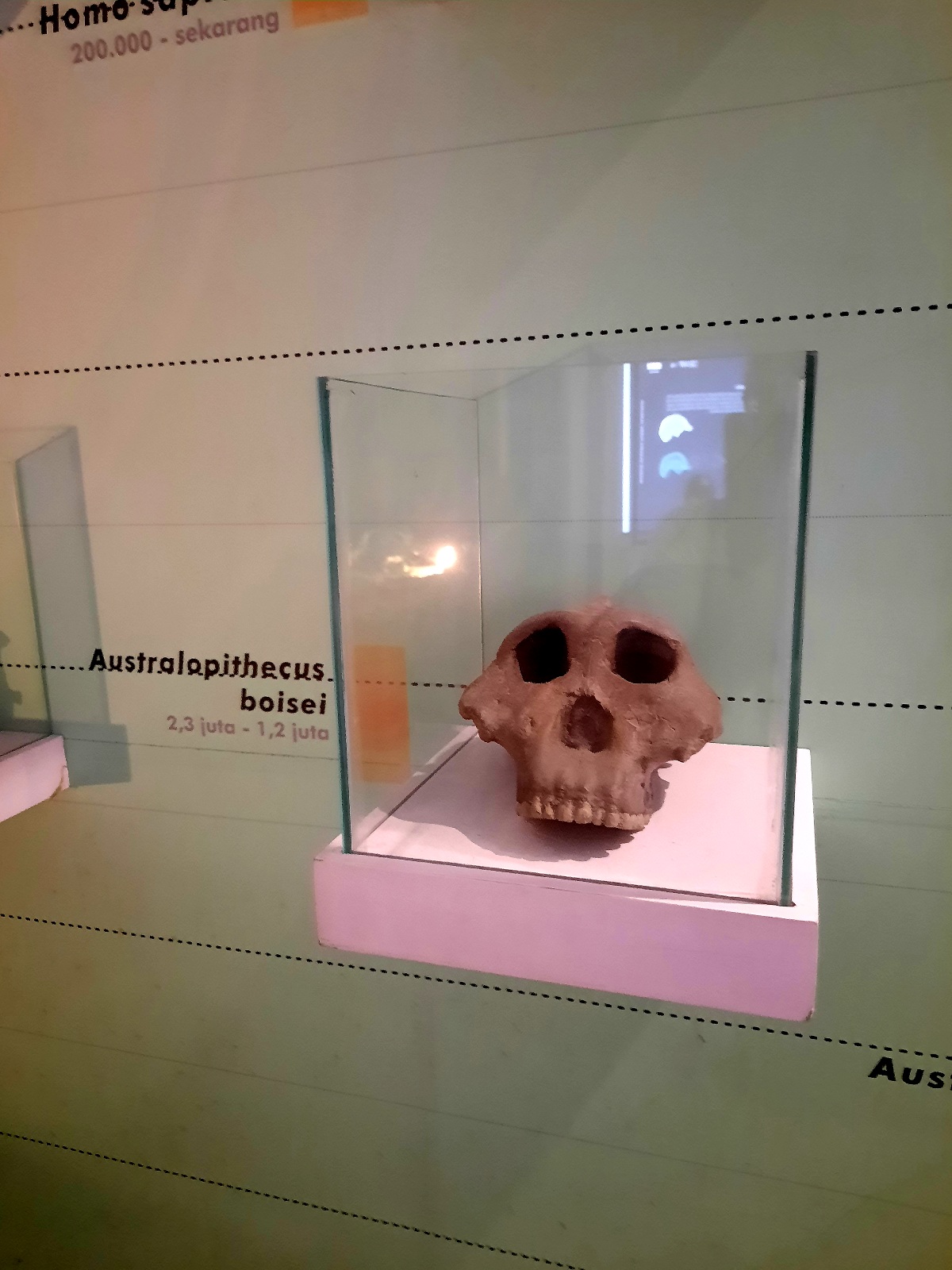
If you have ever wondered what man looked like a million years ago, a visit to Sangiran Early Man Museum is fascinating and mind boggling. It turns out that over the last 20,000 to 3,000 years, the average size of the modern human brain- after growing in size from the brain of Homo erectus, has decreased again by roughly 10% compared to our late ancestors.
Anthropologists and evolutionary biologists have proposed theories for this shrinkage:
-As humans formed complex, cooperative societies, knowledge became shared across the community rather than held entirely by a single individual- hence cooperative intelligence.
-Living in large social groups allowed humans to rely on collective wisdom, cultural storage, and later, external tools and writing, reducing the evolutionary pressure for massive individual brain volume.
What would you think could be a reason for the brain size of man to shrink?
At the museum, visitors can explore replicas of Java Man skulls and massive ancient animal fossils- such as a 4-meter tusk from a prehistoric elephant and detailed dioramas illustrating early human evolution.
https://iha.kemenbud.go.id/en/portfolio/sangiran-early-man-museum/
Our brains seem to be functioning in overload mode these days in an era of so much mind stimulation.
Will artificial intelligence end up easing our minds? There is so much talk of AI taking over.
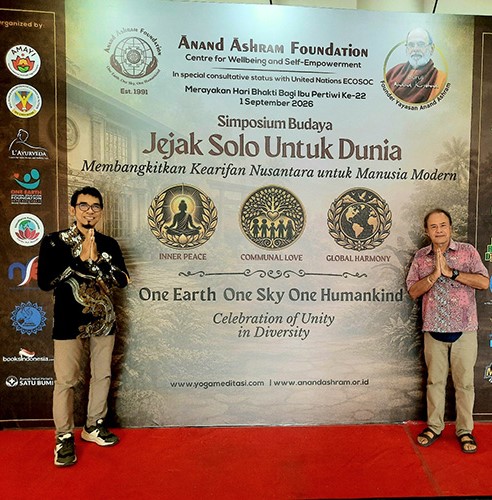
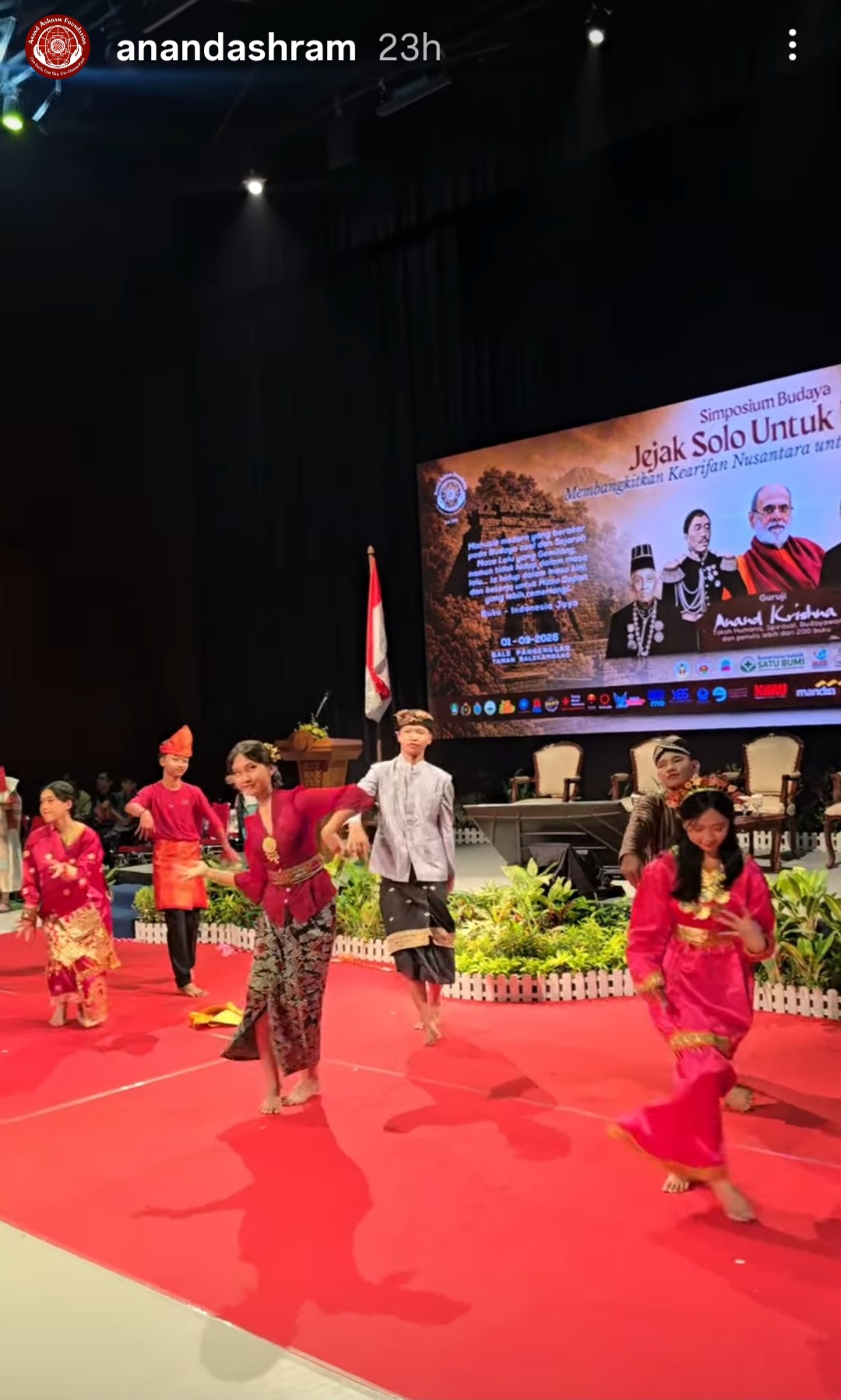
“From Solo to the World- Awakening Wisdom of the Archipelago in a Modern World” –
The trip to Solo culminated in this cultural symposium sharing meaningful discussion on coming back to roots and core values in modern days dealing with issues of climate change and AI.
In times that can feel overwhelming, the students of One Earth School under Anand Krishna Foundation give me hope.




The title of one of Anand Krishna’s books: Tetap Waras di Jaman Edan ( Finding Sanity in Crazy Times ) is actually a spiritual review, commentary and modern adaptation of the work written by a famous Javanese poet-philosopher Ronggowarsito from the Solo Kraton in 19th century with his vision for modern people.
Ronggowarsito ( 1802-1874) was the last court poet of the Solo Kraton.
One of his lines seem timeless- translated from Javanese:
experiencing an age of madness where it is confusing to know how to act. If you join the madness, your conscience cannot bear it, but if you do not join, you get left behind and face hardship.
and his final punchline- translated from Javanese:
Yet by Gods will, no matter how fortunate the reckless are, far more fortunate are those who remain mindful/sane and vigilant.
May sanity in Humanity prevail!
More on: https://www.anandkrishna.org/id/
Schooling for Life- not for Living Alone: https://oneearthschool.org/
One Earth-One Sky-One Humankind
Back to Candi Sukuh and Candi Cetho: https://alamasia.net/candi-sukuh-and-candi-cetho/
Main Indonesia Page: https://alamasia.net/asia-destinations-news-and-links/bali-and-indonesia/