connecting
people and cultures – inspiring journeys
sharing meaningful discoveries in Asia
 About Alam Asia Net
Asia Destinations News and Links
Journeys and Stories
Support Campaigns and Projects
Alam Indah Bali
Reading, Films, Music
Inspirations
Retreats
Some Favorite Images
About Alam Asia Net
Asia Destinations News and Links
Journeys and Stories
Support Campaigns and Projects
Alam Indah Bali
Reading, Films, Music
Inspirations
Retreats
Some Favorite Images
Soul Journeys on the slopes of Java’s mystic Mt. Lawu
September, 2026
Between Central and East Java lies Mt. Lawu- a dormant volcano -(3265m)- revered as a sacred place in Javanese spiritual history and Kejawen mysticism. Here the physical and the spiritual worlds overlap.

Candi Sukuh
Along the western slopes of Mt. Lawu are the ancient temples of Candi Sukuh and Candi Cetho.
I had visited these sites several years ago but it was difficult to understand what these sacred sites were all about. Unlike the classical, Indianized Javanese temples, Candi Sukuh and Candi Cetho are pyramid structures resembling ancient Mayan temples. Very interesting and mysterious is what I left with after my first visit. It was easy to feel a sense of abandonment of these 15th century temples, but witnessing quiet worship reveal these temples remain alive in spirit- used for healing and fertility rites.
When an opportunity came up to join a pilgrimage to Solo and these sacred sites with the Anand Ashram Foundation, I delved deeper into some history.
Queen Suhita
Javanese chronograms carved onto the western gates of Candi Sukuh show that the temple was constructed during the final decades of the Majapahit Empire in the 15th century by Queen Suhita.
She was a rebellious queen defying the male ego and the patriarchal legacy of her predecessors.
Suhita’s childhood was overshadowed by the Paregreg Civil War (1403–1406)—a bloody conflict triggered by a succession dispute between her father and her maternal grandfather which ended up crippling Majapahit. Suhita’s rise to power was a rebellion against male martial glory. She favored stability, diplomatic de-escalation, and civil welfare over territorial conquests. Practicing a more egalitarian rule, Suhita directly engaged with commoners on the streets and bypassed palace bureaucracies to fix infrastructure. This decentralized approach directly challenged the absolute, centralized “God-King” ego (Devaraja) of past male monarchs.
Historical narratives also suggest Suhita bypassed conservative priests. She reportedly detested the ritual of sati (widow burning), which she had witnessed as a child, viewing it as a horrific manifestation of patriarchal control over female life.
By sponsoring these mountain sanctuaries, Suhita may have been deliberately supporting an anti-establishment artistic movement- a spiritual retreat away from the male-dominated court center, returning instead to indigenous animistic pre-Hindu megalithic traditions and Earth-Mother worship.
Stepped terraces symbolize the natural alignment and cosmology of the mountain and sacred home to ancestral spirits.
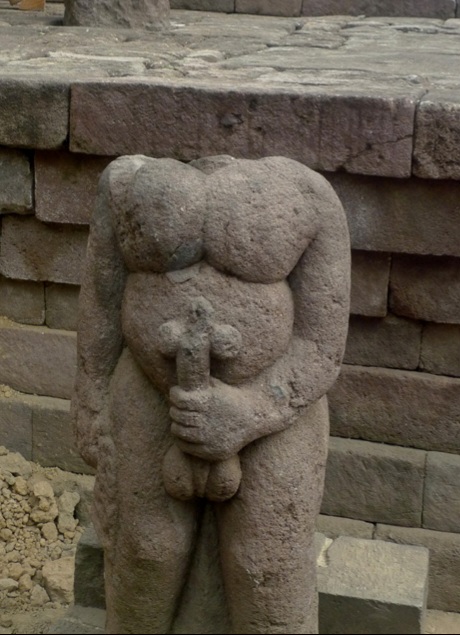
Both Candi Sukuh and Candi Cetho are famous for their explicit, raw carvings of genitalia—such as the lingga-yoni symbols and a man holding his erect penis.
While some misinterpret this as “eroticism,” these symbols are deeply rooted in Tantric Hinduism. In Tantra, the universe cannot exist without the yoni (the cosmic womb/female energy).
Temple iconography of life-giving forces and fertility, re-established the supreme importance of the feminine, serving as a stark reminder to a patriarchal society that all male power ultimately emerges from the female womb.

The womb symbol to the left shows the origin of all life– both male and female.
The Inner Journey
Candi Sukuh: Temple of Living and Dying
Combining ancestor worship with Tantric Hinduism, Candi Sukuh is also intended to act as a physical and spiritual gateway, ensuring the souls of the deceased could safely cross over into the afterlife. Unlike traditional Hindu temples that face east toward the rising sun, Candi Sukuh faces west- the direction of the setting sun, the dead, and the underworld.
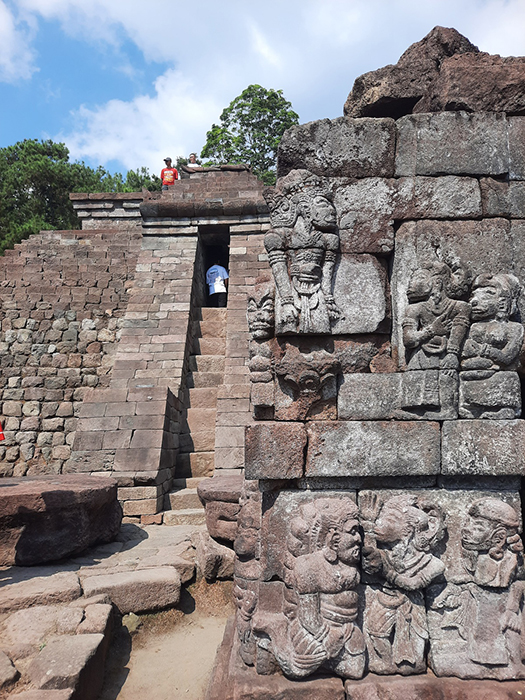
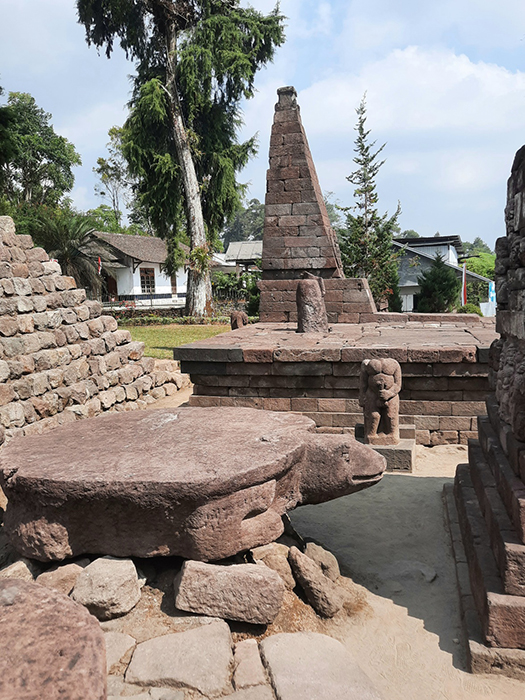
The temple consists of three rising terraces. Moving from the lowest to the highest symbolizes a human soul ascending from the earthly realm, through purification of karmas into spiritual perfection.
The top level is a space for agni hotra– a ritual of cleansing through fire. Agni means fire and Hotra means healing or offering.
The Turtle symbolizes stability and balance during cosmic tasks such as the churning of the ocean of immortality- the foundation of the underworld, assisting the soul’s transition.
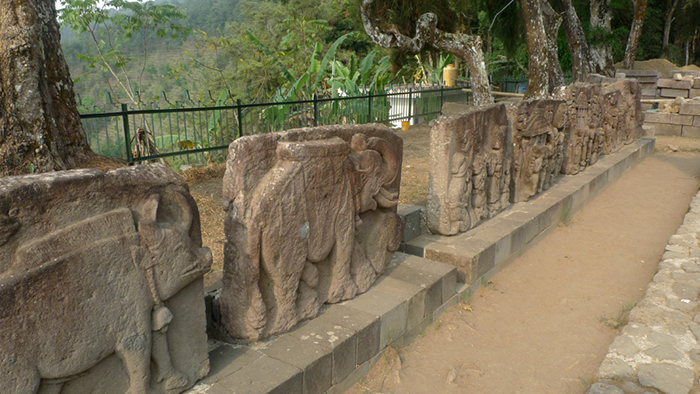
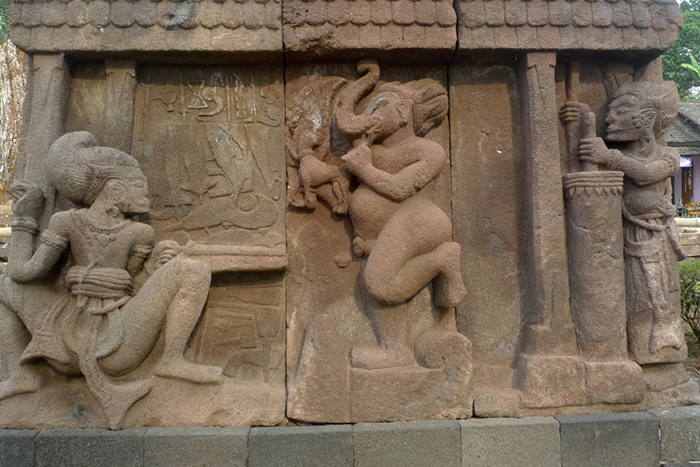
Animal figures such as elephants along with other human figures help depict cyclical nature of life.
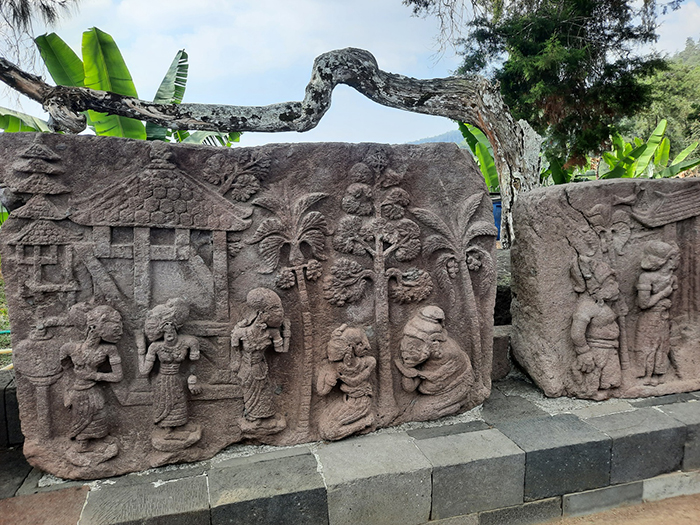
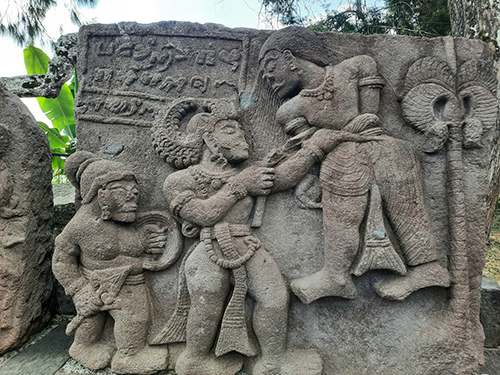
Mt. Lawu- has been known as a place for ruat- sacred exorcism and spiritual cleansing.
The Sudamala story carved into the reliefs at Candi Sukuh depict the liberation of Goddess Uma (wife of Lord Shiva) from a demonic curse due to some misbehavior transforming her into the terrifying Durga.
Durga’s terrifying manifestations were not mere acts of destruction however, but also a divine rebellion against the sins and violations inflicted upon humanity.
In the Sudamala story, Prince Sahadeva, the youngest of the five Pandava brothers from the Mahabharata, is chosen to perform the ruwatan cleansing ritual, breaking the spell and returning the goddess Uma to her original, beautiful divine form.
The reliefs at Candi Sukuh also tell of the myth of Garudeya, the mythical bird who fights to free his mother from slavery.
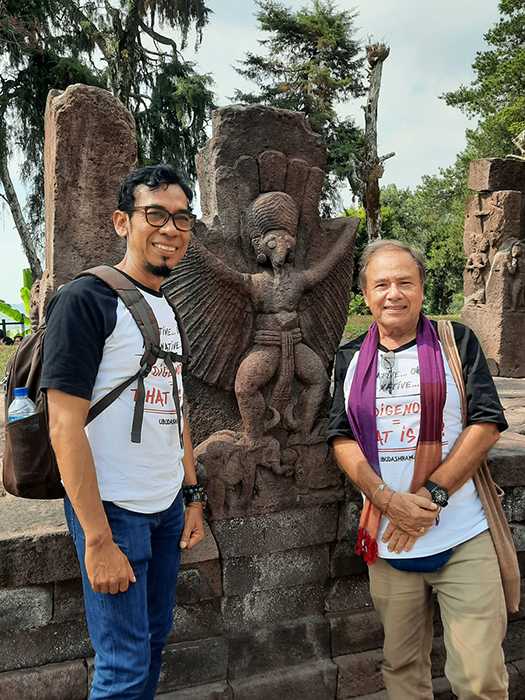
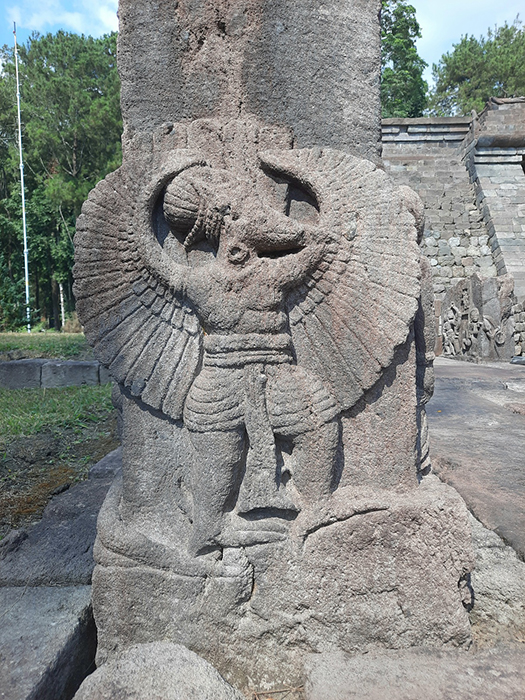
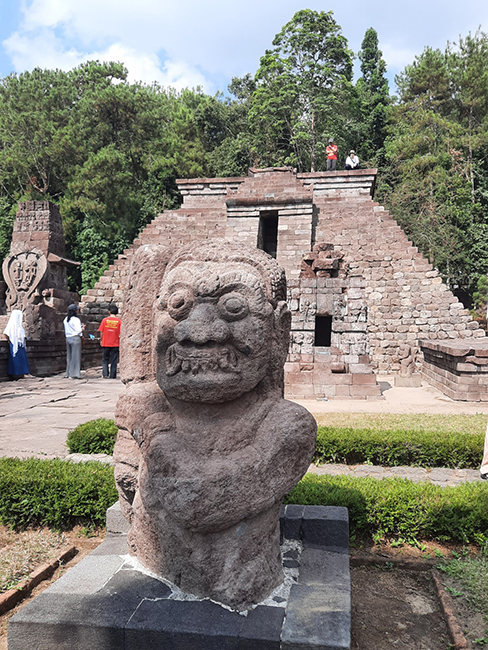
with Gede of Anand Ashram Foundation
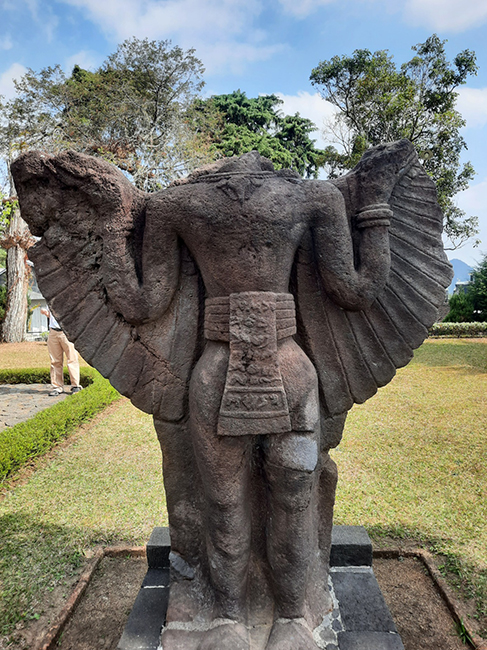
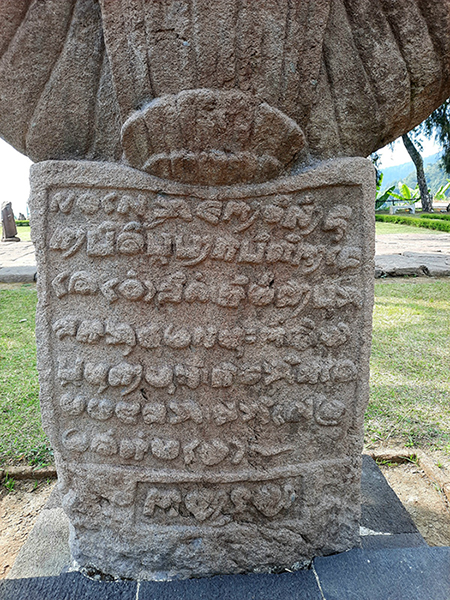
Early inscriptions at Candi Sukuh behind this headless statue. It is not clear when and how the head disappeared.
Candi Cetho- Soul Migration to Higher Levels and Moksa
While both temples were used for soul purification rituals, Candi Cetho is believed to be the place to free oneself from earthly attachments to achieve a higher rebirth or the ultimate moksa. ( liberation )
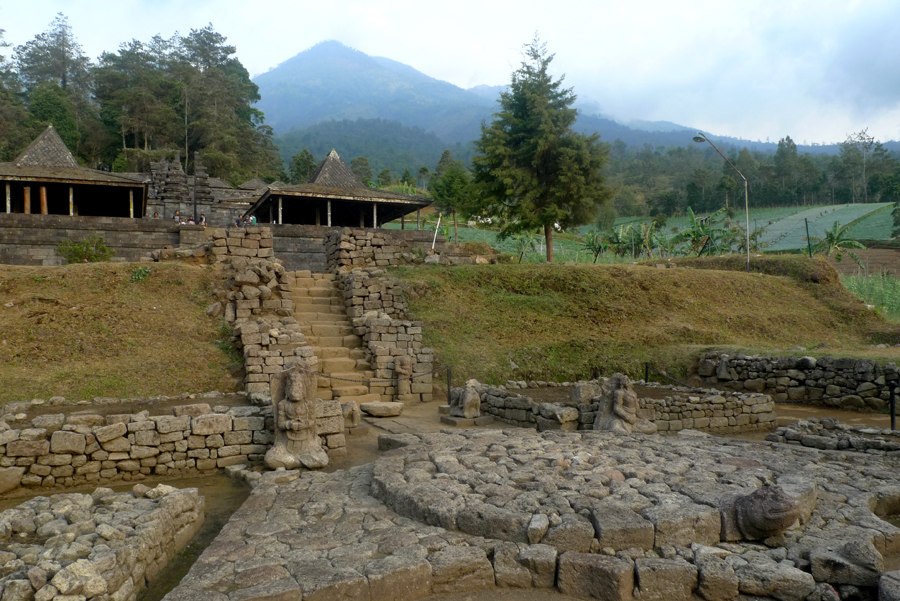
Candi Cetho – approx 10km from Candi Sukuh
The complex is split into multiple levels (historically up to 14, with around 9 to 13 main restored terraces) stretching from west to east. Each higher tier represents a spiritual step toward purity and moksa.
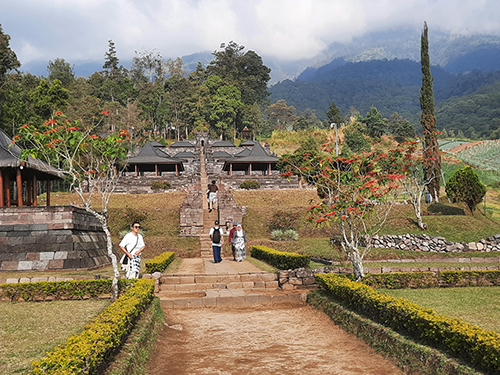
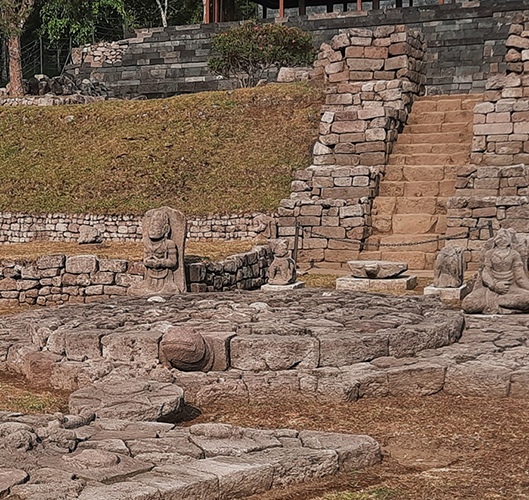
Lower Levels feature large open courtyards, grand Balinese-style stone gateways (gapura), and gardens.
Middle Level contains a giant flat turtle stone representing cosmic creation.
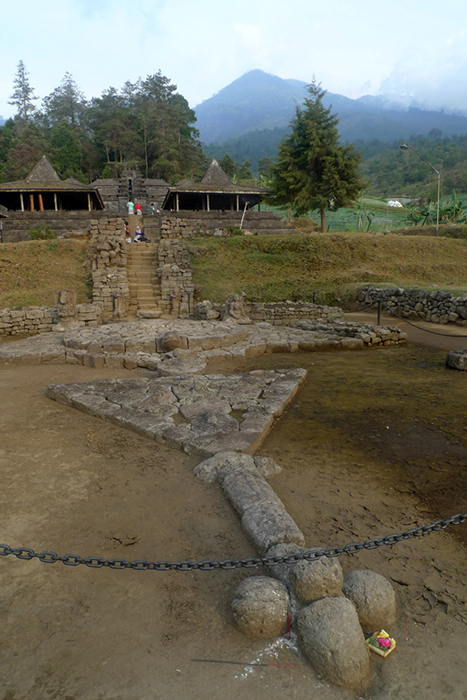
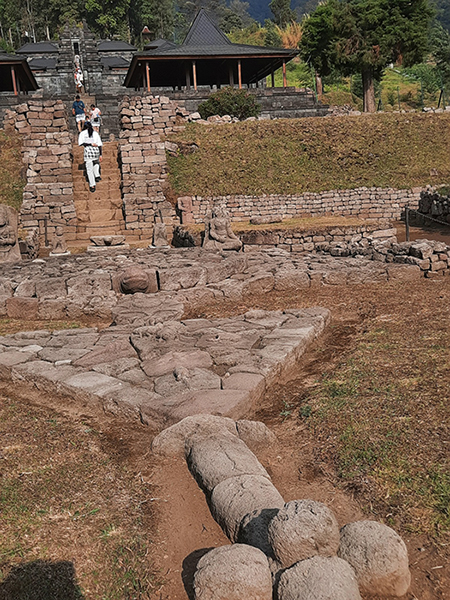
with a unique phallic symbol. Photo to the left from 2015 shows view of Mt. Lawu.
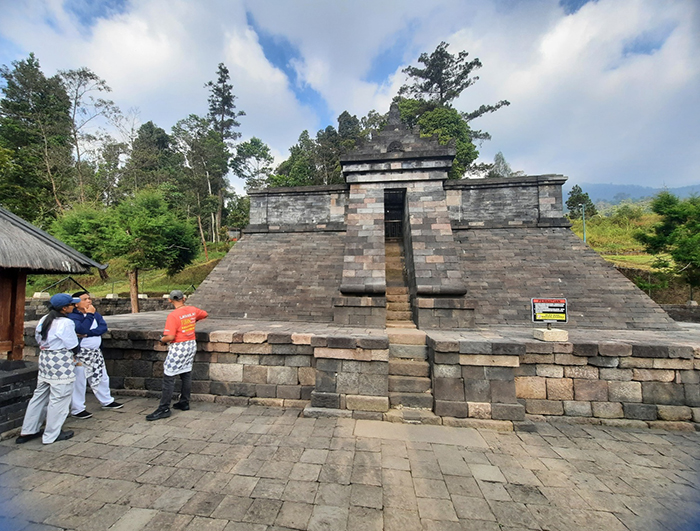
Upper Terraces house open-air pavilions (pendopo) used for rituals, sacred shrines and guardian statues.
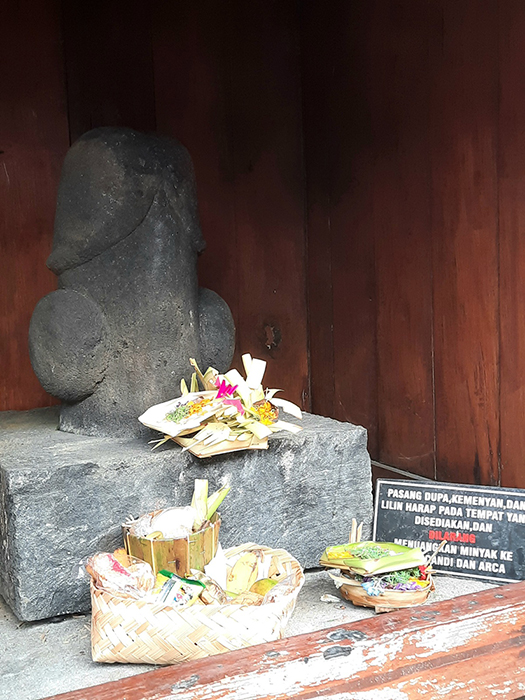
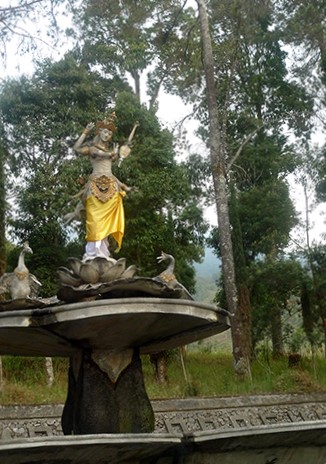
Candi Cetho is aligned with the element of water. Natural springs close to the complex provide water for purification prior to rituals. The Goddess Saraswati statue on the right is found by the natural spring.
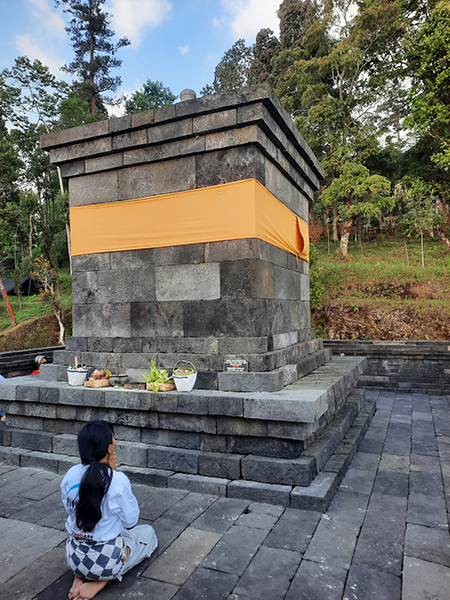
The most sacred space is at the very top facing the peak of the mountain.
Worshipers offer prayers at this cube to connect directly with the formless supreme deity, often associated with Shiva or Sang Hyang Widhi Wasa.
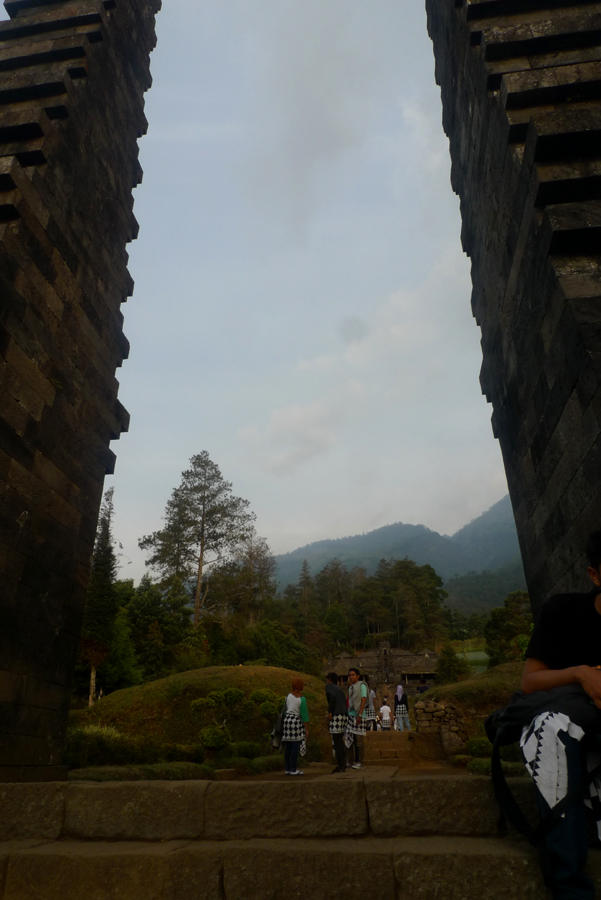
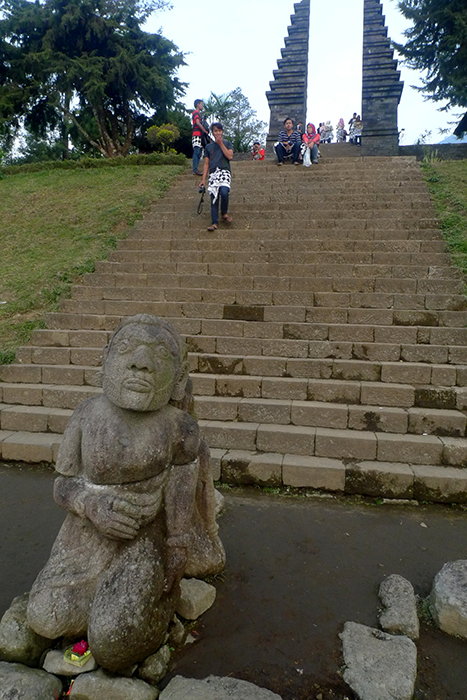
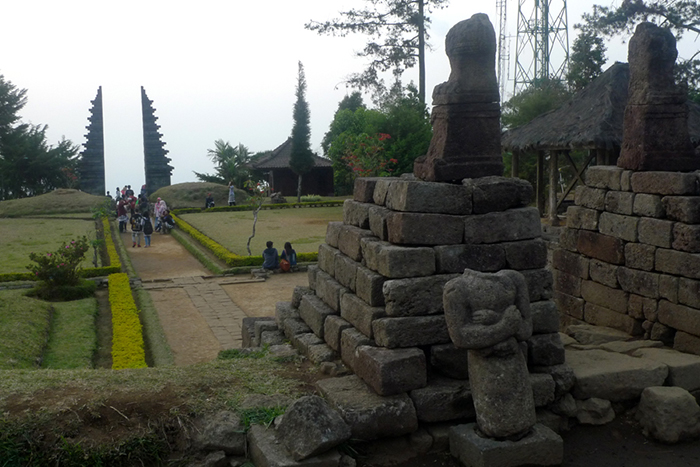
Candi Cetho and Candi Sukuh are located approx 30km or a 1.5 hour drive from Solo through tea plantations of the cooler and misty slopes of Mt. Lawu.
This special trip was organized on 30 August, 2026 by the Anand Ashram Foundation in honor of Guruji Anand Krishna’s birthday. We traced Gurujis footsteps in his birthplace of Solo before continuing to visit Candi Sukuh and Candi Cetho which offered this amazing insight.
Guruji believed these sacred sites are much older than the Majapahit period. They may have been renovated or restored by Queen Suhita, but Guruji talked of Candi Sukuh as an ancient campus of education- teaching us what happens before and after death.
What does happen when we die? – a question often pondered. Some believe we only have one life while other cultures believe in re-birth with our karma guiding our souls into the afterlife once released from our temporary body.
Can our souls continue an independent journey of purification once free of the physical body?
Below are two short You Tube Talks with Guruji Anand Krishna:
Candi Sukuh:
Candi Cetho:
Queen Suhita, having inherited an empire crumbling from the greed of past leaders, perhaps wished to pursue a grand act of purification- to cleanse the once glorious empire of Majapahit of its internal corruption and sins, using the healing power of the mountain to reset the kingdom’s direction for a brighter future. Suhita did not have an heir. The last king of Majapahit, Brawijaya V was a descendant of her brother. As the kingdom finally collapsed under the rising influence of Islamic coastal sultanates in late 15th century, King Brawijaya V allegedly retreated up Mt, Lawu to achieve moksa.
For centuries, pilgrims, mystics and modern-day Indonesian political leaders have climbed its slopes to meditate, seek cosmic guidance, and undergo spiritual purifications.
Guruji Anand Krishna is greatly missed but we can imagine he has passed through the gates to a higher realm with his spirit remaining in the hearts of many.
Sitting at the top of Candi Cetho, there was a sense of serenity with a silent wind and perhaps the mountain does listen to unspoken thoughts and prayers.
From Solo to the World:
Click below to see a few photos of exploring Solo and from the symposium held on 01 September
From Solo to the World- Awakening the Wisdom of Nusantara Archipelago in a Modern World.
https://alamasia.net/from-solo-to-the-world/