connecting
people and cultures – inspiring journeys
sharing meaningful discoveries in Asia
 About Alam Asia Net
Asia Destinations News and Links
Journeys and Stories
Support Campaigns and Projects
Alam Indah Bali
Reading, Films, Music
Inspirations
Retreats
Some Favorite Images
About Alam Asia Net
Asia Destinations News and Links
Journeys and Stories
Support Campaigns and Projects
Alam Indah Bali
Reading, Films, Music
Inspirations
Retreats
Some Favorite Images
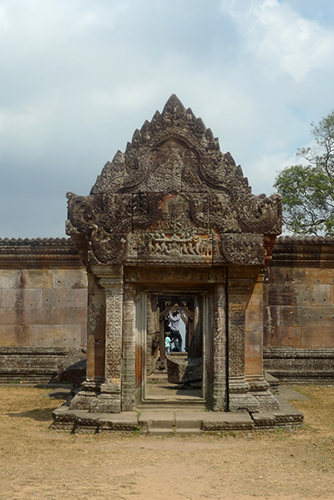
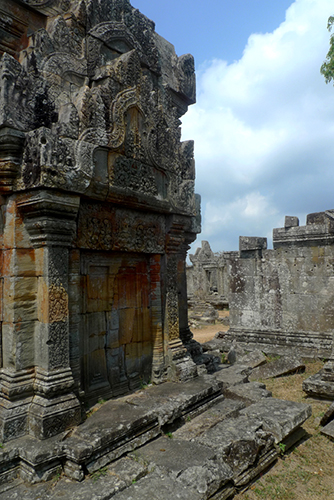
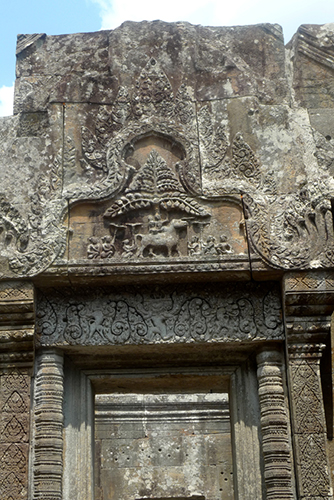
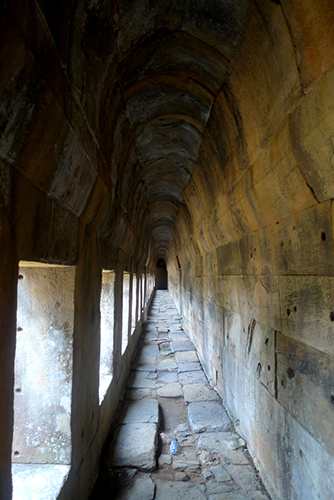
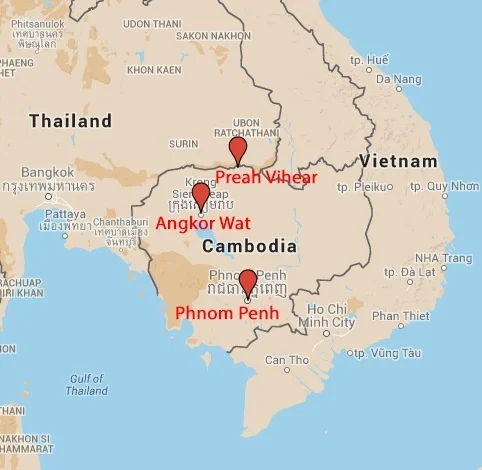
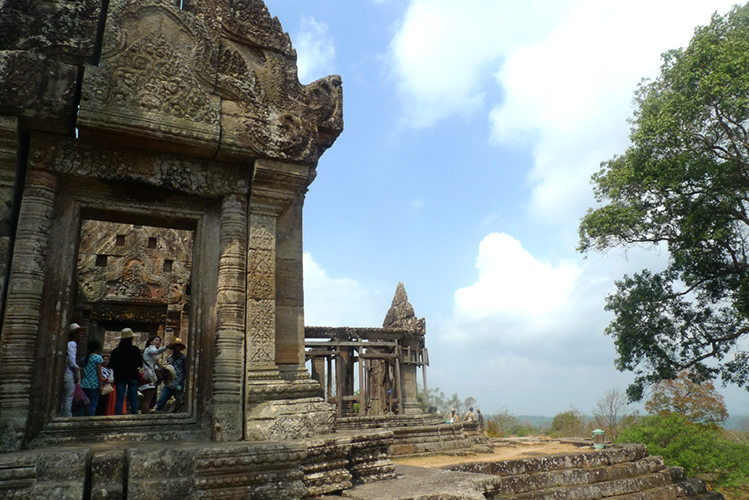
Preah Vihear Temple
A spectacular Khmer Hindu temple complex dedicated to Shiva. Construction began in 9th century under King Yasovarman I, with major expansions later under Kings Surayavarman 1 and II (11th-12th centuries).
Located along a dramatic cliff drop-off, Preah Vihear became a holy site representing Mount Meru- abode of the gods.
Border Disputes
The ridge where Cambodia and Thailand meet has been the center of border disputes leading to a series of conflicts and political tensions. French rule created border confusion between Cambodia and Thailand
( former Siam ).
The 1907 French-Siamese treaty agreement placed Preah Vihear within Cambodia.
Although the Siamese at the time accepted the agreement, ongoing claims silently remained with the Thais insisting the maps need to follow the watershed line of the Dangrek Mountains, located on the Thai side. Following Cambodia’s independence in 1954, Thailand occupied the temple, leading to protests from Cambodia.
1962 ICJ Ruling: The International Court of Justice declared the temple itself Cambodian territory, but Thailand has not recognized this ruling.
Following the Khmer Rouge years (late 1970s) and after, access to Preah Vihear was not possible from within Cambodia due to poor road conditions, and with the area littered with landmines. Thailand managed to control access from the Thai side, using the area for refugee camps. The temple itself saw neglect amidst the chaos.
The Dangrek Massacre
An overlooked piece of history, sometimes referred to as the Preah Vihear pushback or the “Ghost Mountain” massacre, was a forced repatriation of approximately 43,000 to 45,000 Cambodian refugees by Thai forces in June 1979. Following the fall of the Khmer Rouge regime, thousands of Cambodians fled to Thailand, but in a brutal display of “humane deterrence” policy, they were transported to the Dangrek Mountains and forced down steep, mined slopes back into Cambodia, resulting in thousands of deaths.
Read more about this forgotten tragedy:
https://wondersofcambodia.com/dangrek-1979-the-ghosts-of-the-escarpment/
In the early 1990s, some intrepid tourists and many Thais were able to visit Preah Vihear again, with special permits, walking up a long staircase from the Thai side. But visits were frequently disrupted by renewed border tensions and military standoffs.
In 2003, a new road was opened to Preah Vihear, once again providing access from within Cambodia.
In 2008, Preah Vihear was granted UNESCO World Heritage status with the International Court of Justice again ruling in favor of Cambodia. This sparked more tensions between Thailand and Cambodia.
Thailand has been wanting to reopen tourist access from the Thai side.
In 2025, a major border conflict erupted between Thailand and Cambodia, closing Preah Vihear to visitors again.
My visit to Preah Vihear back in 2015:

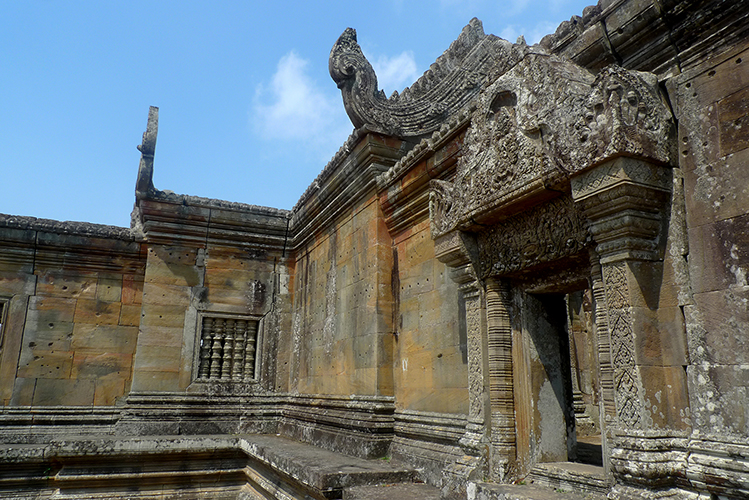
with long-time friend and Angkor guide Sopheara, we drove up to visit Preah Vihear.
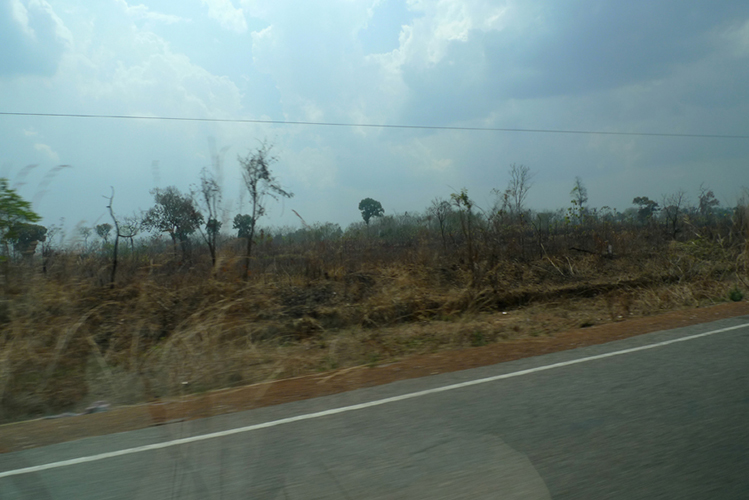

The drive took over 3 hours on a mostly newly paved road, but it was quite shocking to see the amount of deforestation along the way. For years, this area was not accessible to the public and during that time, massive amounts of forest was cut, sent or sold out to Vietnam, I was told.
Finally with the Dangrek mountain range in sight, the drive continues uphill passing camps of Cambodian soldiers living in very poor conditions.
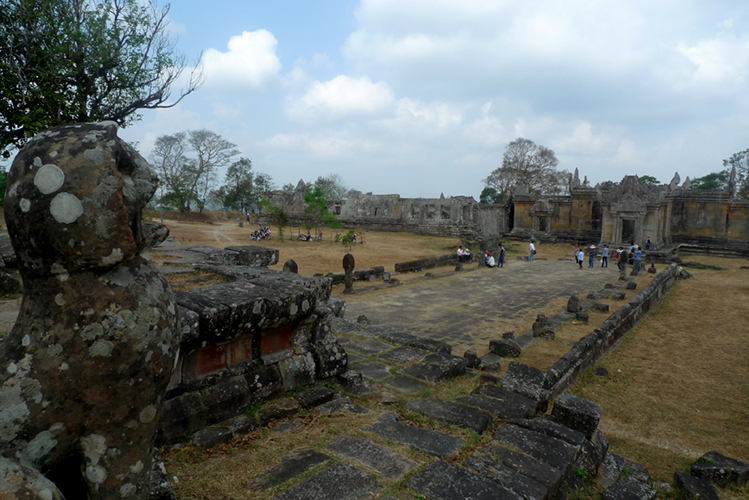
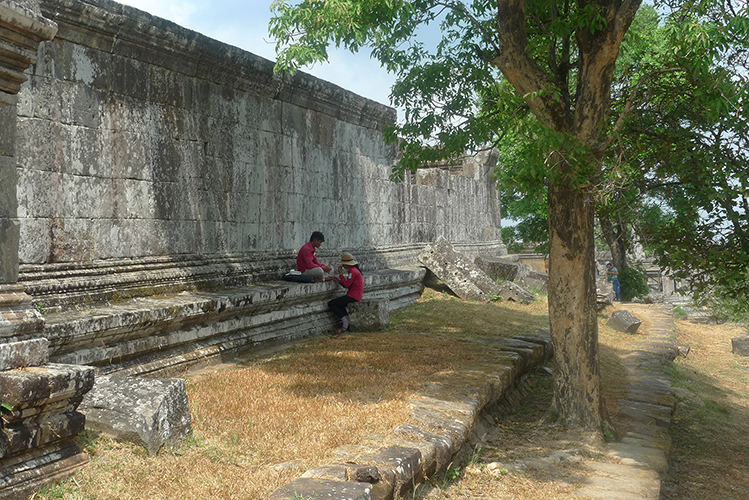
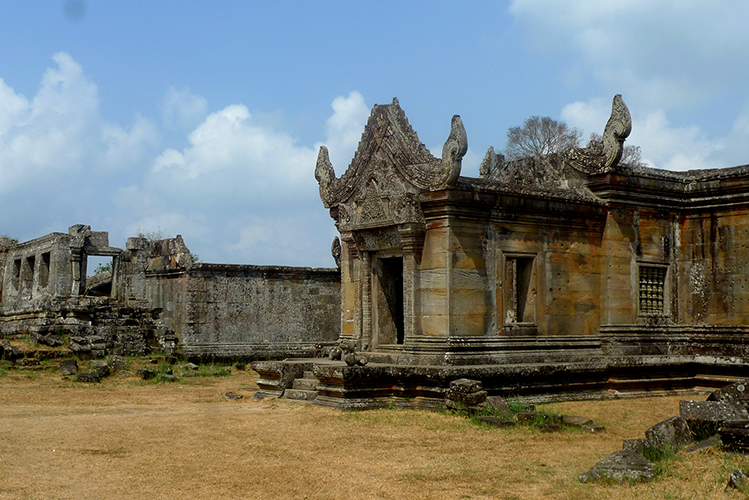
Entering the temple complex feels like walking into a surreal time warp.
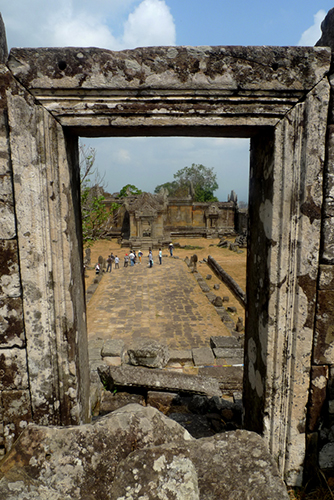
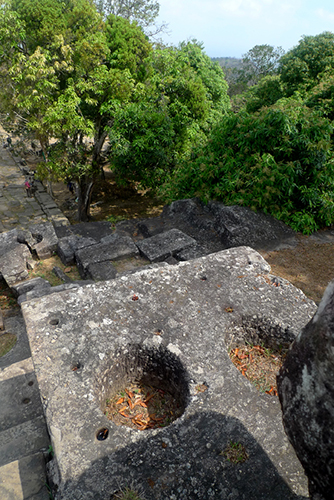
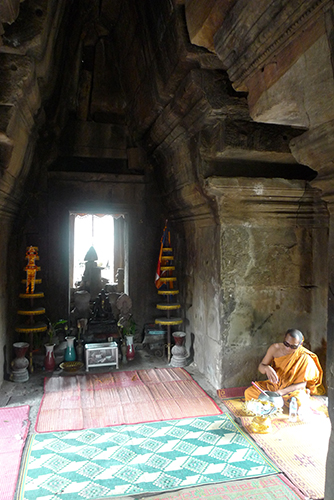
Through gateways and walls that hold on to stories. Above an empty hole where a sacred Lingga once was. And a monk looking after a small shrine.
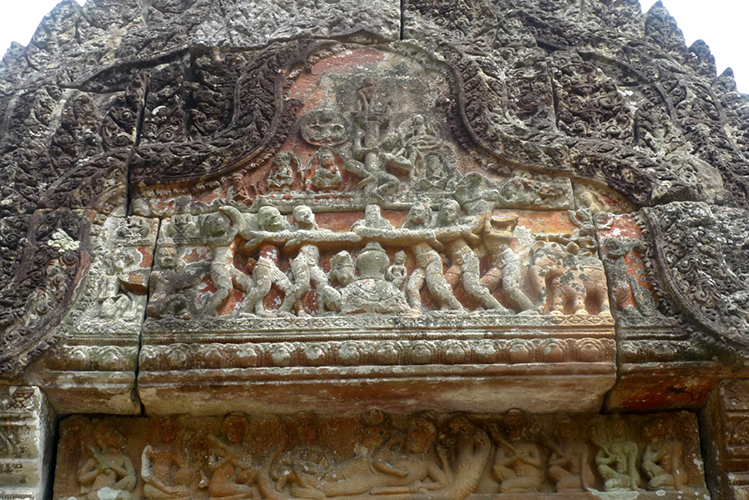
This lintel of Churning the Ocean an excellent condition.
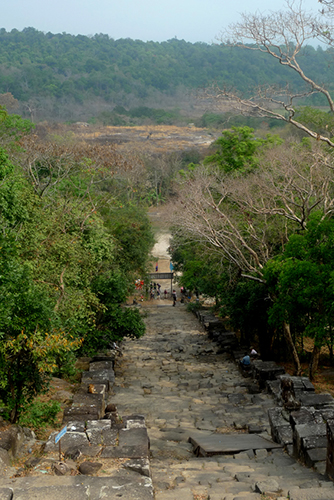
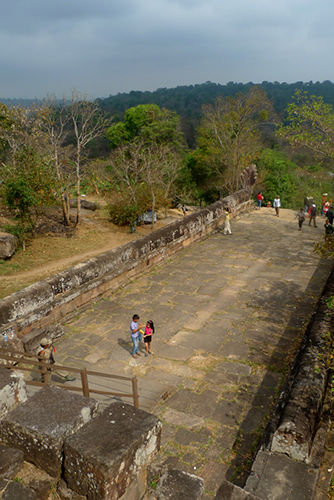
Steps coming up from area where the Thai border is, however official border crossing was closed.
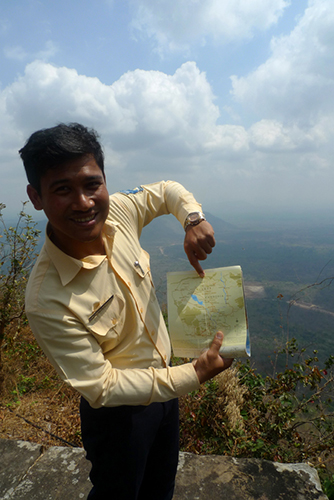
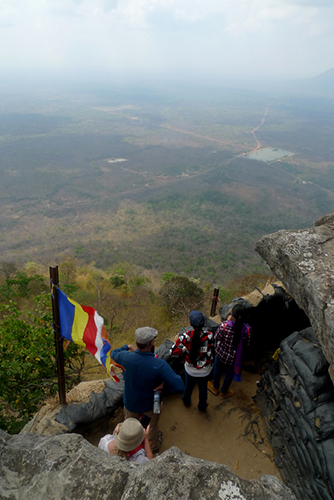
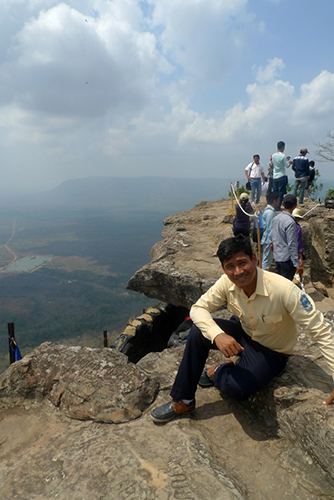
Sopheara holding a map and looking down to the world below. Sitting quietly, one can imagine voices whispering in the air. The flag above is the international flag of Buddhism featuring six vertical stripes of
Blue for compassion/peace, Yellow for the Middle Way, Red for blessings/practice, White for purity/liberation, and Orange for wisdom, with a combined sixth stripe representing the universal truth,
May the energies of this flag touch all souls to find peace, understanding shared history and suffering.

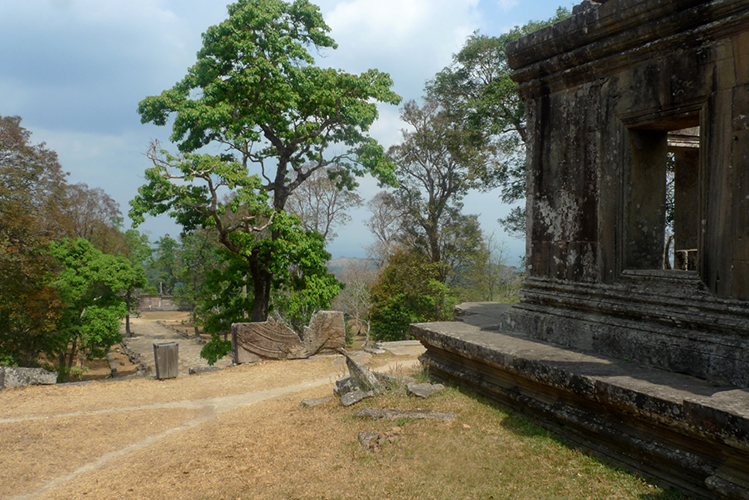
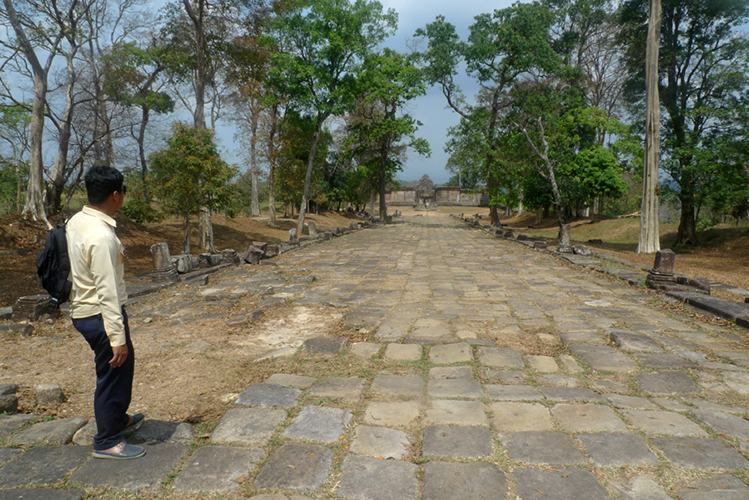
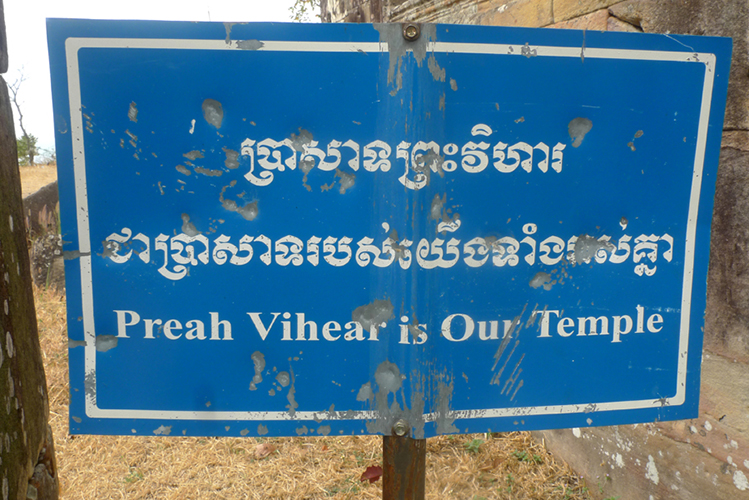
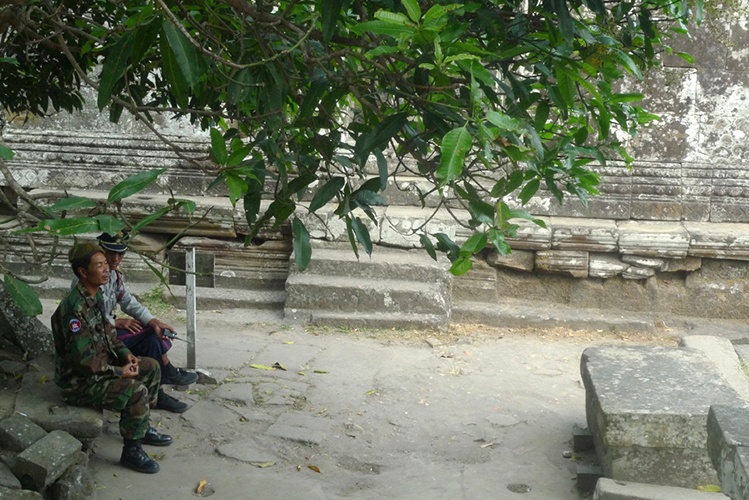
Preah Vihear stands as a testament to Khmer heritage and remains a powerful cultural symbol for Cambodia, Sadly, the latest border conflict in 2025 has resulted in severe damages to Preah Vihear temple by Thai forces. Hopefully leaders can come to a resolution to finally resolve the border conflict.
Unfortunately politicians have used the border issue to stir up nationalistic pride, while distracting their people from what goes on in their shadow plays.
No one needs more war. May all learn from the past and come to respect a common humanity beyond borders.
Back to Siem Reap and Angkor: https://alamasia.net/asia-destinations-news-and-links/cambodia/
For Phnom Penh: https://alamasia.net/asia-destinations-news-and-links/cambodia/phnom-penh/
Travel Gently- Live Consciously